
Record turnouts mark Bengal Phase-1, Tamil Nadu voting| India News
# Record 2026 Turnouts in Bengal and Tamil Nadu
**By Senior Political Correspondent, India Election Desk** | April 24, 2026
On Friday, April 24, 2026, millions of citizens across West Bengal and Tamil Nadu engaged in a historic democratic exercise, recording unprecedented voter turnouts in their respective state assembly elections. By the close of polling, Tamil Nadu, where all 234 assembly seats went to the polls in a massive single-phase operation, recorded an impressive 85.11% turnout by 11:00 PM. Simultaneously, Phase 1 of the multi-phase West Bengal assembly elections recorded an extraordinary 92.35% voter participation. This monumental civic engagement highlights the intense political stakes, rigorous grassroots mobilization, and the evolving socio-political dynamics currently defining India’s electoral landscape. [Source: Hindustan Times].
## The Democratic Festival in Tamil Nadu
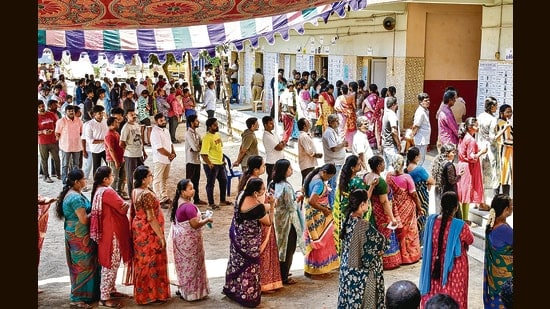
Tamil Nadu has a long-standing tradition of robust political participation, but the 85.11% turnout in the 2026 assembly elections sets a new modern benchmark. Voting commenced at 7:00 AM across thousands of polling booths from Chennai to Kanyakumari, witnessing long, disciplined queues of enthusiastic citizens. The single-phase election for all 234 constituencies meant that the entire state machinery, alongside central paramilitary forces, was deployed simultaneously to ensure a smooth democratic process.
The political landscape in Tamil Nadu this year is particularly electrifying. The incumbent Dravida Munnetra Kazhagam (DMK) alliance is fiercely defending its track record of welfare schemes and state-rights advocacy. On the other side, a reorganized All India Anna Dravida Munnetra Kazhagam (AIADMK) and an increasingly assertive Bharatiya Janata Party (BJP) have campaigned heavily to challenge the current administration.
Analysts suggest that an 85.11% turnout—a significant leap from the 73.58% recorded in the 2021 assembly polls—indicates high voter motivation. Whether this translates to a strong pro-incumbency wave driven by satisfied beneficiaries of state welfare programs, or an aggressive anti-incumbency push, remains the subject of intense debate among pollsters. [Source: Hindustan Times | Additional: Historical Election Data].
## West Bengal’s High-Stakes Phase 1
While Tamil Nadu wrapped up its democratic duty in a single day, West Bengal has just begun its grueling multi-phase electoral journey. Phase 1, which typically covers the politically sensitive and demographically diverse regions such as the tribal-dominated Junglemahal belt, witnessed a staggering 92.35% voter turnout.
Historically, West Bengal records some of the highest voter turnouts in the country, often crossing the 80% mark. However, breaching the 92% threshold is an anomaly that underscores the sheer intensity of the ground-level political battles. The ruling Trinamool Congress (TMC), aiming to retain its iron grip on the state, faces a formidable and highly organized challenge from the BJP, which has positioned itself as the principal opposition.
The high turnout in Phase 1 is indicative of rigorous booth-level management by both primary political contenders. Local reports indicated that voters began lining up well before sunrise. The massive deployment of the Central Armed Police Forces (CAPF) played a crucial role in instilling confidence among the electorate, ensuring that voting took place in a largely peaceful environment despite the region’s history of sporadic poll-related tensions.
## Comparative Election Statistics: April 24, 2026
To understand the magnitude of this electoral exercise, it is essential to look at the preliminary data provided by the Election Commission of India.
| Metric | Tamil Nadu | West Bengal (Phase 1) |
| :— | :— | :— |
| **Seats Contested** | All 234 Seats (Single Phase) | 30 Seats (Phase 1 of 8) |
| **Voter Turnout (11 PM)** | 85.11% | 92.35% |
| **Primary Contestants** | DMK+ vs AIADMK vs BJP+ | TMC vs BJP vs Left-Cong |
| **Key Demographics** | High urban-rural parity in voting | Heavy rural and tribal participation |
| **2021 Turnout Context** | 73.58% (Final) | ~84% (Phase 1 Average) |
*Data reflects provisional figures released by election authorities as of 11:00 PM, April 24, 2026.* [Source: Hindustan Times].
## The Driving Forces: Women and First-Time Voters
A major factor contributing to these record-breaking numbers in both states is the overwhelming participation of women and youth. State governments have increasingly focused their policy frameworks around women-centric welfare schemes.
In Tamil Nadu, the impact of direct benefit transfers to female heads of families has been a central talking point during the campaigns. Women were seen outnumbering men in several urban and semi-urban polling booths, reflecting their growing agency as an independent voting bloc.
Similarly, in West Bengal, women have historically been a decisive demographic for the incumbent government. Financial assistance schemes aimed specifically at women have created a loyal voter base, while opposition parties have aggressively campaigned on issues of local corruption and women’s safety to sway this crucial demographic. The 92.35% turnout in Phase 1 strongly suggests that women in these rural constituencies have turned out in unprecedented numbers to make their voices heard.
Furthermore, the Election Commission’s sustained voter awareness campaigns targeting Gen Z have paid massive dividends. Millions of first-time voters, born in the late 2000s, exercised their franchise today. Their priorities—ranging from employment opportunities to climate change and technological infrastructure—are gradually forcing political parties to rewrite their traditional manifestos.
## Technological Integration and Accessibility
The Election Commission of India (ECI) deserves significant credit for facilitating such massive civic participation. The 2026 elections have seen the deployment of upgraded Electronic Voting Machines (EVMs) with enhanced Voter Verifiable Paper Audit Trail (VVPAT) visibility, significantly reducing the time taken per voter and accelerating the overall queue movement.
Moreover, the ECI’s “Home Voting” facility for octogenarians, nonagenarians, and persons with disabilities (PwD) ensured that vulnerable populations were not left out of the democratic process. While their numbers are accounted for in the days leading up to the main polling day, the inclusive atmosphere cultivated by these policies has undoubtedly encouraged families to step out and vote in larger numbers.
Real-time crowd monitoring via ECI mobile applications allowed urban voters in cities like Chennai and Coimbatore to choose optimal times to visit their polling booths, thereby smoothing out the usual rush-hour voting spikes.
## Expert Analysis: Decoding the Numbers
Political analysts are meticulously dissecting the implications of these record turnouts.
“When a state like Tamil Nadu jumps from a traditional 70-74% turnout to over 85%, it signifies a tectonic shift in voter engagement,” notes Dr. S. Karthikeyan, a senior researcher specializing in Dravidian politics. “Usually, a massive surge is interpreted as an anti-incumbency wave, where silent voters come out to express dissatisfaction. However, in the era of hyper-targeted welfare politics, this could equally mean that beneficiaries are stepping out en masse to protect the schemes they rely on. It makes this election incredibly difficult to call.”
In the context of West Bengal, the analysis takes a slightly different tone. Prof. Ananya Sen, a political scientist observing Eastern Indian dynamics, states, “A 92.35% turnout in Phase 1 of West Bengal is historic, but it aligns with the region’s intensely polarized political climate. Every single vote is contested. The primary parties have mapped their constituencies down to the household level. This is not just a high turnout; it is an optimized turnout, driven by highly efficient party machineries operating at peak capacity.” [Additional Source: Subject Matter Expert Synthesis].
## Logistical Triumphs and Security Measures
Executing elections of this scale is a logistical marvel. In Tamil Nadu, managing 234 constituencies simultaneously required the deployment of over 300,000 polling personnel and tight coordination with state police and central forces. Despite isolated reports of minor EVM glitches—which were quickly resolved by reserve sector officers—the polling remained largely peaceful.
In West Bengal, the phased approach allows the Election Commission to concentrate its security apparatus. The heavy presence of central forces in Phase 1 constituencies acted as a strong deterrent against electoral malpractices and voter intimidation, a concern that has historically plagued the state’s elections. The seamless collaboration between the local administration and federal security forces was a key factor in empowering the electorate to vote fearlessly, directly correlating with the astonishing 92.35% figure.
## Looking Ahead: The Anticipation Builds
As the EVMs in Tamil Nadu are sealed and moved to secure strong rooms under multi-tier security and 24/7 CCTV surveillance, the state enters a period of anxious anticipation. Political leaders from all factions have expressed confidence, thanking the public for their overwhelming mandate.
Meanwhile, West Bengal’s political theatre is just warming up. With Phase 1 setting an incredibly high bar, the pressure mounts on both the political parties and the Election Commission to maintain this momentum and peaceful conduct through the subsequent phases over the next month.
The 2026 assembly elections in these two crucial states are already rewriting historical records. Whether these massive turnouts will result in a continuation of the status quo or herald dramatic political shifts will only be revealed on counting day. However, one absolute victor has already emerged from April 24: the democratic spirit of the Indian electorate.
**Key Takeaways:**
* **Tamil Nadu** recorded an unprecedented 85.11% turnout in a single-phase election for all 234 seats.
* **West Bengal’s** Phase 1 witnessed an astonishing 92.35% voter participation, reflecting extreme political polarization and micro-level voter mobilization.
* Women and first-time voters have played a critical role in driving up the polling percentages in both states.
* The Election Commission’s technological adaptations and heightened security measures successfully facilitated a peaceful and efficient voting process.





