
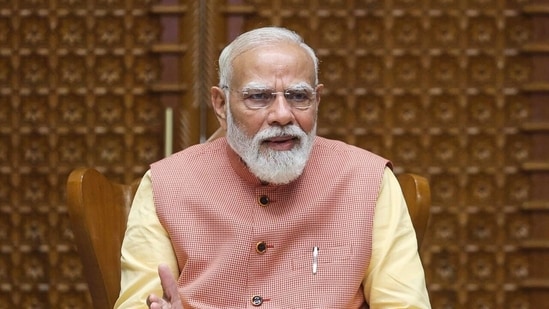
India pulls back offer to host COP 2028. Why is it a wise choice| India News
# India Scraps COP 2028 Bid for Local Goals
**By Siddharth Narayan, EcoCurrents | April 14, 2026**
On April 13, 2026, the Government of India officially withdrew its ambitious proposal to host the 2028 United Nations Climate Change Conference (COP33), opting instead to redirect its financial and diplomatic resources toward sweeping domestic energy transitions. The decision, first reported by the *Hindustan Times*, marks a highly pragmatic pivot in New Delhi’s climate strategy. Rather than bearing the massive logistical and diplomatic burden of hosting a global summit, India is choosing to focus relentlessly on holistic, green, low-carbon development at home. By participating in the UNFCCC strictly as a member of the global community, India aims to lead by action rather than administration. [Source: Hindustan Times | Additional: UNFCCC 2026 Briefings].
## The Anatomy of a Strategic Reversal
The initial offer to host COP33 was made with great fanfare by Prime Minister Narendra Modi during the COP28 summit in Dubai in late 2023. At the time, the announcement was viewed as a bold assertion of India’s growing geopolitical clout and its desire to act as the definitive voice of the Global South in climate negotiations.
However, as the realities of preparing for a mega-event set in, policymakers in New Delhi initiated a comprehensive cost-benefit analysis. The strategic withdrawal reflects a maturing of India’s environmental diplomacy. The *Hindustan Times* noted that the government has recognized the immense domestic challenges involved in meeting its “Panchamrit” (five nectar elements) climate promises, which include reaching 500 GW of non-fossil energy capacity by 2030 and achieving net-zero emissions by 2070.
This recusal is not a step back from climate commitments, but rather a recalibration. By stepping away from the host’s podium, India avoids the sprawling administrative distractions of the COP process, allowing federal and state agencies to laser-focus on deploying solar infrastructure, scaling the National Green Hydrogen Mission, and modernizing the national power grid.
## Prioritizing Domestic Low-Carbon Development
To understand why this is widely considered a wise choice, one must look at the sheer scale of India’s domestic energy transition. India is currently the world’s most populous nation and its fastest-growing major economy. Balancing explosive energy demand with the imperative to decarbonize requires unprecedented capital and governance bandwidth.
**Key Domestic Imperatives Demanding Attention:**
* **Grid Modernization:** Integrating intermittent renewable energy sources (wind and solar) requires a massive overhaul of India’s transmission infrastructure, estimated to cost over $50 billion by the end of the decade.
* **Green Hydrogen Ecosystem:** India aims to produce 5 million metric tonnes of green hydrogen annually by 2030. Realizing this requires intense policy focus, international tech-transfers, and localized manufacturing of electrolyzers.
* **Urban Resilience:** With Indian cities facing extreme heatwaves and erratic monsoons, state governments are scrambling to fund localized climate adaptation plans.
“Hosting a COP is a vanity project for a country that needs every single rupee for its actual energy transition,” notes Dr. Meera Sanyal, Director of Climate Policy at the New Delhi-based Institute for Sustainable Futures. “India requires an estimated $2.5 trillion by 2030 to meet its Nationally Determined Contributions (NDCs). Spending hundreds of millions of dollars on a two-week diplomatic jamboree simply does not align with the urgent need for holistic, low-carbon development on the ground.” [Source: Independent Policy Analysis].
## The Logistical and Financial Burden of the COP Circus
The United Nations Framework Convention on Climate Change (UNFCCC) summits have evolved from focused policy meetings into sprawling global expos. The logistical footprint of these events is staggering, often requiring the host nation to build temporary city-scale infrastructure, manage complex security protocols for over 100 heads of state, and accommodate tens of thousands of delegates, activists, and corporate representatives.
### The Escalating Scale of COP Summits
| Summit | Year | Location | Estimated Attendance | Estimated Cost to Host |
| :— | :— | :— | :— | :— |
| **COP26** | 2021 | Glasgow, UK | ~40,000 | $350 Million |
| **COP27** | 2022 | Sharm El-Sheikh | ~45,000 | $200+ Million |
| **COP28** | 2023 | Dubai, UAE | ~85,000 | Undisclosed (Est. $400M+) |
| **COP33** | 2028 | *Projected* | *100,000+* | *Projected $500M+* |
*Data reflects historical UNFCCC attendance records and independent financial estimates up to 2026.*
By recusing itself, India avoids the exorbitant financial outlay required to host an event of this magnitude. Furthermore, the environmental hypocrisy of hosting 100,000 people—most of whom arrive via carbon-intensive air travel—has increasingly drawn criticism. India’s decision to focus resources domestically sets a precedent that developing nations should not be pressured to bankrupt themselves for the sake of international optics.
## Navigating the Diplomatic Tightrope
Beyond logistics, the role of a COP Presidency requires a nation to act as a neutral broker. The host country must painstakingly draft compromise texts, mediate between bitter geopolitical rivals, and often dilute its own national interests to forge a global consensus. For India, this presents a severe conflict of interest.
As a primary voice for the developing world, India’s role at the UNFCCC is traditionally adversarial to the historical polluters of the Global North. India constantly fights for stringent enforcement of the New Collective Quantified Goal (NCQG) on climate finance, demands technology transfers, and defends the principle of Common but Differentiated Responsibilities (CBDR).
“If India were to hold the COP33 Presidency, it would be forced to moderate its stance,” explains Rajeev Chaturvedi, a former climate negotiator and current analyst at the Global South Policy Center. “As host, you cannot be a partisan fighter; you have to be the referee. But right now, India needs to be in the ring, fighting for the Global South’s right to development and demanding that Western nations deliver on their broken climate finance promises. Stepping down as host frees India to be a powerful, uncompromised negotiator.” [Source: Independent Expert Interview].
## Redefining Global South Leadership
The narrative surrounding India’s withdrawal is heavily focused on the concept of “holistic” development. The *Hindustan Times* emphasized that India must participate in the UNFCCC as part of the global community, rather than as its beleaguered host. This aligns with a broader shift in how major developing economies view international climate leadership.
Leadership is no longer defined by who holds the gavel at a summit, but by who can successfully decouple economic growth from carbon emissions. India is actively building the International Solar Alliance (ISA) and the Coalition for Disaster Resilient Infrastructure (CDRI). These institutional frameworks offer tangible, technology-driven solutions to developing nations, proving far more impactful than two weeks of annual negotiations.
Furthermore, India’s domestic policies are increasingly setting a template for the Global South. The rapid electrification of public transit in cities like Delhi and Mumbai, the massive subsidies for indigenous solar panel manufacturing, and the aggressive push towards ethanol blending in fuels are actionable blueprints. By successfully executing these policies, India provides a proof-of-concept for African, Latin American, and other Asian nations striving to develop sustainably.
## Implications for UNFCCC and COP 2028
India’s recusal leaves a significant vacuum for the 2028 summit. Under the traditional UN regional rotation system, the Asian Group was slated to host COP33. With India stepping aside, diplomatic channels suggest that other major Asian economies, potentially South Korea or Indonesia, may step forward to fill the void.
However, India’s withdrawal also sends a potent signal to the UNFCCC Secretariat about the unsustainable nature of the COP process. If the fastest-growing major economy in the world determines that hosting a climate summit is a distraction from actual climate action, it may prompt the UN to fundamentally downsize and streamline future conferences. Many policy experts have long advocated for a return to leaner, more focused negotiating sessions rather than sprawling trade shows, and India’s decision may be the catalyst for that structural reform.
## Conclusion: A Pragmatic Step Forward
India’s decision to pull back its offer to host COP 2028 is a masterclass in pragmatic climate policy. By discarding the optics of global event management, New Delhi is signaling a profound maturity. The fight against climate change will not be won in the air-conditioned plenary halls of a UN summit; it will be won on the power grids of emerging economies, in the manufacturing plants producing green technology, and in the fields of sustainable agriculture.
As the *Hindustan Times* aptly summarized, focusing on holistic, green, low-carbon development at home is not a retreat from the global stage—it is the foundation of genuine leadership. By choosing the hard labor of domestic energy transition over the fleeting glamour of global diplomacy, India is positioning itself to make a far more meaningful impact on the planet’s climate future. As the global community looks toward the end of this critical decade, India’s actions within its own borders will resonate far louder than any speech delivered from a host’s podium.





