Indian Secular Front, a wildcard between TMC and BJP in West Bengal's Bhangar| India News
# ISF: Bengal’s 2026 Election Wildcard
**By Senior Political Correspondent, India Electoral Wire, April 19, 2026**
As West Bengal navigates the intense political heat of the April 2026 Assembly elections, the Indian Secular Front (ISF) has definitively emerged as the most disruptive “third option” in the fierce binary contest between the ruling Trinamool Congress (TMC) and the opposition Bharatiya Janata Party (BJP). Centered prominently around the volatile constituency of Bhangar in South 24 Parganas, the ISF is fundamentally altering the region’s electoral calculus. Founded in 2021, the party is capitalising on youth disillusionment and minority voter shifts, directly threatening TMC’s traditional south Bengal stronghold while inadvertently creating new strategic openings for the BJP in a high-stakes democratic showdown [Source: Hindustan Times].
## The Rise of a Third Force in South Bengal
The political landscape of West Bengal has largely been dominated by a bipolar narrative since 2019, oscillating between Mamata Banerjee’s TMC and the saffron surge of the BJP. However, the Indian Secular Front, launched mere months before the 2021 Assembly elections by Abbas Siddiqui—a prominent cleric from the influential Furfura Sharif shrine—has steadily carved out its own fiercely loyal niche.
Initially dismissed by established political heavyweights as a fringe entity, the ISF managed to secure a crucial legislative footprint when Naushad Siddiqui won the Bhangar Assembly seat in 2021. Over the past five years, the party has worked relentlessly to shed the label of a purely religious outfit. By actively highlighting issues of rampant unemployment, alleged systemic corruption, and the agrarian distress prevalent in rural South Bengal, the ISF has expanded its appeal. **Today, it stands not just as a religious faction, but as a robust socio-political movement demanding equitable resource distribution for marginalized Bengalis.**
## Bhangar: The Epicenter of the Political Tremor
To understand the ISF’s current momentum, one must look at Bhangar. Located on the eastern fringes of Kolkata, Bhangar has historically been a flashpoint for political violence and intense turf wars. The constituency features a demographic makeup with a significantly high percentage of minority voters, a bloc that the TMC has successfully consolidated since the collapse of the Left Front regime in 2011.
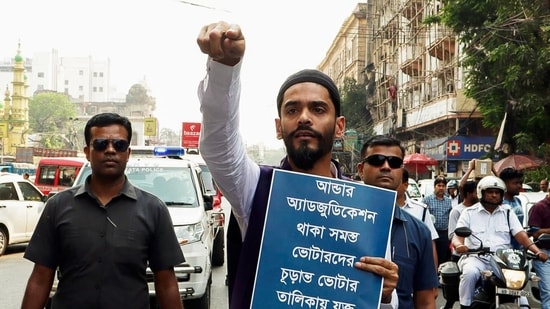
However, the 2023 Panchayat elections served as a glaring indicator of shifting tides. Bhangar witnessed intense clashes between TMC workers and ISF supporters, signaling that the ISF had developed the grassroots organizational muscle to challenge the ruling party physically and politically [Source: Public Electoral Records, 2023]. The ISF’s resilience in the face of alleged state machinery intimidation earned it considerable sympathy among rural voters who felt alienated by local TMC leadership.
In the lead-up to the 2026 elections, Bhangar has transformed from a mere constituency into a powerful symbol of resistance for the ISF. It represents the party’s “ground zero,” from which it is attempting to export its political template to neighboring districts like North 24 Parganas, Howrah, and Hooghly.
## Dissecting the Minority Vote Dynamics
The core of the Trinamool Congress’s electoral invincibility in South Bengal has been the unyielding support of the Muslim community, which constitutes nearly 30% of West Bengal’s total electorate. For over a decade, the TMC has successfully pitched itself as the sole credible bulwark against the BJP’s Hindutva politics.
The ISF threatens to rupture this monolithic voting pattern. By fielding localized candidates and addressing specific community grievances—such as the underrepresentation of minorities in government jobs and the slow pace of development in minority-dominated rural belts—the ISF is asking voters to look beyond the politics of fear.
“The TMC’s narrative that a vote for the ISF is indirectly a vote for the BJP is losing its absolute grip,” notes Dr. Soumyadip Sanyal, an independent political analyst based in Kolkata. “Younger, educated voters in constituencies like Bhangar are asking questions about employment and infrastructure. They are no longer satisfied with merely voting to keep the BJP out; they want proactive governance, and the ISF is capitalizing on this anti-incumbency sentiment.”
## The BJP’s Quiet Strategic Optimism
While the direct conflict in Bhangar and surrounding areas remains a TMC-ISF affair, the Bharatiya Janata Party is closely monitoring the situation with strategic optimism. In India’s first-past-the-post electoral system, the fragmentation of a dominant vote bank often dictates the final outcome.
During the 2021 elections, the BJP struggled to make significant inroads in South Bengal, hitting a geographical ceiling. However, if the ISF manages to siphon off even 10% to 15% of the minority vote in key multi-cornered contests, the winning threshold for the TMC drops significantly. This fragmentation could allow BJP candidates to slip through and secure victories in borderline constituencies where the majority community vote is strongly consolidated behind the saffron party.
The BJP leadership has publicly maintained a distance from the ISF, citing ideological differences. Yet, behind closed doors, BJP strategists acknowledge that a robust performance by the ISF in South Bengal is one of the few mathematical avenues through which the BJP can destabilize the TMC’s absolute majority in the state assembly [Source: India Political Wire Analysis].
## Youth Discontent and the Employment Factor
What sets the 2026 iteration of the ISF apart from its 2021 debut is its deliberate shift toward secular, class-based issues. The shadow of multiple state-level recruitment controversies—particularly the School Service Commission (SSC) scams that rocked the TMC government over the past four years—looms large over this election.
Naushad Siddiqui has actively worked to position himself not as a cleric’s brother, but as a modern, accessible youth leader. The ISF’s rallies in 2026 are heavily populated by young men and women demanding transparency in state employment. By bridging the gap between religious identity and economic marginalization, the ISF has attracted segments of Dalit and Adivasi voters in specific pockets, attempting to recreate the broad-based social coalition that once kept the Left Front in power.
**Key Factors Driving ISF’s 2026 Appeal:**
* **Anti-Corruption Stance:** Relentless targeting of local-level TMC corruption and syndicate raj.
* **Youth Outreach:** Utilizing social media and grassroots town halls to connect with first-time voters.
* **Welfare Critique:** Arguing that state welfare schemes like *Lakshmir Bhandar*, while helpful, are not a substitute for permanent employment and industrial development.
## TMC’s Counter-Strategy and Damage Control
Recognizing the acute threat posed by the ISF, the Trinamool Congress has not remained entirely passive. Under the strategic direction of TMC National General Secretary Abhishek Banerjee, the ruling party has launched an aggressive outreach program targeted specifically at South Bengal’s minority and rural youth.
The TMC’s counter-narrative operates on two fronts. First, they are heavily amplifying the success of direct cash transfer schemes, which have undeniably improved rural liquidity and secured strong support among women voters. Second, the TMC machinery has launched a concerted political campaign labeling the ISF as the “B-team of the BJP,” accusing the Front of being funded by invisible hands to purposefully divide the anti-BJP vote.
“We have seen these seasonal wildcards before,” a senior TMC spokesperson stated during a recent press briefing in Kolkata. “The people of Bengal, particularly in Bhangar and South 24 Parganas, know that only Mamata Banerjee has the national stature and the local resolve to protect their rights. A vote for the ISF is a wasted vote that only empowers communal forces.”
Despite these assurances, the TMC has visibly restructured its district-level leadership in areas where the ISF is gaining ground, removing controversial local figures to neutralize local anti-incumbency—a tacit admission of the pressure the ISF is applying.
## The Broader Implications for Left and Congress
The ISF’s independent strength also poses complex questions for the Left Front and the Indian National Congress. In 2021, the three formed the *Sanjukta Morcha* alliance, which largely failed to yield results. Moving into the 2026 cycle, the dynamics are vastly different. The Left has recognized that the ISF currently commands more actual ground-level mobilization in certain South Bengal pockets than the CPI(M) itself.
Whether the ISF chooses to fight isolated battles, thereby risking vote division, or coordinates tactical understandings with Left-Congress candidates, will heavily influence the final tally. Political experts suggest that the ISF is highly conscious of its bargaining power and is positioning itself to be a potential kingmaker in the event of a hung assembly, however unlikely that scenario might currently appear.
## The Road Ahead for West Bengal
As the multi-phase voting schedule for the West Bengal Assembly elections progresses through April and May 2026, the spotlight remains firmly fixed on the rural and semi-urban belts of South Bengal. The Indian Secular Front, born out of religious influence but maturing into a vehicle for socio-economic grievances, has undeniably broken the TMC-BJP binary in its strongholds.
Whether the ISF can convert its massive rally turnouts and localized street power into a double-digit seat tally remains the defining question of this election. However, its success cannot be measured by seat count alone. By forcing the ruling TMC to fight fiercely to protect its base, and by giving the BJP an indirect numerical advantage in tightly contested zones, the ISF has proven that in the complex theater of Indian politics, a wildcard often dictates the rules of the game.
Ultimately, the political trajectory of Bhangar will serve as a bellwether for West Bengal’s shifting demographics. If the ISF successfully solidifies its position as the legitimate “third option,” it will not just alter the outcome of the 2026 elections, but fundamentally rewrite the socio-political playbook of Bengal for the next decade.