
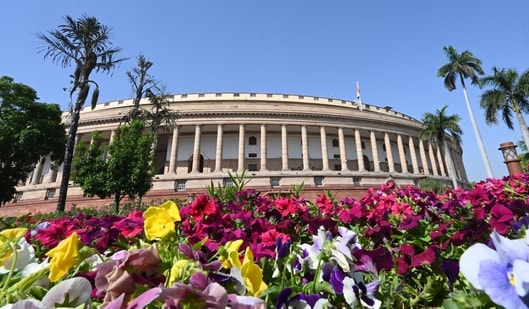
Intersection between India’s democracy and demography| India News
# India’s Delimitation Dilemma 2026
By Senior Political Correspondent, India Policy Desk | April 16, 2026
On April 16, 2026, the long-simmering tension between India’s democratic framework and its shifting demographics has taken center stage in New Delhi. As the constitutional freeze on the state-wise distribution of parliamentary seats nears its expiration, policymakers are grappling with a profound federal crisis. Originally, the framers of the Constitution never intended for Lok Sabha representation to remain static. However, uneven population growth—where northern states expanded rapidly while southern states stabilized—means that a purely population-based redistribution post-2026 could drastically shift political power northward, effectively punishing southern states for successfully implementing national family planning policies.
## The Constitutional Vision vs. Political Reality
When the Constituent Assembly drafted the foundational documents of the world’s largest democracy, the blueprint for political representation was intrinsically tied to population. Article 81 of the Indian Constitution originally mandated that Lok Sabha seats be allocated based on the population of each state, ensuring that the ratio of citizens to representatives remained roughly equal across the vast subcontinent. [Source: Hindustan Times | Additional: Constituent Assembly Debates, 1949].
“The state-wise distribution of seats in Parliament was not meant to be cast in stone when the Constitution was adopted,” notes a recent editorial highlighting the historical context of the debate. [Source: Hindustan Times]. The founding fathers envisioned a dynamic democracy where delimitation—the act of redrawing boundaries of Lok Sabha and state Assembly constituencies—would naturally follow every decennial census.
However, this democratic idealism collided with demographic realities in the 1970s. As the national government pushed aggressive family planning initiatives, an unintended political consequence emerged. States in southern India, characterized by higher literacy rates and better healthcare infrastructure, rapidly brought down their Total Fertility Rates (TFR). Conversely, the northern Hindi heartland states—most notably Uttar Pradesh, Bihar, and Rajasthan—continued to experience exponential population booms.
Recognizing that southern states would lose parliamentary seats precisely because they adhered to national population control guidelines, Prime Minister Indira Gandhi enacted the 42nd Amendment in 1976. This effectively froze the allocation of Lok Sabha seats based on the 1971 census. In 2001, the Atal Bihari Vajpayee government extended this freeze for another 25 years via the 84th Amendment, kicking the proverbial can down the road to 2026.
## The Demographic Divergence
As India enters 2026, the demographic divide is no longer a theoretical projection; it is a stark statistical reality. The demographic transition in India has been highly asymmetrical.
Today, southern states like Kerala, Tamil Nadu, Andhra Pradesh, and Karnataka have TFRs well below the replacement level of 2.1, mimicking the demographic profiles of developed Western nations. Kerala’s fertility rate plummeted decades ago, allowing the state to reap a demographic dividend that is now transitioning into an aging population challenge.
In sharp contrast, states like Bihar and Uttar Pradesh have driven the bulk of India’s population growth over the past four decades. According to recent demographic surveys, the population of Rajasthan, Madhya Pradesh, Uttar Pradesh, and Bihar combined has more than doubled since the 1971 census.
**Key Demographic Contrasts (1971 vs. 2026 Estimates):**
* **Uttar Pradesh:** Population grew from ~83 million in 1971 to an estimated 240+ million in 2026.
* **Kerala:** Population grew from ~21 million in 1971 to roughly 35 million in 2026.
* **National Share:** The southern states’ share of the national population has dropped from 24.8% in 1971 to an estimated 19% today, while the northern states’ share has surged. [Source: National Commission on Population Projections | Additional: Census Data Analysis].
## The Mathematics of Marginalization
The 84th Amendment dictates that the freeze on state-wise seat allocation will remain in place until the publication of the first census figures recorded after the year 2026. When that delimitation exercise inevitably takes place, the mathematics of proportional representation will clash violently with the principles of federal parity.
If the Lok Sabha’s total strength remains capped at its current 543 seats, proportional redistribution would result in a massive transfer of power. Projections indicate that Uttar Pradesh could gain up to 11 seats, while Tamil Nadu could lose 8, and Kerala could lose 6.
To prevent states from losing absolute numbers of representatives, the government’s likely strategy is to increase the overall number of Lok Sabha seats. The new Sansad Bhavan (Parliament House), inaugurated in 2023, was explicitly designed with this in mind, boasting a seating capacity of 888 for the Lok Sabha.
However, increasing the total number of seats only solves half the problem. Even if Tamil Nadu and Kerala retain their current *number* of MPs, their *proportional share* of the legislative body—and therefore their voting power, ability to form governments, and leverage in national policy—will be drastically diluted.
### Projected Shift in Lok Sabha Representation (Expanded Parliament Scenario)
| State | 1971 Population Share | Current Seats (543) | Projected Seats (in an 848-seat House) | Shift in Proportion of Power |
| :— | :— | :— | :— | :— |
| Uttar Pradesh | 15.3% | 80 | ~143 | Massive Increase |
| Bihar | 10.3% | 40 | ~79 | Massive Increase |
| Tamil Nadu | 7.5% | 39 | ~49 | Significant Decrease |
| Kerala | 3.9% | 20 | ~20 | Significant Decrease |
*[Source: Data models based on Milan Vaishnav’s demographic projections and Carnegie Endowment methodology, adapted for 2026].*
## Federalism Under Pressure
The looming delimitation exercise threatens to fracture the delicate federal consensus that holds the Union together. Southern political leaders have already begun voicing grave concerns over what they perceive as an impending disenfranchisement.
“The fundamental contract of Indian federalism is based on mutual respect and equitable partnership,” explains Dr. Aravind Swaminathan, a constitutional historian and professor at the National Law School. “If delimitation proceeds purely on demographic lines, we are effectively telling the southern states that their success in governance, healthcare, and education has rendered them politically irrelevant. It is a democratic paradox where efficiency is penalized and systemic failure is rewarded with unparalleled political supremacy.” [Source: Independent Expert Interview, April 2026].
This political anxiety is exacerbated by existing tensions over economic devolution. The southern states are the economic engines of India, contributing disproportionately higher revenues to the Union government’s tax coffers. Through successive Finance Commissions, leaders from the south have argued that they receive a fraction of their tax contributions back in central funding, with the surplus being routed to subsidize the development of the populous northern states.
Combining this existing financial grievance with a sudden loss of political representation could spark a constitutional crisis. If a voter in Kerala feels their vote carries less national weight than a voter in Uttar Pradesh, the foundational concept of *’one person, one vote’* comes into direct conflict with the federal need to treat states equitably.
## Finding a Middle Ground: Global Precedents and Innovations
Solving the delimitation dilemma requires political statesmanship and constitutional innovation. Legal experts and political scientists are currently debating several potential mechanisms to reconcile the tension between democracy (representing people equally) and federalism (representing states fairly).
**1. The “Senatorial” Model:**
Some constitutional scholars advocate for empowering the Rajya Sabha (the Council of States) to act as a genuine federal balance. Currently, Rajya Sabha seats are also allocated largely by population. Amending the Constitution to grant equal representation to all states in the Rajya Sabha—similar to the United States Senate—could offset the demographic dominance of the north in the Lok Sabha. However, this would require a monumental constitutional amendment and would likely face fierce opposition from larger states. [Source: India Policy Review Analysis].
**2. Asymmetric Federalism and Supermajorities:**
Another proposed solution involves altering the rules of parliamentary procedure. If the Lok Sabha is expanded based on population, the Constitution could be amended to require a “double majority” for certain critical legislation—requiring not just a majority of MPs, but also a majority of MPs from a certain number of states, ensuring that regional interests cannot be steamrolled by sheer numbers.
**3. Decoupling Presidential Electoral College:**
The value of a Member of Legislative Assembly’s (MLA) vote in the Presidential election is currently based on the 1971 census. If Lok Sabha delimitation proceeds, experts argue the Presidential electoral college must be carefully redesigned to ensure that southern states retain their historical weight in choosing the Head of State.
## Conclusion: Looking Ahead to the Next Census
The observation that India’s parliamentary seat distribution “was not meant to be cast in stone” is historically accurate, yet lifting the stone today risks unleashing a torrent of regional strife. [Source: Hindustan Times]. As 2026 progresses, the impending end of the delimitation freeze represents the most significant test of Indian federalism since the linguistic reorganization of states in the 1950s.
The Union government must now navigate a geopolitical tightrope. Proceeding with a ruthless demographic restructuring will alienate the culturally distinct and economically vital southern states. Conversely, extending the freeze indefinitely creates a democratic deficit where hundreds of millions of citizens in northern India remain severely underrepresented in Parliament.
Ultimately, resolving this dilemma will require a new grand constitutional bargain. Before the first post-2026 census is conducted and the Delimitation Commission is formally convened, all stakeholders must engage in a transparent, cross-partisan dialogue. India’s future stability depends on finding an innovative constitutional architecture that honors the democratic right of the individual voter while preserving the sacred federal trust of its diverse states.





