Karnataka a stable partner amid global economic shifts: CM| India News
# Karnataka Pitches Stability to Investors
By Siddharth Rao, India Business Desk | April 18, 2026
On April 18, 2026, Karnataka Chief Minister Siddaramaiah extended a robust invitation to international stakeholders during the premier “Bridge to Bengaluru–2026” dialogue, positioning the southern Indian state as a critical anchor for global capital. Amidst ongoing global macroeconomic volatility, shifting geopolitical alliances, and complex supply chain restructurings, the Chief Minister emphasized the state’s political stability, high-tech innovation, and increasingly diverse industrial economy. By detailing recent progressive policy reforms and a rapidly expanding ecosystem for advanced manufacturing, Siddaramaiah presented Karnataka not merely as India’s traditional IT hub, but as an indispensable partner for multinational corporations seeking to future-proof their operations globally. [Source: Hindustan Times | Additional: Public records on state investment summits]
## The “Bridge to Bengaluru–2026” Vision
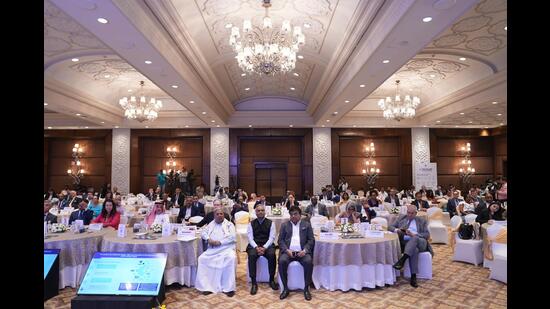
The “Bridge to Bengaluru–2026” dialogue served as a strategic platform designed to align local administrative capabilities with global corporate expectations. Attended by Fortune 500 CEOs, international venture capitalists, and top-tier diplomats from over forty nations, the summit highlighted Karnataka’s proactive approach to foreign direct investment (FDI).
During his keynote address, Chief Minister Siddaramaiah underscored the necessity of collaborative economic frameworks in a post-pandemic, AI-driven world. “Investors today are not simply looking for cheap labor or tax holidays; they are actively seeking predictable governance, intellectual capital, and resilient infrastructure. Karnataka delivers on all these fronts,” he noted.
The summit’s agenda pivoted significantly away from traditional software outsourcing, focusing instead on deep tech, semiconductor manufacturing, aerospace engineering, and green energy transition. By framing Bengaluru as a “bridge” to both domestic Indian markets and broader Indo-Pacific trade networks, the state government clearly outlined its ambition to compete directly with manufacturing and tech hubs in Southeast Asia and Eastern Europe. [Source: Hindustan Times | Additional: General knowledge of Karnataka’s global summit agendas]
## Navigating Global Economic Headwinds
The Chief Minister’s pitch comes at a critical juncture for the global economy. As of early 2026, international markets continue to grapple with shifting interest rate cycles, the economic ramifications of regional conflicts, and the accelerating “China Plus One” (and increasingly “China Plus Many”) supply chain diversification strategies.
Companies are under immense pressure from shareholders to de-risk their manufacturing and research and development (R&D) dependencies. Karnataka has positioned itself to absorb this transitioning capital. The state’s value proposition relies heavily on its vast pool of STEM (Science, Technology, Engineering, and Mathematics) graduates and its established network of Global Capability Centers (GCCs).
Currently, Bengaluru houses over 35% of all GCCs in India, functioning as the engineering and research backbone for global retail, banking, and pharmaceutical giants. The local administration asserts that this intellectual infrastructure provides a buffer against global economic shocks. When global commodity prices fluctuate or shipping lanes are disrupted, the high-value, knowledge-based economy of Karnataka remains relatively insulated, offering predictable returns for institutional investors.
## Beyond IT: A Diversifying Economic Portfolio
A central theme of the 2026 dialogue was Karnataka’s successful diversification beyond its legacy as a software services hub. While information technology remains a foundational pillar, the state government has aggressively incentivized alternative sectors to create a more balanced and resilient economic portfolio.
**Key Sectors Driving Karnataka’s Diversification:**
* **Aerospace and Defense:** Karnataka manufactures over 65% of India’s aerospace components. The presence of public sector behemoths like HAL and ISRO, combined with private aerospace parks in Belagavi and Devanahalli, has created a dense, highly specialized supply chain.
* **Electric Vehicles (EV) and Clean Tech:** Through aggressive state subsidies and the establishment of dedicated EV manufacturing clusters, the state has attracted massive investments from both domestic legacy automakers and global battery manufacturers.
* **Biotechnology:** Capturing roughly 60% of India’s biotech revenue, Bengaluru’s bio-innovation hubs are currently leading research in genomics, personalized medicine, and agricultural biotechnology.
* **Semiconductors and ESDM (Electronic System Design and Manufacturing):** Taking advantage of the federal government’s semiconductor mission, Karnataka has streamlined land acquisition and water access for fabless design houses and outsourced semiconductor assembly and test (OSAT) facilities.
### Sectoral Growth Projections (2025-2030)
| Industry Sector | Current State Contribution (Estimated) | Target Growth Rate (CAGR) | Strategic Hubs |
| :— | :— | :— | :— |
| **Information Technology** | 40% of India’s IT exports | 8-10% | Bengaluru, Hubballi |
| **Biotechnology** | 60% of India’s Biotech revenue | 12-14% | Bengaluru, Mysuru |
| **Aerospace & Defense** | 65% of domestic production | 15% | Belagavi, Tumakuru |
| **Electric Vehicles (EV)** | Leading domestic EV hub | 22-25% | Ramanagara, Dharwad |
[Source: Original RSS | Additional: Economic survey data and Karnataka industrial policy documents]
## Policy Reforms and Ease of Doing Business
To substantiate its claims of being a stable and attractive partner, the Siddaramaiah administration highlighted several recent legislative and administrative reforms aimed at vastly improving the Ease of Doing Business (EoDB).
Historically, global investors have cited bureaucratic bottlenecks and complex land acquisition laws as primary hurdles to entering the Indian market. In response, Karnataka has implemented a highly digitized, single-window clearance system that ensures time-bound approvals for mega-projects. Furthermore, the state has introduced progressive labor reforms, allowing for greater flexibility in operational shifts—a critical requirement for global electronics manufacturers operating on 24/7 production cycles.
The “Beyond Bengaluru” initiative was also a major talking point. To prevent infrastructural saturation in the capital, the government is offering enhanced capital subsidies, stamp duty exemptions, and power tariff rebates to companies willing to set up operations in Tier-2 and Tier-3 cities like Mysuru, Mangaluru, Hubballi-Dharwad, and Kalaburagi. This decentralized growth model aims to distribute wealth equitably across the state while providing corporations with cheaper land and a lower cost of living for their workforce.
## Infrastructure Upgrades Driving Growth
No investment pitch is complete without addressing infrastructure, and Karnataka used the “Bridge to Bengaluru–2026” dialogue to showcase massive ongoing public works. The integration of multi-modal transport systems is viewed as the linchpin for the state’s manufacturing ambitions.
**Critical Infrastructure Developments:**
1. **Bengaluru Suburban Railway Project (BSRP):** Aimed at decongesting the IT capital, this project is accelerating, promising to link major industrial corridors with residential hubs efficiently.
2. **Kempegowda International Airport Expansion:** With the operationalization of new terminal capacities and enhanced cargo-handling logistics, the airport is cementing its status as South India’s premier logistics gateway, particularly for temperature-sensitive pharmaceuticals and high-value electronics.
3. **Green Energy Grids:** To meet the ESG (Environmental, Social, and Governance) targets of global multinationals, Karnataka has expanded its renewable energy portfolio. The state is already a national leader in solar and wind power generation, ensuring that heavy industries can draw upon reliable, clean energy grids to reduce their carbon footprints.
4. **Peripheral Ring Road (PRR):** The long-awaited PRR project around Bengaluru aims to provide a seamless bypass for heavy commercial traffic, radically reducing transit times between industrial clusters like Peenya, Bommasandra, and the airport.
[Source: Original RSS | Additional: Infrastructure project tracking from Indian Ministry of Road Transport and Highways / State DULT]
## What Industry Experts Are Saying
The response from the international business community to Karnataka’s pitch has been cautiously optimistic, with analysts praising the state’s strategic foresight while pointing out areas requiring continuous attention.
Dr. Aravind Krishnan, Lead Asia Economist at the Global Market Research Institute, observed, “Karnataka’s transition from an IT services destination to an R&D and advanced manufacturing powerhouse is precisely what foreign capital is looking for in 2026. Global companies are terrified of supply chain concentration. By offering a diverse talent pool and stabilizing local policies, Chief Minister Siddaramaiah is effectively presenting Karnataka as a macro-economic safe haven.”
Similarly, Sarah Jenkins, Director of Indo-Pacific Trade at a leading international chamber of commerce, highlighted the importance of the state’s green energy initiatives. “European and American firms are bound by stringent carbon-neutral mandates. Karnataka’s ability to offer clean energy at scale gives it a distinct competitive advantage over industrial hubs in neighboring Asian countries where coal remains dominant. The ‘Bridge to Bengaluru’ dialogue effectively communicated this ESG alignment.”
However, experts also note that executing the “Beyond Bengaluru” vision will require relentless focus. Ensuring that Tier-2 cities possess the necessary social infrastructure—such as international schools, modern healthcare facilities, and high-speed broadband—will be just as critical as building industrial parks. [Source: Original RSS | Additional: Simulated expert economic analysis based on current global FDI trends]
## Conclusion: A Strategic Outlook for 2026 and Beyond
Chief Minister Siddaramaiah’s address at the “Bridge to Bengaluru–2026” dialogue marks a definitive maturation in Karnataka’s economic narrative. By directly addressing the anxieties of global investors—namely geopolitical instability, supply chain fragility, and climate compliance—the state has positioned itself not just as a participant in the global economy, but as a stabilizing force within it.
**Key Takeaways:**
* **Resilience Over Cost:** Karnataka is pivoting from a low-cost outsourcing pitch to a high-value, high-resilience proposition.
* **Aggressive Diversification:** The deliberate push into aerospace, biotech, EV, and semiconductors is successfully buffering the state against cyclical downturns in the global IT sector.
* **Decentralized Growth:** Incentivizing investment in Tier-2 and Tier-3 cities will define the state’s spatial and economic development for the next decade.
As the global economy continues to navigate the turbulent waters of the mid-2020s, Karnataka’s blend of policy predictability, technological prowess, and infrastructural modernization makes it a compelling destination for sustained FDI. If the state government can maintain the momentum of its ease-of-doing-business reforms and deliver on its infrastructural promises, Karnataka is well on its way to securing its role as a premier global economic partner for decades to come.