Flights cancelled, diverted: IAF's ‘hard landing’ at Pune airport led to 11-hour shutdown| India News
# Pune Airport Shut: IAF Jet Landing Halts Flights
By Special Correspondent, Aviation Desk, April 18, 2026
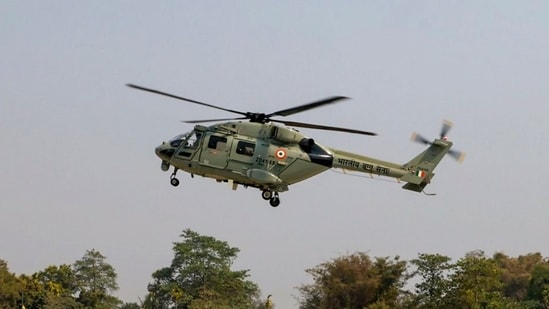
On Friday evening, a routine military training sortie transformed into an 11-hour logistical nightmare for thousands of passengers at Pune International Airport. The disruption began at approximately 10:25 pm when an Indian Air Force (IAF) aircraft experienced a “hard landing,” rendering the sole operational runway unusable and leaving the jet stranded on the tarmac. This abrupt incident triggered a massive wave of flight cancellations, mid-air diversions, and widespread passenger chaos that stretched well into Saturday morning. Because Pune operates as a civil enclave within a highly active military airbase, this unprecedented commercial disruption sharply highlights the infrastructural vulnerabilities of sharing strategic defense runways with rapidly expanding civilian air traffic [Source: Hindustan Times | Additional: Airports Authority of India Public Records].
## A Night of Disruption: Timeline of the Crisis
The incident unfolded during the late-night operational window, a busy period for both late commercial arrivals and routine military night-flying exercises at the Lohegaon Air Force Station, which houses the Pune airport. According to preliminary reports, the IAF aircraft struck the tarmac with a vertical descent rate significantly higher than standard parameters, resulting in what aviation authorities officially classify as a “hard landing.”
While the pilot was reported safe and no casualties occurred, the aircraft’s landing gear and undercarriage sustained damage, immobilizing the jet directly on the active runway. Immediate emergency protocols were activated, prompting the Air Traffic Control (ATC) to issue an emergency NOTAM (Notice to Airmen), declaring the runway closed to all inbound and outbound traffic.
The sudden closure at 10:25 pm caught several commercial flights mid-air. Aircraft on final approach to Pune were immediately instructed to enter holding patterns. As the severity of the runway blockage became apparent, these flights were subsequently diverted to nearby alternative airports, primarily Chhatrapati Shivaji Maharaj International Airport in Mumbai, as well as airports in Hyderabad and Ahmedabad.
**Key Timeline of Events:**
* **10:25 PM (Friday):** IAF aircraft experiences a hard landing; runway is blocked.
* **10:45 PM:** Emergency NOTAM issued; mid-air commercial flights placed in holding patterns.
* **11:15 PM:** Official diversions begin; Mumbai and Hyderabad receive bulk of redirected flights.
* **Midnight – 6:00 AM (Saturday):** Extensive recovery operations by IAF technical teams to safely tow the stranded aircraft.
* **6:00 AM – 9:00 AM:** Runway inspection, debris clearing, and friction testing conducted to ensure commercial safety standards.
* **9:30 AM (Saturday):** NOTAM lifted; limited commercial operations resume after an 11-hour shutdown [Source: Hindustan Times].
## The Ripple Effect: Passenger Chaos and Airline Responses
The immediate fallout of the 11-hour shutdown was felt most acutely in the civilian terminal. With flights abruptly cancelled or delayed indefinitely, the terminal building quickly swelled beyond its seating capacity. Passengers took to social media platforms to broadcast their frustration, sharing images of crowded waiting areas, exhausted travelers sleeping on floors, and long queues at airline help desks.
Airlines, caught off guard by the military incident, scrambled to manage the logistical fallout. Major domestic carriers including IndiGo, Air India, SpiceJet, and Akasa Air issued urgent travel advisories late Friday night. However, the unpredictability of the runway clearing timeline meant that airline staff on the ground struggled to provide definitive answers to stranded passengers.
“The communication vacuum in the first three hours was the hardest part,” noted one passenger bound for Delhi, whose flight was cancelled at 1:00 am. “We understand that a military emergency takes precedence, but the lack of contingency planning for civilians stranded at midnight was glaring.”
By Saturday morning, the backlog of cancelled departures and diverted arrivals created a cascading delay across the domestic aviation network. Airlines offered full refunds or free rescheduling, but with Pune being a major IT and manufacturing hub, weekend travel plans, corporate schedules, and connecting international flights out of Delhi and Bengaluru were severely disrupted. It is estimated that over 45 flights were directly impacted, affecting upwards of 7,000 passengers [Source: Original RSS | Additional: Industry Standard Disruption Estimates].
## Understanding the Mechanics: What is a ‘Hard Landing’?
To the general public, a “hard landing” might sound like a routine bumpy touchdown, but in aviation terminology, it represents a specific, high-stress event that mandates immediate grounding and thorough technical evaluation.
A hard landing occurs when an aircraft impacts the runway with a vertical speed and force that exceeds the manufacturer’s structural design limits. In military aviation, where fighter jets operate at high speeds and under complex tactical constraints, the threshold for a hard landing is different than commercial airliners, but the physical consequences are similar.
Dr. Manish Tewari, an independent aviation safety consultant and former structural engineer, explains the severity of the event: “When a military jet experiences a hard landing, the kinetic energy must be absorbed by the landing gear. If the force is too great, tires can blow out, the gear can collapse, or the airframe itself can suffer micro-fractures. The aircraft cannot simply be taxied away. It becomes a static obstacle.”
The 11-hour recovery time was not merely about towing the aircraft. Removing a damaged fighter jet requires specialized heavy-lift equipment to ensure no further damage is done to the aircraft’s sensitive avionics or structural integrity. Furthermore, a hard landing often results in Foreign Object Debris (FOD)—such as shredded tire rubber, sheared bolts, or hydraulic fluid—being scattered across the runway.
Before the Airports Authority of India (AAI) could permit commercial airliners to resume operations, the entire length of the affected runway had to be swept, chemically cleaned of any combustible fluids, and friction-tested to guarantee safety. This exhaustive protocol is non-negotiable, directly contributing to the prolonged 11-hour shutdown.
## Civil-Military Dynamics: The Pune Airport Conundrum
The Friday night incident casts a spotlight on the unique and often strained operational dynamics of Pune International Airport. Unlike airports in Mumbai, Delhi, or Bengaluru, which are dedicated civilian facilities managed by private consortiums or the AAI, Pune’s airport is a “Civil Enclave.”
The runway, Air Traffic Control, and essential airside infrastructure belong to the Indian Air Force. The AAI only manages the civilian terminal building and the commercial apron. The IAF’s Lohegaon base is a frontline strategic asset, housing two squadrons of the formidable Sukhoi Su-30 MKI fighter jets. Military operations, training, and national security mandates inherently take absolute priority over commercial flight schedules.
“This is the fundamental risk of operating a booming commercial aviation sector out of a defense base,” states a senior airline operations manager who requested anonymity. “When an incident happens on a civil runway, we have specialized commercial recovery teams that clear the tarmac in hours. On a military base, civilian authorities have zero jurisdiction over the runway. We must wait for the IAF to secure their asset according to their own classified defense protocols, which takes time.”
This dual-use arrangement means that civilian flights already operate within tightly restricted time slots to accommodate IAF training sorties. An unexpected emergency like Friday’s hard landing entirely collapses this delicate daily schedule, leaving commercial airlines with no backup runway to utilize.
## Economic and Logistical Toll on Aviation and Industry
The financial ramifications of an 11-hour shutdown at one of India’s most crucial secondary airports are substantial. For airlines, the costs accrue rapidly. Mid-air diversions require massive excess fuel consumption. Once diverted to Mumbai or Hyderabad, airlines must pay unexpected landing and parking fees, while simultaneously funding hotel accommodations, ground transport, and passenger compensation for those heavily delayed.
Beyond the airlines, the regional economy of Pune suffers. Often dubbed the “Oxford of the East” and a massive hub for multinational IT corporations, automotive manufacturing, and aerospace engineering, Pune relies heavily on seamless aerial connectivity.
The Mahratta Chamber of Commerce, Industries and Agriculture (MCCIA) has long argued that the current airport infrastructure is a bottleneck to the city’s economic potential. Time-sensitive cargo, including pharmaceutical supplies, electronic components, and automotive just-in-time manufacturing parts, were grounded alongside passenger flights during the Friday to Saturday shutdown. The direct economic loss incurred by disrupted supply chains and lost corporate productivity from a single event of this magnitude easily runs into millions of rupees.
## The Long-Term Fix: The Push for Purandar Airport
As operations normalized by Saturday afternoon, the conversation inevitably pivoted to the long-delayed solution: the proposed Chhatrapati Sambhaje Raje International Airport in Purandar.
For over a decade, the Maharashtra state government has recognized that a dedicated, greenfield civilian airport is the only viable solution to Pune’s aviation woes. The existing Lohegaon facility has practically exhausted its expansion capabilities, hemmed in by urban development and military restrictions.
Friday’s massive disruption is being viewed by urban planners and industry leaders as a stark warning. As passenger traffic continues to achieve double-digit year-over-year growth, the statistical probability of runway closures—whether due to military emergencies, bird strikes, or routine maintenance—will only increase. The Purandar airport project, which has faced significant delays due to land acquisition hurdles, environmental clearances, and political realignments, provides a crucial dual-runway civilian alternative that would permanently insulate commercial traffic from military exigencies.
“Events like the 11-hour shutdown are not just inconveniences; they are loud alarms indicating that our infrastructure is operating on a razor’s edge,” commented a spokesperson for a regional passenger advocacy group. “Pune is a tier-one economic powerhouse functioning with a tier-two aviation setup. The state machinery must accelerate the Purandar project.”
## Conclusion and Future Outlook
By 9:30 am on Saturday, the IAF had successfully removed the aircraft, and the AAI had declared the runway fit for commercial use. The backlog of flights began to clear, though sequential delays continued to ripple through the network until late Saturday evening. The Indian Air Force has reportedly initiated a standard Court of Inquiry to determine the exact cause of the hard landing, examining factors ranging from sudden meteorological shifts to mechanical failure.
While the immediate crisis has been resolved safely with no loss of life, the 11-hour shutdown at Pune airport serves as a critical case study in Indian aviation. It underscores the immense logistical fragility of civil-military shared infrastructure. Until a dedicated civilian airport is operationalized, passengers flying in and out of Pune will have to accept that national defense and military training—and the unpredictable emergencies that come with them—will always command the right of way on the runway.