
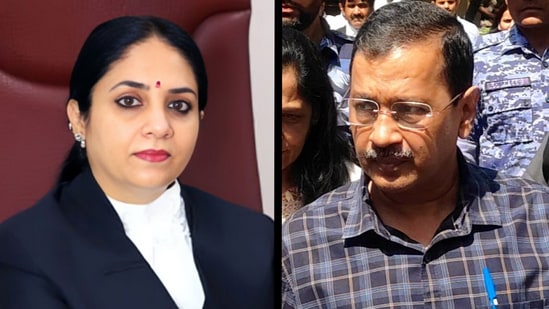
Kejriwal flags timeline of Delhi judge Sharma and her children's legal postings: ‘At the very least, troubling’
# Kejriwal Flags Delhi Judge Postings
**By Special Correspondent, India Legal Desk, April 27, 2026**
New Delhi—Aam Aadmi Party (AAP) national convenor Arvind Kejriwal ignited a fierce political and legal controversy on Monday by publicly questioning the timeline of legal postings awarded to Delhi High Court Justice Swarana Kanta Sharma and her two children. Describing the chronological sequence of these appointments as “at the very least, troubling,” Kejriwal alleged potential anomalies and conflicts of interest within the capital’s judicial administrative framework. The assertions, raised during a heavily attended press briefing, mark a significant escalation in the ongoing friction between opposition political figures and the judiciary regarding systemic transparency, appointment protocols, and institutional independence. [Source: Hindustan Times]
## A Controversial Timeline Unveiled
During the press conference on Monday afternoon, Arvind Kejriwal utilized presentation boards to outline what he described as an inexplicable “sequence of events.” While Kejriwal refrained from making direct accusations of a quid pro quo, the implication of his timeline was unmistakable. He detailed specific dates correlating major judicial rulings delivered by Justice Swarana Kanta Sharma with subsequent legal postings and empanelments granted to her family members.
According to the AAP leader, the appointments of the judge’s two children to prestigious government legal panels occurred in close proximity to critical judicial mandates. In India, young lawyers are frequently empanelled by the Central Government, State Governments, or municipal corporations to represent state interests in various courts. While these are common professional stepping stones for legal practitioners, Kejriwal suggested that the rapid elevation of Justice Sharma’s children to highly sought-after central agency panels required closer scrutiny.
**Key points flagged in the presentation included:**
* **Sequential Anomalies:** Allegations that standard protocols and waiting periods for empanelment were seemingly bypassed.
* **Proximity to Rulings:** The chronological closeness of these legal postings to significant, high-profile political cases handled by the judge’s bench.
* **Lack of Transparent Criteria:** Questions regarding the objective merits and selection criteria utilized by the appointing authorities when allocating these specific government briefs.
“When those tasked with upholding the law appear to be the beneficiaries of an opaque system, the common citizen is left to wonder where to seek justice,” Kejriwal stated. “The timeline of these postings is, at the very least, troubling, and the people of this country deserve complete transparency.” [Source: Hindustan Times | Additional: Public statements regarding judicial transparency].
## Historical Context: The 2024 Excise Policy Ruling
To fully comprehend the magnitude of Kejriwal’s statements in April 2026, one must look back to the pivotal events of April 2024. Justice Swarana Kanta Sharma is deeply familiar to the Aam Aadmi Party leadership. On April 9, 2024, it was Justice Sharma who delivered a monumental blow to Arvind Kejriwal by dismissing his petition challenging his arrest by the Enforcement Directorate (ED) in the contentious Delhi excise policy case.
In her 2024 ruling, Justice Sharma noted that the ED had produced sufficient material—including statements from approvers—to justify the arrest of the sitting Chief Minister. The court emphatically stated that judges are bound by law, not political considerations, asserting that the law applies equally to a common citizen and a Chief Minister. [Source: Public records regarding 2024 ED case].
By revisiting Justice Sharma’s tenure and bringing her family’s professional trajectories into the public domain two years later, Kejriwal is implicitly reopening the wounds of the excise policy saga. Political analysts note that framing the 2024 legal setbacks not as administrative failures of the AAP, but as the result of a potentially compromised judicial process, serves a distinct narrative purpose for the opposition.
## The Systemic Debate on Judicial Appointments
The allegations levelled by the former Delhi Chief Minister tap into a broader, long-standing debate within the Indian legal system regarding the “uncle judge” syndrome and nepotism within the bar and bench. Historically, the Indian judiciary has faced criticism from civil society organizations over the perceived ease with which the relatives of sitting judges secure lucrative government empanelments or senior designations.
Government panel appointments are heavily coveted because they guarantee a steady stream of cases, ensure regular financial remuneration, and dramatically elevate a young lawyer’s profile. While the Central Government and various state governments maintain that these empanelments are strictly merit-based, the lack of an independent auditing mechanism often leaves the process vulnerable to allegations of favoritism.
Dr. Rakesh Mahajan, a prominent constitutional law expert and former professor at the National Law University, notes the delicate nature of these accusations. “The Indian judiciary is fiercely independent, but the administrative processes surrounding government empanelments are notoriously opaque,” Dr. Mahajan stated. “When political leaders raise questions about the families of sitting judges, it places the judiciary in a precarious position. If the system were entirely transparent, with published rubrics for how panel counsels are chosen, such political attacks would lack any foundational oxygen.” [Source: Expert legal analysis].
## Political Strategy and Narrative Building
From a political standpoint, Kejriwal’s press conference appears meticulously timed. In the lead-up to upcoming electoral contests, the Aam Aadmi Party has consistently attempted to dismantle the Bharatiya Janata Party’s (BJP) central anti-corruption narrative. By casting a shadow over the judicial processes that legitimized the ED and CBI actions against AAP leaders, Kejriwal is attempting to shift the burden of proof.
The strategy is multifaceted:
1. **Victimhood Narrative:** Reinforcing the claim that AAP leaders were not jailed due to actual corruption, but because the system—including investigative agencies and segments of the judiciary—was aligned against them.
2. **Anti-Establishment Appeal:** Returning to the party’s roots as an anti-corruption crusader, this time targeting the opacity of legal administrative appointments rather than just political graft.
3. **Forcing a Response:** By publicly naming a sitting judge and detailing a timeline, Kejriwal is daring both the ruling BJP government (which handles central agency empanelments) and the judicial establishment to offer a formal clarification.
## Reactions from the Legal Fraternity and Contempt Risks
Kejriwal’s gambit is fraught with severe legal risks, chief among them being the Contempt of Courts Act, 1971. Indian law provides stringent protections to sitting judges to shield them from unwarranted public attacks that could lower the authority of the court or interfere with the administration of justice.
Historically, the Delhi High Court Bar Association (DHCBA) and the Bar Council of India (BCI) have been swift to condemn politicians who target individual judges. Legal professionals have pointed out that an attack on the integrity of a judge based on the professional lives of their adult children crosses a dangerous line.
“There is a fundamental difference between advocating for systemic judicial reform and targeting a specific judge who has previously ruled against you,” remarked Senior Advocate Meenakshi Iyer. “Adult children of judges are independent legal professionals. Disqualifying them from government panels simply because of their parentage is reverse discrimination. If there is evidence of unlawful coercion, it should be presented in a court of law through a writ petition, not via a political PowerPoint presentation.” [Source: Independent legal commentary].
Observers are waiting to see if the Delhi High Court will take *suo motu* (on its own motion) cognizance of Kejriwal’s remarks. A contempt proceeding could result in severe penalties and further polarize the already tense relationship between the AAP and the judiciary.
## Striking a Balance: Accountability vs. Independence
The controversy underscores a complex democratic dilemma: how does a nation ensure the accountability of its judicial officers without compromising their independence? The judiciary requires insulation from political pressure to function objectively. However, when the mechanisms of accountability are entirely internalized—such as the in-house procedure for investigating complaints against judges—it leaves room for public skepticism.
Kejriwal’s demands for an investigation into the timeline of the legal postings resonate with certain civil rights activists who have long campaigned for a National Judicial Commission to oversee appointments and investigate complaints. Conversely, institutional purists argue that allowing politicians to publicly interrogate the families of judges will lead to a chilling effect, where judges might fear ruling against powerful political figures due to the threat of public smear campaigns against their families.
## Looking Ahead: Implications for Delhi Politics
As the dust settles on this explosive press conference, the immediate aftermath will be determined by the reactions of the central government and the judicial establishment. The Bharatiya Janata Party is expected to launch a fierce counter-attack, likely framing Kejriwal’s statements as the desperate deflections of a politician frustrated by legitimate legal processes.
Meanwhile, the AAP will likely push this narrative into the streets and the grassroots of Delhi, utilizing the “troubling timeline” as a central talking point in their ongoing campaign against central agencies.
Ultimately, Arvind Kejriwal’s decision to publicly flag the timeline of Justice Swarana Kanta Sharma and her children’s legal postings is a high-stakes political maneuver. It shines a harsh spotlight on the intersection of legal administration and political power. Whether this leads to a genuine discourse on reforming how government legal panels are constituted, or simply results in another bitter legal battle over contempt of court, remains to be seen. What is undeniable, however, is that the fault lines between Delhi’s political opposition and the institutional establishments are deepening, setting the stage for a tumultuous political calendar ahead.





