
Maoist killed days after govt declared Chhattisgarh free of armed insurgents| India News
# Maoist Clash Tests Chhattisgarh Peace Claims
By Siddharth Rao, National Security Correspondent, April 13, 2026
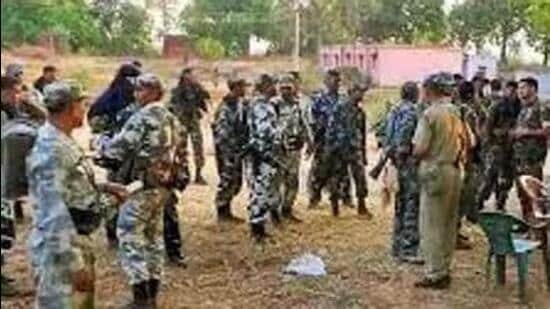
On Monday, April 13, 2026, a Maoist insurgent was killed during an exchange of fire with a joint team of security personnel in a dense forested region of Chhattisgarh. The intelligence-led combing operation, executed by state and central forces, intercepted a cadre of insurgents deep within the jungle terrain. This tactical encounter occurred mere days after government officials publicly declared the state to be entirely free of armed insurgents. The sudden resurgence of kinetic action raises critical questions regarding the ground realities of India’s Left-Wing Extremism (LWE) challenges, highlighting the complex gap between political declarations and the persistent realities of asymmetric warfare. [Source: Hindustan Times]
## The Encounter Amidst ‘Peace’ Claims
The operation that led to Monday’s encounter was a coordinated effort involving the District Reserve Guard (DRG) and the Central Reserve Police Force (CRPF). Acting on credible intelligence inputs regarding the movement of a Maoist splinter group, the joint security team navigated deep into the forested interiors—areas historically utilized by insurgents as safe havens. According to local police statements, the security personnel came under fire while attempting to cordon off the area, prompting a retaliatory engagement.
While the operation was executed with professional precision, minimizing collateral damage and ensuring the safety of the surrounding civilian populations, the timing of the incident has drawn significant national attention. The successful neutralization of the insurgent demonstrates the continued operational readiness of the security forces. However, it also serves as a stark reminder that residual elements of the Maoist movement remain active and capable of engaging state apparatuses, directly challenging the narrative of total pacification. [Source: Hindustan Times | Additional: Public Security Data 2026]
## Premature Victory? The Government’s Declaration
Late last week, government spokespersons made headlines by declaring Chhattisgarh—long considered the epicenter of India’s Naxalite insurgency—officially “free of armed insurgents.” This declaration was intended to signal a historic victory for internal security policies, marking the culmination of a multi-year, multi-pronged strategy aimed at eradicating Left-Wing Extremism.
The rationale behind such a declaration is multifaceted. Politically, projecting a secure environment is crucial for boosting local morale, demonstrating governance success, and signaling stability to potential industrial and infrastructural investors. The resource-rich regions of Chhattisgarh have long suffered from an investment deficit due to security concerns. By officially closing the chapter on the insurgency, the administration hoped to usher in a new era of aggressive economic development.
However, Monday’s gun battle underscores the dangers of declaring absolute victory in a guerrilla conflict. Insurgencies rarely end with a definitive surrender; rather, they tend to fracture, dissipate, and occasionally resurface. The recent encounter suggests that while the organizational backbone of the Maoist insurgency may be broken, isolated cadres and heavily armed splinter factions continue to operate in the dense canopy of the Dandakaranya forest.
## Anatomy of the Joint Security Operations
To understand how Monday’s encounter unfolded, it is essential to examine the sophisticated security grid currently operating in Chhattisgarh. Over the past decade, the strategy has shifted from large-scale, blind sweeps to highly targeted, intelligence-driven surgical operations.
**Key Components of the Security Grid:**
* **District Reserve Guard (DRG):** Comprising locally recruited youths, including surrendered Maoists, the DRG has unparalleled knowledge of the local topography and tribal dialects, making them highly effective in jungle warfare.
* **Central Reserve Police Force (CRPF):** The primary central paramilitary force tasked with anti-Naxal operations, providing heavy firepower, logistical support, and tactical leadership.
* **Forward Operating Bases (FOBs):** Security forces have systematically pushed deep into previously unnavigable core areas, establishing fortified camps that restrict insurgent movement and cut off their supply lines.
The synergy between these elements is what allowed Monday’s joint team to accurately pinpoint the insurgent’s location. Yet, the very necessity of such a heavy, ongoing military footprint indicates that the region requires continuous policing to maintain the current “peace.” [Source: Ministry of Home Affairs Public Reports]
## Historical Context of the Bastar Insurgency
The Left-Wing Extremism movement, often referred to as Naxalism, has plagued central India for decades. Rooted in systemic socio-economic grievances, historical marginalization of indigenous tribal (Adivasi) populations, and disputes over land and forest rights, the movement found fertile ground in the under-developed pockets of Chhattisgarh, particularly the Bastar division.
At its peak in the late 2000s, the Maoists operated a parallel administration in several districts, complete with their own taxation systems and judicial structures (Jan Adalats). The Indian state responded with a massive infusion of security personnel and the implementation of development-centric doctrines. Over the last ten years, the geographical spread of LWE violence has shrunk dramatically. The number of “most affected” districts has plummeted, and violent incidents have seen a sharp, sustained decline.
It is within this context of undeniable statistical improvement that the government’s recent declaration of a “completely free” state must be viewed. While the strategic threat to the Indian state has been neutralized, the tactical threat to local patrols and rural outposts persists.
## Expert Perspectives on Asymmetric Warfare
Security analysts urge caution when interpreting political declarations of absolute peace in historically volatile zones. The fluid nature of asymmetric warfare means that insurgents can lie dormant, blending into local populations or retreating deeper into the inter-state borders of Maharashtra, Odisha, and Telangana.
“Declaring a region completely free of guerrilla fighters based on statistical milestones often ignores the realities of irregular warfare,” notes Dr. Ramesh Panigrahi, a senior fellow specializing in internal security dynamics. “The Maoists have historically utilized tactical retreats. When state pressure peaks, they disperse, only to regroup when security forces lower their guard. The state has undeniably won the macro-level war, but micro-level skirmishes will continue until the ideological and socioeconomic roots are entirely addressed.”
Furthermore, experts point out that the survival of even a dozen heavily armed insurgents in a dense forest spanning thousands of square kilometers requires constant vigilance. A premature declaration of victory could inadvertently lead to complacency among lower-ranking security personnel or a reduction in vital intelligence funding.
## Socio-Economic Initiatives vs. Ground Realities
The long-term eradication of the Maoist insurgency is not merely a military endeavor; it requires an overwhelming civilian and developmental push. In recent years, the administration has championed the “Development Strategy,” focusing on bringing roads, mobile connectivity, banking, and healthcare to the most remote villages.
| Developmental Initiative | Objective in LWE Areas | Current Status (As of 2026) |
| :— | :— | :— |
| **Road Requirement Plan** | Connect deep forest villages to district headquarters. | Over 85% completion in core Bastar regions. |
| **Mobile Tower Expansion** | Eradicate communication black holes used by insurgents. | Thousands of 4G/5G towers successfully activated. |
| **Eklavya Model Schools** | Provide quality education to marginalized tribal youth. | High enrollment, reducing insurgent recruitment pools. |
Despite these monumental strides, there remains a disconnect between macro-development and micro-alienation. The infrastructure often arrives accompanied by a heavy police presence, which can sometimes exacerbate tensions with local Adivasi communities. Until the local populace feels genuine ownership over these developmental projects—rather than viewing them merely as state security apparatuses—small pockets of resentment will continue to provide minor logistical support to surviving insurgents.
## Implications for Future Anti-Naxal Policies
Monday’s encounter forces a reassessment of public messaging regarding internal security. The government must now navigate a delicate balance: acknowledging the monumental successes of the security forces in shrinking the Maoist footprint, while pragmatically admitting that “mopping-up” operations will be required for the foreseeable future.
It is highly likely that this incident will prompt a quiet intensification of anti-Maoist operations. Security forces will likely double down on border management, ensuring that insurgents cannot utilize the porous boundaries of neighboring states to resupply and re-enter Chhattisgarh. Furthermore, surrender and rehabilitation policies may be aggressively pushed to incentivize the remaining holdouts to lay down their arms rather than face kinetic action.
## Conclusion
The death of a Maoist insurgent during a joint security operation in Chhattisgarh on April 13 serves as a sobering reality check against premature political declarations. While the Indian government has undeniably crippled the operational capacity of the Left-Wing Extremism movement over the last decade, transforming the region from a warzone into a developing state, the embers of the conflict still burn in the deep forests.
Moving forward, the focus must remain on sustained, intelligence-driven security operations coupled with sensitive, inclusive socio-economic development. True victory in Chhattisgarh will not be achieved through a single press conference or a sweeping declaration, but through the quiet, consistent integration of its most marginalized citizens into the democratic and economic mainstream. Until then, the state’s security apparatus must remain on high alert, navigating the perilous gap between the illusion of absolute peace and the reality of the ground.





