
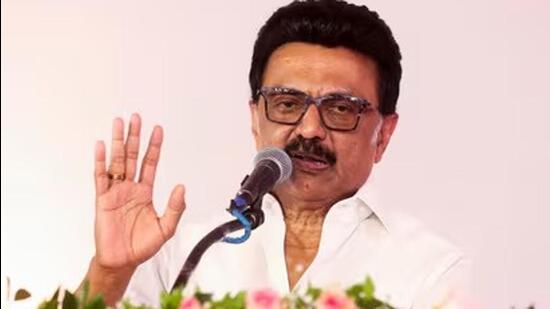
MK Stalin hits out at TVK’s Vijay over his ‘emptied state’s finances’ comment
# Stalin Slams TVK’s Vijay Over Finance Remarks
**By Special Correspondent, India Polity Post, May 10, 2026**
On Sunday, Tamil Nadu Chief Minister M.K. Stalin strongly rebuked Tamizhaga Vettri Kazhagam (TVK) founder and actor-turned-politician Vijay over his recent allegations that the ruling Dravida Munnetra Kazhagam (DMK) government had “emptied the state’s finances.” Speaking amidst the heated atmosphere of the 2026 Tamil Nadu Assembly election season, Stalin robustly defended his administration’s fiscal and administrative track record. He asserted that despite unprecedented economic disruptions—ranging from the global COVID-19 pandemic to devastating regional floods—the state government successfully delivered on its extensive public welfare promises. This sharp exchange marks a significant escalation in the political rivalry between the entrenched Dravidian major and the newly emerged political challenger.
## The Spark: Competing Narratives on Tamil Nadu’s Wealth
The war of words was ignited earlier this week during a massive TVK public rally, where Vijay aggressively targeted the incumbent DMK government’s fiscal management. The actor-politician accused the state leadership of pushing Tamil Nadu into an inescapable debt trap while failing to generate sufficient capital for infrastructure development, effectively claiming they had “emptied the state’s finances” through mismanagement and misplaced priorities.
In a swift and sharp counter-offensive, Chief Minister M.K. Stalin dismissed Vijay’s accusations as politically motivated rhetoric lacking an understanding of governance and macroeconomics. According to the original report, Stalin emphasized that his party implemented countless public welfare schemes despite facing multifaceted challenges. [Source: Hindustan Times | Additional: Public Electoral Records 2026].
“Those who have just entered the political arena and read from prepared scripts do not understand the complexities of running a state as large and dynamic as Tamil Nadu,” Stalin reportedly remarked, taking a veiled dig at Vijay’s cinematic background. The Chief Minister stressed that the government’s coffers were utilized exactly as intended: to shield the most vulnerable populations from economic ruin during back-to-back crises.
## Crisis Management: Navigating COVID-19 and Climate Disasters
A central pillar of Stalin’s defense rests on the historic emergencies his government navigated since assuming power in May 2021. The Chief Minister pointed out that the DMK inherited a heavily strained economy during the brutal second wave of the COVID-19 pandemic. State funds were massively redirected to healthcare infrastructure, emergency relief, and cash transfers to safeguard livelihoods when economic activity had completely ground to a halt.
Furthermore, Tamil Nadu has faced severe climate-induced challenges. The catastrophic Michaung cyclone and subsequent floods in late 2023, followed by unprecedented rainfall in the southern districts of Thoothukudi and Tirunelveli, necessitated massive, unbudgeted expenditures.
Stalin has repeatedly argued that while the state machinery worked tirelessly to rescue citizens and rebuild infrastructure, the financial support from the Union Government was grossly inadequate. “When natural disasters struck, we did not abandon our people citing a lack of funds. We stepped up. We distributed relief directly to the affected families,” Stalin noted, framing the state’s debt not as a result of corruption or mismanagement, but as the cost of compassionate governance. [Source: Hindustan Times | Additional: State Disaster Management Authority Reports 2024-2025].
## Analyzing the State’s Finances: The Debt vs. Growth Debate
Vijay’s allegations tap into a very real macroeconomic concern regarding Tamil Nadu’s fiscal health, an issue heavily debated by economists leading up to the 2026 elections. As of the 2025-2026 state budget, Tamil Nadu’s outstanding debt hovered near the ₹8 lakh crore mark. Opposition parties, including the AIADMK and now TVK, have frequently used this figure to paint a picture of impending financial collapse.
However, financial experts offer a more nuanced view of the situation. While the absolute debt figure is high, Tamil Nadu consistently remains one of the largest and fastest-growing state economies in India, boasting a formidable Gross State Domestic Product (GSDP).
Dr. V. Ramanathan, a Chennai-based political economist, explains the dynamic: “Vijay’s claim that the state’s finances are ’emptied’ is a potent political soundbite, but it lacks macroeconomic nuance. Tamil Nadu’s debt-to-GSDP ratio is generally within permissible limits set by the Fiscal Responsibility and Budget Management (FRBM) Act. However, the rising interest payments on this debt are indeed a structural concern that limits capital expenditure. The DMK’s argument is that human capital investment—which often looks like ‘freebies’ to critics—yields long-term economic dividends.” [Source: Independent Economic Analysis].
## Welfare as an Investment: The Dravidian Model Defended
To counter TVK’s narrative, Stalin vigorously highlighted the flagship schemes implemented under his leadership, labeling them as core components of the “Dravidian Model” of governance—a philosophy that intertwines social justice with economic development.
Key initiatives championed by the Stalin administration include:
* **Kalaignar Magalir Urimai Thogai:** A monthly basic income scheme providing ₹1,000 to over a crore eligible women, intended to recognize uncompensated domestic labor and boost grassroots economic circulation.
* **Chief Minister’s Breakfast Scheme:** A pioneering program offering free morning meals to primary school children across the state, aimed at eradicating child malnutrition and improving school attendance.
* **Pudhumai Penn Scheme:** Financial assistance for girl students pursuing higher education, designed to prevent early marriages and increase female workforce participation.
* **Makkalai Thedi Maruthuvam:** A doorstep healthcare delivery system targeting non-communicable diseases, greatly reducing the out-of-pocket medical expenses for the rural poor.
“Are these the schemes they claim are emptying the state treasury?” Stalin questioned during his address. He argued that these are not mere handouts but vital socio-economic investments. By empowering women, educating children, and ensuring public health, the state is actively building a robust, productive workforce for the future.
## TVK’s Disruption: The Youth Vote and Anti-Incumbency
Despite the DMK’s robust defense, Vijay’s entry into the political arena has undeniably altered the traditional bipolar dynamics of Tamil Nadu politics. Having officially launched Tamizhaga Vettri Kazhagam in early 2024 with his eyes firmly set on the 2026 assembly elections, Vijay is strategically positioning himself as an alternative to both the DMK and the AIADMK.
By focusing on state finances, Vijay is attempting to woo the urban middle class, young professionals, and first-time voters who are increasingly concerned about inflation, employment generation, and the long-term economic stability of the state. His narrative attempts to strip away the ideological armor of the Dravidian parties and focus strictly on governance metrics and anti-corruption.
“Vijay is smartly targeting the fatigue that inevitably sets in after a party has been in power for five years,” notes political strategist Anitha Krishnan. “While welfare schemes are incredibly popular among the rural and lower-income demographics, the aspirational youth demographic wants to see high-paying jobs, better urban infrastructure, and fiscal prudence. Vijay is speaking directly to that latter group by highlighting the debt issue.” [Source: Independent Political Commentary].
## The Broader Implications for State vs. Center Finances
Adding another layer of complexity to Stalin’s defense is the ongoing friction between Tamil Nadu and the Union Government over the devolution of taxes and the allocation of disaster relief funds. The DMK has continually argued that Tamil Nadu is unfairly penalized for its demographic and economic successes by the Finance Commission, receiving less than thirty paise for every rupee it contributes to the central exchequer.
By bringing the focus back to the lack of central support during floods and the pandemic, Stalin is actively shifting the blame for any financial strain away from his administration and toward New Delhi. This strategy serves a dual purpose: it nullifies Vijay’s attacks on local mismanagement while simultaneously reinforcing the DMK’s foundational narrative of championing state autonomy and regional rights against a centralized authority.
## Conclusion: A High-Stakes Battle of Narratives
As Tamil Nadu wades deep into the 2026 electoral battle, the clash between M.K. Stalin and Vijay represents more than just a political skirmish; it is a fundamental debate over the economic philosophy of the state.
Vijay and the TVK are banking on the premise that voters are ready for an administration that prioritizes fiscal austerity, infrastructure capital, and debt reduction over traditional populist measures. On the other hand, Chief Minister M.K. Stalin remains confident that the electorate will reward the DMK for its unwavering commitment to the “Dravidian Model”—a safety net that protected millions during compounding global and environmental crises.
Whether the electorate views the state’s financial burden as the result of reckless emptying of coffers, as Vijay claims, or as the necessary price of a compassionate, welfare-driven government, as Stalin asserts, will ultimately determine the outcome of the impending 2026 legislative assembly elections. The coming weeks will likely see an intensification of these fiscal debates, demanding deeper scrutiny from voters and experts alike.





