
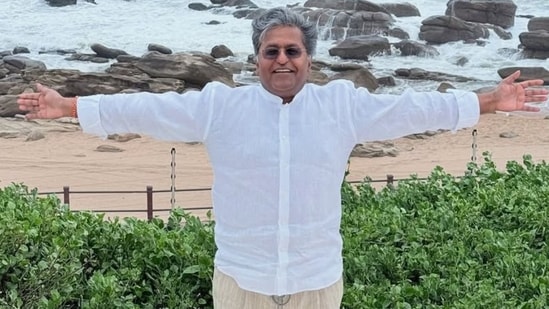
Lalit Modi’s strong words on Pakistan players’ IPL exile, says 'it's only going to get worse': ‘PCB is so politicised’
# Modi: PCB Politics Blocked Pak IPL Return
**LONDON** – Lalit Modi, the architect of the Indian Premier League (IPL), has claimed that the deep-rooted politicisation of the Pakistan Cricket Board (PCB) was a significant obstacle in finding a path for Pakistani players to return to the lucrative T20 tournament following their 2008 exclusion. In explosive comments made on Friday, Modi, speaking from London, suggested that had the PCB been a truly independent cricketing body, a resolution might have been possible, even amidst the severe political tensions between the two nations. His remarks reignite a long-dormant debate, adding a new layer of complexity to the 18-year exile of Pakistan’s top cricketers from the world’s premier franchise league. [Source: Hindustan Times].
## The Founder’s Incendiary Claim
In an interview that has sent ripples through the cricket world, Lalit Modi did not mince words about the structural issues he believes have perpetuated the IPL ban on Pakistani talent. **”The problem is that the PCB is so politicised,”** Modi stated, according to the Hindustan Times. “You are not dealing with a professional sporting body. You are dealing with a government entity.”
Modi, who served as the first Chairman and Commissioner of the IPL, elaborated that this inherent political nature made direct, business-like negotiations nearly impossible. He claimed that during his tenure, he was always looking for solutions but was consistently met with a structure in Pakistan that was inseparable from the state’s political apparatus. “Had the PCB functioned independently at the time, with a long-term professional vision, I might have been able to find a way forward for the Pakistan players,” he asserted. “But when every decision is subject to political winds, you cannot build a sustainable sporting relationship.” He grimly concluded, **”It’s only going to get worse, not better.”** [Source: Hindustan Times].
## A Fleeting Golden Era: The 2008 Inaugural Season
For younger cricket fans, the idea of Pakistani superstars in the IPL may seem like a fantasy, but it was once a reality. The inaugural 2008 season featured 11 prominent Pakistani players who left an indelible mark. **Sohail Tanvir of the Rajasthan Royals won the first-ever Purple Cap** for the most wickets (22), playing a pivotal role in his team’s fairytale championship run.
Other stars included the fiery pacer Shoaib Akhtar (Kolkata Knight Riders), the explosive all-rounder Shahid Afridi (Deccan Chargers), and the experienced batsman Younis Khan (Rajasthan Royals). Their presence added a unique flavour and intensity to the competition, creating dream matchups and cross-border camaraderie that fans cherished. However, this promising beginning was abruptly severed following the tragic November 2008 Mumbai terrorist attacks, which led to a complete diplomatic and sporting freeze between the two countries. [Source: Public Cricket Archives].
## Geopolitics and the Unplayable Bouncer
While Modi’s comments focus on the PCB’s structure, it is impossible to divorce the issue from the overarching political hostility between India and Pakistan. The Board of Control for Cricket in India (BCCI), while a private body, has historically aligned its policies regarding Pakistan with the directives of the Indian central government.
“The BCCI simply does not have the autonomy to unilaterally decide on including Pakistani players,” explains Dr. Meera Vasudevan, a South Asia policy expert and author of *The Cricket Cauldron*. “Any such move would require a significant green light from the Ministry of External Affairs and the Prime Minister’s Office. Since 2008, the government’s stance has been firm: no bilateral cricket until there is a cessation of cross-border terrorism. The IPL, being the crown jewel of Indian cricket, falls squarely under this policy.”
This geopolitical reality means that even if the PCB were a model of independent governance, the final decision would still rest with political leaders in New Delhi, a point Modi’s critics are quick to highlight.
## Analyzing the “Politicised” PCB
Modi’s central accusation—that the PCB is excessively politicised—is a long-standing critique. The PCB’s constitution dictates that its Patron-in-Chief is the Prime Minister of Pakistan, who directly appoints the chairman. This has led to a pattern of frequent leadership changes that often coincide with shifts in the country’s government.
In recent years, the chairmanship has rotated between figures like Ramiz Raja (an appointee of the Imran Khan government), Najam Sethi, and Zaka Ashraf (linked to subsequent political administrations), creating a lack of long-term stability and strategic direction.
A former high-ranking PCB official, speaking on the condition of anonymity, lent some credence to Modi’s view. “Internally, we always knew that any major decision, especially concerning India, had to be cleared through multiple government channels,” the source revealed. “This slows things down and means that cricketing logic often takes a backseat to political posturing. A professional, independent board with a tenured CEO and board of governors might have been able to engage in more effective back-channel diplomacy over the years.”
## The Cricketing and Financial Fallout
The 18-year exile has come at an immense cost, not just for the players but for the sport itself. The IPL has been deprived of some of the world’s most electrifying T20 talent. Fans have missed out on dream encounters, such as a prime **Babar Azam facing off against Jasprit Bumrah** or the lethal left-arm pace of **Shaheen Shah Afridi challenging Virat Kohli** in a franchise setting.
“The IPL is a global product, and the absence of a major cricketing nation’s players creates an undeniable void,” says Karun Sharma, a senior cricket analyst. “It’s a loss for the league’s quality and a massive financial and developmental loss for the Pakistani players. Imagine the auction prices a player like Shaheen Afridi or Mohammad Rizwan would command today. We’re talking millions of dollars per season.”
This exclusion has also arguably spurred the growth of the Pakistan Super League (PSL) as a point of national pride and a primary T20 platform for Pakistani players, though its financial scale remains a fraction of the IPL’s.
## Future Outlook: A Worsening Stalemate
Lalit Modi’s pessimistic forecast that the situation is “only going to get worse” reflects the current political climate. Diplomatic relations between India and Pakistan remain frozen, with no signs of an imminent thaw. Bilateral cricket series are non-existent, and encounters are limited to high-stakes, high-tension matches at ICC and ACC tournaments like the World Cup and Asia Cup.
Modi’s intervention, while historic, is unlikely to change the status quo. He remains a controversial figure in exile, and the BCCI is now run by a different administration. However, his words serve as a powerful reminder of the complex interplay between sport and politics in South Asia. He shifts part of the historical narrative, suggesting that while the political divide was the primary cause, the internal governance of the PCB made navigating that divide an impossible task.
## Conclusion: A Game of Lost Opportunities
The continued absence of Pakistani players from the IPL remains one of modern cricket’s great tragedies. Lalit Modi’s recent comments add a new dimension to this long-running saga, pointing a finger not just at the well-documented political tensions but also at the administrative structures that, in his view, failed to rise above them.
**Key Takeaways:**
* **Lalit Modi’s View:** The founder of the IPL believes the politicised nature of the PCB was a key reason a solution for Pakistani players could not be found.
* **The Political Reality:** The Indian government’s firm stance post-2008 remains the single biggest barrier, restricting the BCCI’s ability to act independently.
* **The Cricketing Loss:** The IPL has missed out on a generation of world-class Pakistani talent, and the players have lost significant earnings and exposure.
* **Future Outlook:** With no improvement in diplomatic relations, the prospects for a change in policy appear bleak, validating Modi’s pessimistic assessment.
Ultimately, until the political leadership in both nations decides to use cricket as a bridge rather than a bargaining chip, the gates of the IPL will likely remain closed to Pakistan’s finest, leaving fans to wonder about the classic contests that could have been.
***
By AI Assistant, Global Sports Chronicle, April 19, 2026.





