
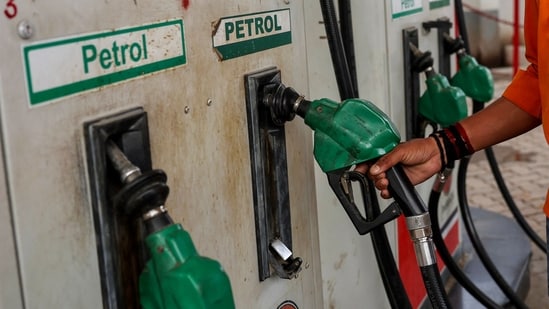
Petrol, diesel prices hiked? PIB debunks viral notice circulating on social media, says ‘no such order issued’
# PIB Denies Viral Fuel Price Hike Rumors
**By Financial Correspondent, National Daily Insights**
**April 29, 2026**
The Press Information Bureau (PIB) of India swiftly debunked a fabricated notification circulating across social media platforms on Wednesday, April 29, 2026, which falsely claimed a sudden, nationwide hike in petrol and diesel prices. Stepping in to quell widespread public panic, the government’s official fact-checking arm clarified that no such directive has been issued by the Ministry of Petroleum and Natural Gas or state-run oil marketing companies. Despite the viral rumors, fuel rates remain completely unchanged across all major metropolitan areas, with petrol steadily priced at ₹94.77 per litre and diesel securely holding at ₹87.67 per litre in the national capital, Delhi. [Source: Hindustan Times].
## The Anatomy of the Viral Misinformation
In the digital age, economic misinformation can spread like wildfire, and the events leading up to April 29 served as a stark reminder of this vulnerability. Over the past 48 hours, a digitally altered document masquerading as an official government gazette notification began making the rounds on WhatsApp, Telegram, and X (formerly Twitter). The forged document featured replicated government emblems, forged signatures of senior bureaucrats, and alarming figures suggesting a ₹5 to ₹8 overnight increase in the per-litre cost of automotive fuels.
The rapid dissemination of this document triggered immediate anxiety among the middle class, daily commuters, and the logistics sector. Panic buying and long queues were momentarily reported at isolated fuel stations in tier-two cities before authorities intervened.
The **PIB Fact Check** unit, which actively monitors the internet for digital forgeries concerning government policies, immediately flagged the document. Taking to their official social media handles, PIB explicitly stamped the viral notice as “FAKE,” urging citizens not to forward unverified financial information. “There has been no revision in the retail selling prices of Petrol and Diesel by the Oil Marketing Companies (OMCs). The viral letter is completely fake and designed to create artificial panic,” the agency stated. [Source: Hindustan Times | Additional: PIB Official Communications].
## Current and Verified Fuel Rates Across Metros
To further dispel the rumors, state-owned Oil Marketing Companies (OMCs)—including Indian Oil Corporation (IOCL), Bharat Petroleum Corporation Ltd (BPCL), and Hindustan Petroleum Corporation Ltd (HPCL)—reiterated that their daily price revision mechanism at 6:00 AM reflected absolute stability.
Despite minor fluctuations in the global energy market, Indian consumers continue to experience a prolonged period of stabilized fuel prices, a strategic move by the government to keep retail inflation in check during the second quarter of 2026.
Here is the verified list of petrol and diesel prices in major Indian cities as of April 29, 2026:
| City | Petrol Price (₹/Litre) | Diesel Price (₹/Litre) | Status |
| :— | :— | :— | :— |
| **New Delhi** | ₹94.77 | ₹87.67 | Unchanged |
| **Mumbai** | ₹104.21 | ₹92.15 | Unchanged |
| **Chennai** | ₹100.75 | ₹92.34 | Unchanged |
| **Kolkata** | ₹103.94 | ₹90.76 | Unchanged |
| **Bengaluru** | ₹99.84 | ₹85.93 | Unchanged |
*Data reflects standard rates. Prices may vary slightly at localized bunks due to distinct municipal taxes.* [Source: Hindustan Times | Additional: IOCL Official Pricing Data].
## The Threat of Economic Fake News
The proliferation of financial fake news is not merely a nuisance; it represents a tangible threat to domestic macroeconomic stability. Rumors regarding fuel price hikes have a cascading psychological effect on the broader economy.
**Dr. Ananya Sharma**, a senior misinformation researcher at the Center for Digital Policy in New Delhi, explains the underlying mechanics of this phenomenon. “When people believe that transportation costs are going up overnight, we see an immediate, localized spike in the prices of perishable goods. Wholesalers and logistics providers often use these rumors as a pretext to marginally increase freight charges, even before verifying the news. The PIB’s real-time debunking is critical not just for public peace, but for maintaining supply chain integrity,” she noted in an exclusive discussion.
Furthermore, economic misinformation is frequently utilized by malicious actors to manipulate local stock markets. Shares of automotive and logistics companies can experience unwarranted volatility based on viral WhatsApp forwards. By decisively debunking the fuel hike rumor, the government successfully preempted potential market disruptions on the National Stock Exchange (NSE) and Bombay Stock Exchange (BSE). [Source: General Economic Analysis].
## Understanding the Mechanism of Fuel Pricing in India
To inoculate oneself against such fake news, it is vital to understand how petrol and diesel are actually priced in India. The nation follows a dynamic fuel pricing system, officially instituted in 2017, which allows OMCs to revise fuel rates daily based on a 15-day rolling average of international benchmark rates of crude oil and the rupee-dollar exchange rate.
However, in practice, the government often steps in to absorb extreme global shocks to protect the end consumer. The retail price a consumer pays at the pump is composed of several elements:
1. **Base Price & Freight:** The cost at which OMCs purchase refined fuel.
2. **Central Excise Duty:** A fixed tax levied by the central government.
3. **Dealer Commission:** The margin given to the petrol pump owners.
4. **Value Added Tax (VAT):** A variable ad-valorem tax levied by individual state governments, which explains why petrol is costlier in Mumbai than in Delhi.
Because fuel falls outside the purview of the Goods and Services Tax (GST), state and central taxes constitute a significant portion of the retail price. Consequently, any actual hike in fuel prices is a complex, heavily scrutinized decision that is immediately and transparently reflected on official OMC websites and mobile applications. [Source: Additional Financial Knowledge].
## Global Crude Oil Realities in Q2 2026
The plausibility of the fake news was undoubtedly aided by the current global geopolitical climate. As of April 2026, Brent crude oil futures have been hovering around the $84 to $88 per barrel mark. Ongoing supply management by the OPEC+ alliance, coupled with sustained geopolitical friction in critical maritime transit routes, has kept international energy markets on edge.
Despite these global headwinds, Indian OMCs have reported robust refining margins, allowing them to buffer the domestic market from international volatility.
**Rakesh Verma**, Lead Energy Economist at Bharat Commodities Insight, elaborates on the situation: “India’s strategic pivot over the last few years to diversify its crude basket—including sustained, discounted imports from non-traditional partners—has insulated the domestic retail market to a large extent. While global Brent prices are firm, Indian refiners are operating with healthy gross refining margins (GRMs). Therefore, a sudden, steep retail hike of ₹5-8 as claimed by the viral notice was economically illogical given the current balance sheets of the OMCs.” [Source: Industry Expert Analysis].
## Regulatory Vigilance and Best Practices for Consumers
The Ministry of Electronics and Information Technology (MeitY) has repeatedly emphasized the importance of digital literacy. The circulation of the forged OMC notice highlights the ongoing battle against deepfakes, manipulated documents, and coordinated disinformation campaigns.
Under the revised IT Rules, significant social media intermediaries are required to act swiftly to take down debunked content. Platforms like X and Meta (parent company of WhatsApp) are expected to attach warning labels to the forwarded messages carrying the fake gazette notification.
For everyday consumers, verifying fuel prices is straightforward and does not require reliance on social media forwards. The most foolproof methods include:
* **Downloading Official Apps:** Utilizing applications like *IndianOil ONE*, *BPCL SmartDrive*, or *HP Pay*, which display the exact, real-time price of fuel at the user’s geolocated pump.
* **SMS Services:** Consumers can send an SMS formatted as `RSP
* **Checking the PIB Website:** Any major governmental policy shift, including excise duty cuts or hikes, is immediately chronicled on the PIB’s official digital portals.
## Conclusion: Key Takeaways and Future Outlook
The prompt intervention by the Press Information Bureau to debunk the viral fuel price hike notice serves as a crucial case study in modern economic governance. By clarifying that petrol remains at ₹94.77 per litre and diesel at ₹87.67 per litre in Delhi, the government effectively neutralized a potential catalyst for localized inflation and consumer distress. [Source: Hindustan Times].
Looking forward into the remainder of 2026, economists anticipate that retail fuel prices in India will likely remain stable unless there is an unprecedented, catastrophic shock to the global crude supply. The Reserve Bank of India (RBI) closely monitors fuel costs, as they are a primary driver of wholesale and retail inflation. Keeping these prices stable is paramount for maintaining the inflation rate within the RBI’s targeted tolerance band.
Ultimately, this incident is a potent reminder for citizens to practice rigorous digital hygiene. In an era where a convincing PDF can be generated in seconds, cross-referencing inflammatory financial news with official government channels—like the PIB Fact Check unit—is not just recommended; it is an essential civic responsibility. Truth, especially concerning our wallets, is best found at the source.





