
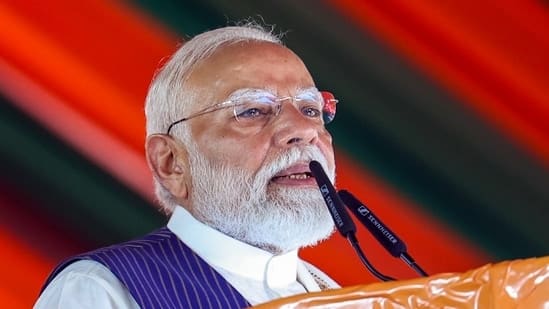
PM Modi best representative of Sangh, says RSS gen secy Dattatreya Hosabale| India News
# Modi: RSS’s Best Representative, Says Hosabale
By Staff Correspondent, New Delhi, April 25, 2026
Prime Minister Narendra Modi is the “best representative” of the Rashtriya Swayamsevak Sangh (RSS) who has successfully propagated the organization’s core cultural and nationalistic values through unique and unprecedented methods, RSS General Secretary Dattatreya Hosabale declared on Saturday. Speaking at a prominent gathering in New Delhi on April 25, 2026, the senior Sangh leader emphasized that Modi’s governance model serves as a modern vehicle for the RSS’s century-old vision. This endorsement comes at a critical juncture as the RSS concludes its centenary celebrations, cementing Modi’s legacy not just as a political titan, but as the paramount ideological torchbearer of the broader Sangh Parivar. [Source: Hindustan Times]
## The Centenary Context: A Century of Ideology
The timing of Hosabale’s remarks is highly significant. Founded in September 1925 by Dr. K.B. Hedgewar, the RSS has recently marked its monumental centenary. Throughout its 100-year history, the organization has evolved from a small cultural group in Nagpur to the ideological parent of the ruling Bharatiya Janata Party (BJP), boasting millions of dedicated *swayamsevaks* (volunteers) worldwide. [Source: Hindustan Times | Additional: Historical Archives]
Hosabale’s characterization of PM Modi as the Sangh’s finest representative is a public acknowledgment of the symbiosis between the RSS’s socio-cultural objectives and the BJP’s state machinery under Modi’s leadership. For decades, the RSS operated primarily on the fringes of state power, relying on grassroots mobilization to foster its vision of *Hindu Rashtra* (a Hindu nation) and cultural nationalism. However, the last twelve years of the Modi administration have witnessed a mainstreaming of these ideals.
By framing Modi as the ultimate ambassador of Sangh values, the RSS leadership is signaling unified satisfaction with the ideological dividends yielded during his tenure. This statement effectively quells any speculative murmurs regarding ideological friction between the BJP’s political pragmatism and the RSS’s cultural purism, presenting a united front as India navigates its post-2024 political landscape.
## Decoding the “Unique Ways” of Propagation
When Hosabale noted that PM Modi propagates RSS values in “unique ways,” he was referring to the administration’s ability to seamlessly weave cultural nationalism into the fabric of developmental and diplomatic governance. Unlike traditional ideological propagation, which relies on rhetoric and grassroots camps, Modi’s approach institutionalizes these values through state policy and global posturing. [Source: Hindustan Times]
Several key milestones highlight this unique methodology:
* **Civilizational Rejuvenation:** The construction and consecration of the Ram Mandir in Ayodhya, the development of the Kashi Vishwanath Corridor, and the revival of ancient heritage sites are framed not merely as religious projects, but as a reclaiming of India’s civilizational ethos.
* **Decolonization of State Symbols:** The installation of the *Sengol* in the new Parliament building, the renaming of colonial-era laws (such as replacing the Indian Penal Code with the Bharatiya Nyaya Sanhita), and the National Education Policy (NEP) 2020 reflect the RSS’s long-standing demand to Indianize the country’s institutional framework.
* **Atmanirbhar Bharat (Self-Reliant India):** The economic push for self-reliance closely mirrors the *Swadeshi* (indigenous) economic philosophy championed by the RSS affiliate, Swadeshi Jagran Manch. PM Modi has repackaged this traditional protectionist stance into a globally competitive manufacturing push.
Through these initiatives, Modi has achieved what previous generations of Sangh leaders could only theorize: translating a culturally assertive Hindu identity into a modernized, aspirational state policy.
## Evolution of BJP-RSS Dynamics
To fully grasp the weight of Hosabale’s endorsement, one must examine the historical evolution of the relationship between the BJP and the RSS. During the tenure of India’s first BJP Prime Minister, Atal Bihari Vajpayee, the dynamic was frequently characterized by tension. Vajpayee’s coalition compulsions often forced him to dilute core ideological commitments, leading to public clashes with then-RSS chief K.S. Sudarshan over economic and cultural policies. [Source: Additional Knowledge / Political History]
In stark contrast, the Modi era represents an era of unprecedented alignment. PM Modi, who spent his formative years as an RSS *pracharak* (full-time worker), inherently understands the Sangh’s organizational psyche. Since assuming office in 2014, and securing subsequent mandates, his government has delivered on the foundational promises of the BJP-RSS manifesto—most notably the abrogation of Article 370 in Jammu and Kashmir, and the facilitation of the Ram Temple in Ayodhya.
Hosabale’s public praise confirms that the RSS hierarchy views Modi not just as a political leader who consults them, but as one of their own who has masterfully executed the organization’s grand strategy. The RSS General Secretary’s remarks underscore a profound mutual trust, suggesting that the ideological parent is entirely comfortable with the immense centralization of political brand-equity around Modi.
## Expert Analysis and Political Implications
Political analysts view Dattatreya Hosabale’s statement as a strategic maneuver with both immediate and long-term implications. By explicitly tying Modi’s political brand to the RSS’s core values, the Sangh is consolidating its voter base while validating its own relevance in modern Indian statecraft.
“This is a watershed statement in the context of the RSS centenary,” notes Dr. Suhasini Rao, a New Delhi-based political historian and author. “For decades, the RSS maintained a measured distance from the day-to-day operations of the BJP, acting as a moral compass rather than a cheerleader. By unequivocally calling PM Modi its ‘best representative,’ the RSS is claiming ownership of his governance successes while simultaneously leveraging his massive global popularity to validate its own ideological journey.” [Source: Independent Expert Analysis]
Furthermore, the endorsement has significant electoral implications. As the BJP prepares for a series of crucial state assembly elections in late 2026 and 2027, maintaining absolute synergy with the RSS’s vast network of grassroots mobilizers is essential. Hosabale’s comments send a clear directive to millions of *swayamsevaks* across the country: the Modi administration is the ultimate political manifestation of their lifelong volunteer work. This ensures maximum voter turnout and grassroots campaigning efficacy, eliminating any potential localized anti-incumbency sentiments against regional BJP leaders.
## Cultural Nationalism as Mainstream State Policy
Beyond electoral politics, the recognition of Modi’s “unique ways” highlights a profound shift in India’s socio-cultural landscape. The RSS has long operated on the belief that political power is merely a tool for broader societal transformation. Under Modi, the state apparatus has been utilized to mainstream what was once considered alternative, right-wing cultural nationalism.
The integration of Yoga into global diplomacy, the promotion of Ayurveda, and the framing of India as the *Vishwa Mitra* (friend of the world) are deeply rooted in the RSS concept of *Vasudhaiva Kutumbakam* (the world is one family). However, Modi has effectively translated these esoteric philosophical concepts into actionable soft-power diplomacy.
Vikram Singh, a political scientist specializing in the Sangh Parivar, explains, “What Hosabale is acknowledging is Modi’s genius in communication. Modi took the RSS’s raw ideological tenets—which critics often labeled as insular or orthodox—and repackaged them into a narrative of national pride, technological advancement, and anti-colonial resurgence. He made the RSS ideology aspirational for the modern, urban Indian youth.” [Source: Independent Expert Analysis]
This societal shift is perhaps the most enduring legacy of the Modi-RSS partnership. The normalization of Hindutva-aligned cultural priorities within the mainstream media, academia, and public discourse represents a comprehensive victory for the RSS in its 100th year.
## Conclusion: A Consolidated Future Outlook
Dattatreya Hosabale’s declaration that Prime Minister Narendra Modi is the “best representative” of the RSS is more than mere political praise; it is a definitive historical assessment by the Sangh Parivar as it steps into its second century. [Source: Hindustan Times]
The key takeaway from this development is the total ideological synthesis between the RSS and the Modi-led BJP government. By recognizing Modi’s “unique ways” of propagating its values, the RSS has validated his synthesis of ancient cultural pride with modern economic and geopolitical ambition.
Looking ahead, this ironclad endorsement ensures that the ideological roadmap for the BJP remains uninterrupted. As India continues its trajectory on the global stage, the overarching narrative will remain deeply anchored in the civilizational values propagated by the RSS and executed by its most prominent *pracharak*-turned-Prime Minister. The synergy between Nagpur (RSS headquarters) and New Delhi has never been stronger, setting a resolute course for India’s domestic and cultural policies in the years to come.





