Portals of Yamunotri, Gangotri, Kedarnath Dham open as Char Dham Yatra commences| India News
# Char Dham Yatra 2026: Holy Portals Open
**By Special Correspondent, The Heritage Desk | April 19, 2026**
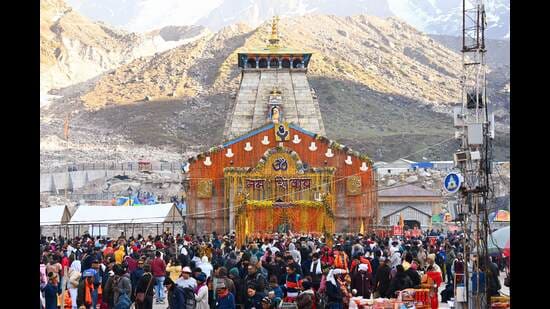
The highly anticipated Char Dham Yatra officially commenced on Sunday, April 19, 2026, as the sacred portals of the Kedarnath, Gangotri, and Yamunotri temples were thrown open to devotees. Coinciding with the auspicious Hindu festival of Akshay Tritiya, the high-altitude Himalayan shrines in Uttarakhand resonated with Vedic chants, the sound of conch shells, and traditional drum beats. Thousands of pilgrims gathered in the freezing morning temperatures to witness the opening ceremonies, marking the beginning of India’s most significant religious tourism season. Organized under strict state supervision, the 2026 pilgrimage promises a spiritually fulfilling and highly regulated experience for global and domestic devotees. [Source: Hindustan Times].
## A Sacred Commencement on Akshay Tritiya
The opening of the shrines is a meticulously timed ritual that follows the Hindu lunar calendar. Akshay Tritiya, considered a day of unending prosperity, traditionally marks the day when the Himalayan deities return to their high-altitude summer abodes.
At **Kedarnath Dham**, dedicated to Lord Shiva and situated at an altitude of 3,583 meters, the grand wooden doors were unlocked exactly at 6:20 AM. The opening was preceded by a specialized ritual where the chief priest (Rawal) and the temple committee members transferred the *Utsav Doli* (festive idol) of Lord Shiva from its winter seat at the Omkareshwar Temple in Ukhimath. The shrine was adorned with nearly 20 quintals of marigold and jasmine flowers, while a contingent of the Indian Army’s Maratha Light Infantry band played devotional tunes.
Simultaneously, in the Uttarkashi district, the portals of **Gangotri** and **Yamunotri** were opened to the public. The idol of Goddess Ganga arrived from her winter retreat in Mukhba village, while Goddess Yamuna was brought in a decorated palanquin from Kharsali. Thousands of devotees took holy dips in the freezing waters of the Bhagirathi and Yamuna rivers before seeking blessings. [Source: Hindustan Times | Additional: Uttarakhand Char Dham Devasthanam Management Board rituals].
## Record Registrations and Regulated Influx
The 2026 season has already witnessed an unprecedented surge in pilgrim interest. According to the Uttarakhand Tourism Development Board, over **1.8 million devotees pre-registered** for the Yatra within the first month of the portal’s launch.
To prevent the chaotic overcrowding seen in previous years and to ensure passenger safety, the state government has implemented a strict daily cap on visitor numbers. The current carrying capacity allows for 15,000 pilgrims per day at Kedarnath, 16,000 at Badrinath, 8,000 at Gangotri, and 5,500 at Yamunotri.
“We are leveraging technology to ensure a seamless Yatra. Mandatory QR-code-based registration, RFID tagging for all commercial vehicles, and real-time crowd monitoring at checkpoints are strictly in place,” explained Dr. Abhinav Rawat, a senior official with the Uttarakhand State Tourism Department. “Pilgrims arriving without prior registration are being respectfully halted at Rishikesh and Haridwar.” [Source: Additional: Uttarakhand Tourism Development Board 2026 framework].
## Enhancing Infrastructure: The All-Weather Road
The logistical backbone of the Char Dham Yatra has seen substantial upgrades in 2026, largely due to the near-completion of the **Char Dham Mahamarg Vikas Pariyojana** (All-Weather Road Project). The 889-kilometer highway network has significantly reduced travel time and minimized the risk of landslides, a perennial threat in the Garhwal Himalayas.
Furthermore, aviation infrastructure has been augmented. Helicopter shuttle services from Guptkashi, Phata, and Sirsi to Kedarnath have been streamlined with a centralized online booking system, eradicating the black-market ticket scalping that plagued earlier seasons. The Directorate General of Civil Aviation (DGCA) has deployed special safety auditors at these helipads to monitor load limits and weather compliance daily.
## Eco-Tourism and Himalayan Sustainability
With millions descending upon the fragile Himalayan ecosystem over a six-month window, environmental degradation remains a critical concern. The state’s push for “Sustainable Pilgrimage” is more aggressive this year.
**Single-use plastics have been entirely banned** along the Yatra routes. The government has partnered with local NGOs to install water ATMs, encouraging pilgrims to use reusable copper or steel bottles. Additionally, ecological task forces have been deployed to manage solid waste generated by mules and horses on the 16-kilometer trek to Kedarnath and the 5-kilometer trek to Yamunotri.
Environmental scientist Dr. Rajesh Nautiyal emphasizes the necessity of these measures: “The carrying capacity of the Himalayas is not infinite. The glaciers feeding the Mandakini and Bhagirathi rivers are highly sensitive to black carbon and localized warming caused by vehicular emissions and waste burning. The rigorous enforcement of eco-norms in 2026 is not just administrative; it is a matter of ecological survival.” [Source: Additional: Independent Environmental Analysis on Himalayan Carrying Capacity].
## Economic Lifeline for Uttarakhand
Beyond its spiritual magnitude, the Char Dham Yatra is the economic engine of Uttarakhand. It contributes significantly to the state’s Gross Domestic Product (GDP), providing livelihoods for hundreds of thousands of residents in the Garhwal region.
From the *dandi-kandi* (palanquin and basket) operators and mule owners to hoteliers, tour guides, and local restaurant (*dhaba*) owners, the Yatra is a six-month window of intense economic activity.
“The local economy relies entirely on a successful Yatra season,” notes Sunil Kumar, President of the Garhwal Hotel and Tour Operators Association. “Following the government’s infrastructure upgrades, we are seeing a shift from budget pilgrimages to premium spiritual tourism. Hotel occupancies in key transit towns like Rudraprayag, Uttarkashi, and Joshimath are already at 100% capacity for the next two months.”
## Prioritizing Pilgrim Health and Safety
The journey to shrines located above 10,000 feet exposes pilgrims to severe weather volatility and the risk of High Altitude Mountain Sickness (AMS), hypothermia, and High Altitude Pulmonary Edema (HAPE). To mitigate health crises, the Uttarakhand Health Department has established **three-tier medical screening checkpoints** along the routes.
Pilgrims aged 50 and above are required to undergo a mandatory health screening before undertaking the treks. Furthermore, portable hyperbaric oxygen chambers, automatic external defibrillators (AEDs), and specialized cardiac teams have been positioned at regular intervals.
“Faith is a powerful motivator, but physiological limits must be respected,” warns Dr. Meena Bisht, a senior medical officer stationed at the Kedarnath base camp. “We strongly advise pilgrims to spend at least 24 to 48 hours acclimatizing in lower-altitude towns like Guptkashi or Barkot before ascending. Ignoring breathlessness or dizziness can be fatal at 11,000 feet.”
To manage natural disasters, battalions of the State Disaster Response Force (SDRF) and National Disaster Response Force (NDRF) have been stationed in highly vulnerable landslide zones, equipped with heavy earth-moving machinery and advanced communication devices. [Source: Additional: State Disaster Response Force 2026 Deployment Plan].
## Badrinath Awaits Its Grand Opening
While Kedarnath, Gangotri, and Yamunotri have officially opened their gates, the portals of the fourth shrine, **Badrinath Dham**, are scheduled to open later this week. Dedicated to Lord Vishnu, the Badrinath temple in the Chamoli district completes the sacred circuit. The chief priest (Rawal) of Badrinath has already initiated the complex rituals to transfer the sacred seat of Lord Badrinath from the Narsingh Temple in Joshimath.
Once Badrinath opens, the Char Dham Yatra will be operating at full capacity, drawing a daily influx of over 40,000 devotees across the four distinct Himalayan valleys.
## Conclusion and Future Outlook
The commencement of the Char Dham Yatra 2026 on Akshay Tritiya signals a harmonious blend of ancient Hindu traditions and modern administrative governance. As the rhythmic Vedic chants echo through the peaks of Yamunotri, Gangotri, and Kedarnath, the pilgrimage reflects India’s enduring spiritual heritage.
Looking ahead, the success of the 2026 season will rely heavily on the continuous cooperation between state authorities, local stakeholders, and the pilgrims themselves. By adhering to registration caps, respecting health advisories, and maintaining a commitment to zero-plastic eco-tourism, devotees can ensure that the divine Himalayan shrines remain preserved for generations to come.