
President renominates Harivansh Narayan Singh to Rajya Sabha| India News
# President Renominates Harivansh To Rajya Sabha
By Senior Political Correspondent, The National Desk, April 10, 2026
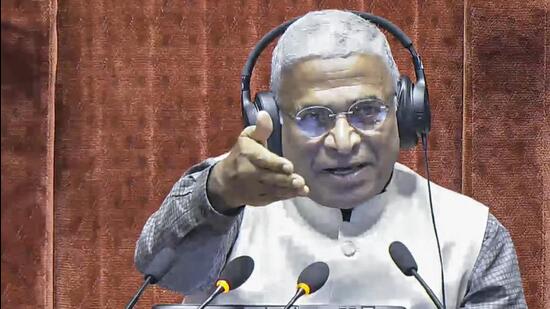
**NEW DELHI** — The President of India has officially renominated veteran journalist and seasoned parliamentarian Harivansh Narayan Singh to the Rajya Sabha. The announcement, confirmed early Friday, exercises the President’s constitutional prerogative under Article 80 to appoint distinguished individuals to Parliament’s Upper House. Singh, who has served with distinction as the Deputy Chairman of the Rajya Sabha, returns to the legislative fold recognized for his decades-long contributions to literature, journalism, and social service. This strategic renomination ensures critical continuity in parliamentary leadership while honoring a career dedicated to regional empowerment and democratic discourse. [Source: Hindustan Times].
## The Constitutional Framework Behind the Nomination
The architecture of India’s Parliament was meticulously designed by the framers of the Constitution to ensure a balance of popular representation and domain expertise. **Article 80 of the Constitution of India** mandates the composition of the Rajya Sabha, stating that the Council of States shall consist of no more than 250 members. Crucially, **Article 80(1)(a) read with Article 80(3)** empowers the President of India to nominate up to 12 members to the Upper House.
These nominations are strictly reserved for individuals who have acquired special knowledge or practical experience in four distinct categories: **literature, science, art, and social service**.
Harivansh Narayan Singh’s renomination falls squarely within the realms of literature and social service, acknowledging his transformative impact on Hindi journalism and public awareness. By utilizing this constitutional provision, the President brings non-partisan expertise into the legislative arena, ensuring that the debates in the “House of Elders” are enriched by seasoned professionals who are not bound by the immediate pressures of electoral politics. [Source: Original RSS | Additional: Constitution of India].
## From Prabhat Khabar to Parliament: A Legacy of Literary Service
To understand the weight of this renomination, one must look at Singh’s expansive career before he entered the corridors of power. Born in the Ballia district of Uttar Pradesh, Harivansh spent over four decades as an active journalist. He is most widely celebrated for his tenure as the Chief Editor of *Prabhat Khabar*, a Hindi daily based in Ranchi, Jharkhand.
When Singh took the helm of the newspaper in 1989, it was struggling to survive. Under his leadership, *Prabhat Khabar* transformed into a formidable voice for the marginalized, particularly in the socio-economically complex regions of Bihar and Jharkhand. His editorial direction was marked by fearless reporting on systemic corruption, including breaking major stories on the infamous fodder scam in the 1990s.
“Harivansh Narayan Singh did not just report the news; he utilized the printing press as an instrument for profound social service,” explains Dr. Rajiv Verma, a media historian at the Indian Institute of Mass Communication. “His nomination under the literature and social service quota is a testament to the idea that regional journalism is a vital pillar of Indian democracy.” [Source: Additional: Media Archives].
Beyond daily news, his literary contributions include several books and essays documenting the political and social evolution of the Hindi heartland, cementing his qualification under the constitutional mandate for literature.
## Steering the Upper House: A Steady Hand at the Helm
Harivansh first entered the Rajya Sabha in 2014 as a representative of the Janata Dal (United) from Bihar. He quickly earned the respect of his peers across the aisle, leading to his election as the **Deputy Chairman of the Rajya Sabha in August 2018**, a position to which he was re-elected in 2020.
His tenure as Deputy Chairman has been characterized by a calm, soft-spoken demeanor, even during some of the most turbulent legislative sessions in recent Indian history. He presided over the passage of highly contentious bills, navigating intense parliamentary disruptions with a firm adherence to the rulebook. His ability to maintain decorum and facilitate debate, often working late into the night, has been widely acknowledged by both the ruling National Democratic Alliance (NDA) and the opposition blocs.
This renomination by the President recognizes not just his past career, but his institutional memory. In an increasingly polarized political climate, having a seasoned arbiter like Singh in the Upper House provides a stabilizing force.
## Navigating the Bipartisan Divide
While nominated members of the Rajya Sabha are technically unaffiliated and expected to act as independent voices of expertise, Harivansh’s political roots with the JD(U) add an interesting layer to his return. However, entering through the Presidential nomination route under Article 80 traditionally requires the member to adopt a statesman-like, apolitical stance.
According to parliamentary rules, a nominated member has the option to join a political party within the first six months of their nomination; otherwise, they remain an independent member for the duration of their six-year term. Given his previous role as Deputy Chairman—a position that inherently demands neutrality—political observers anticipate that he will maintain a non-partisan posture to effectively serve the House.
“The decision to bring Harivansh back via the Presidential quota is a strategic masterstroke,” notes Suhasini Rao, a senior political analyst at the Centre for Policy Research. “It allows the Parliament to retain a highly effective presiding officer without directly entangling his seat in the complex electoral arithmetic of state legislative assemblies. It underscores a consensus that his institutional value transcends typical party politics.” [Source: Additional: Political Analysis].
## The Evolving Role of the Rajya Sabha’s Nominated Cohort
The cohort of 12 nominated members has historically featured luminaries ranging from scientists and artists to sportspersons and legal luminaries. Past nominees have included the likes of boxer Mary Kom, cricketing legend Sachin Tendulkar, and former Chief Justice of India Ranjan Gogoi.
However, the efficacy and participation of nominated members have frequently been subjects of public debate. Critics often point to the low attendance records and minimal debate participation of celebrity nominees. Harivansh Narayan Singh’s appointment stands in stark contrast to this trend. As a career parliamentarian and former presiding officer, he brings an unparalleled understanding of legislative procedure.
His presence elevates the functional capability of the nominated bloc. Rather than being a ceremonial figurehead, Singh is expected to be deeply involved in committee work, legislative drafting, and the day-to-day management of parliamentary affairs. His appointment signals a preference for functional expertise and active legislative participation in the utilization of the Article 80 quota.
## Legislative Priorities for the 2026 Calendar
As India moves deeper into 2026, the Rajya Sabha faces a dense and complex legislative agenda. The Parliament is slated to debate crucial bills regarding digital privacy, artificial intelligence regulation, sweeping labor reforms, and climate change mitigation strategies.
Passing legislation in the Rajya Sabha requires meticulous negotiation, as the arithmetic of the Upper House often differs from the Lok Sabha. The role of the Deputy Chairman—and indeed, of respected senior members who can build consensus across party lines—is vital to prevent legislative gridlock.
Harivansh’s established rapport with floor leaders across the political spectrum will be an invaluable asset to the government and the opposition alike. His deep understanding of the agrarian economy, regional disparities, and media ethics—honed during his years in journalism—will provide crucial insights during parliamentary debates on these emerging sectors.
## Conclusion: A Commitment to Institutional Continuity
The President’s renomination of Harivansh Narayan Singh to the Rajya Sabha on April 10, 2026, is a reaffirmation of the enduring value of experienced leadership in India’s legislative framework. By invoking Article 80 to recognize his contributions to literature and social service, the move elegantly bridges Singh’s journalistic legacy with his contemporary parliamentary duties.
**Key Takeaways:**
* **Constitutional Mandate:** The nomination utilizes Article 80 of the Constitution, which allows the President to appoint 12 members to the Rajya Sabha from fields like literature and social service.
* **Journalistic Legacy:** Harivansh’s four-decade career, notably as Editor-in-Chief of *Prabhat Khabar*, justifies his nomination under the literature and public service categories.
* **Institutional Stability:** His proven track record as Deputy Chairman ensures that the Rajya Sabha retains a calm, experienced arbiter for future legislative sessions.
* **Enhanced Nominated Cohort:** Unlike ceremonial appointments, Singh brings procedural expertise, setting a high standard for the active participation of nominated MPs.
As Parliament prepares for the rigorous debates of 2026, Harivansh Narayan Singh’s return to the Upper House guarantees that the voice of the Hindi heartland, the rigor of journalistic inquiry, and the grace of seasoned statesmanship will continue to echo through its halls.





