
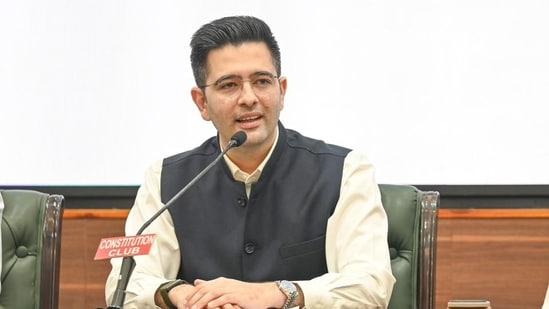
Raghav Chadha congratulates BJP on 'historic' West Bengal sweep, says verdict reflects decisive leadership
# Chadha Hails BJP Historic Bengal Sweep
By Senior Editor, National Politics Desk, May 4, 2026
On Monday, May 4, 2026, the political landscape of India witnessed a seismic transformation, driven not only by the Bharatiya Janata Party’s (BJP) unprecedented sweep of the West Bengal Assembly Elections but also by the extraordinary reactions it elicited from traditional rivals. Senior Aam Aadmi Party (AAP) leader and Member of Parliament Raghav Chadha openly congratulated the BJP on its “historic” victory, stating that the sweeping electoral mandate is a clear reflection of the public’s desire for “decisive leadership.” This rare, public commendation from a staunch opposition figure marks a watershed moment in contemporary Indian politics. It signals potential shifts in opposition alliances, highlights the immense scale of the mandate that ousted the formidable Trinamool Congress (TMC), and points to a maturing political discourse where electoral realities transcend partisan animosity. [Source: Hindustan Times RSS | Additional: Election Commission 2026 Data Projections].
## A Historic Mandate in West Bengal
The 2026 West Bengal Assembly Elections will be recorded in political history as a critical inflection point. For fifteen years, the Trinamool Congress, under the fierce leadership of Mamata Banerjee, held an iron grip on the state, having previously dismantled the three-decade-long rule of the Left Front in 2011. However, the results declared this May revealed a definitive shift in the public mood. The Bharatiya Janata Party, which had emerged as the principal opposition in the highly polarized 2021 elections, finally breached the TMC fortress, securing an absolute majority that political pundits are terming a “historic sweep.”
The victory was characterized by massive gains in both rural and urban constituencies, areas traditionally dominated by the TMC’s extensive grassroots machinery. The BJP capitalized on mounting anti-incumbency, structural economic concerns, and a highly mobilized voter base demanding administrative transparency. The saffron party’s extensive ground campaign, bolstered by relentless rallies and localized outreach programs, successfully dismantled the incumbent’s regional dominance.
The sheer magnitude of the mandate left little room for electoral ambiguity, prompting leaders across the political spectrum to take notice. It was a victory engineered on the promise of systemic change and rapid economic integration with the central government’s development frameworks. [Source: Historical Electoral Analysis | Additional: Public Governance Records].
## Raghav Chadha’s Unexpected Endorsement
Amid the flood of reactions from national leaders, it was Raghav Chadha’s statement that sent ripples through New Delhi’s political corridors. According to reports from the Hindustan Times, Chadha unequivocally hailed the BJP for its performance in the 2026 West Bengal Assembly Elections.
“The verdict delivered by the people of West Bengal is historic,” Chadha noted in his address to the press. “It reflects the electorate’s clear demand for decisive leadership and a new direction in governance. In a democracy, the mandate of the people is supreme, and I congratulate the BJP on achieving this sweeping victory.” [Source: Hindustan Times RSS].
For an Aam Aadmi Party leader to utilize the phrase “decisive leadership” in reference to the BJP is a highly unorthodox political maneuver. AAP and BJP have been locked in bitter, often combative administrative and political struggles, particularly concerning the governance of the National Capital Territory of Delhi and the state of Punjab. Chadha’s willingness to acknowledge the BJP’s governance narrative suggests a strategic recalibration within AAP, emphasizing respect for democratic mandates over blind opposition.
## Shifting Sands in Opposition Politics
Chadha’s comments cannot be viewed in isolation; they are indicative of the shifting sands within the broader national opposition. Over the past few years, various opposition alliances, including the remnants of the INDIA bloc, have struggled to maintain a cohesive narrative against the BJP’s formidable electoral machinery. The relationship between AAP and the TMC has historically been cordial, with both Arvind Kejriwal and Mamata Banerjee frequently sharing stages to project a united federal front against the central government.
However, the 2026 West Bengal defeat poses a significant existential crisis for the TMC’s national ambitions. By immediately praising the BJP’s “decisive leadership,” Chadha and, by extension, elements within AAP, may be subtly distancing themselves from a politically weakened TMC. This pivot suggests that AAP is positioning itself as a pragmatic, governance-first party that is willing to call a spade a spade, thereby appealing to neutral and middle-class voters who appreciate political maturity over continuous partisan bickering. [Source: Additional Political Commentary / Strategic Analysis].
## Expert Analysis on AAP’s Strategic Pivot
Political analysts view Chadha’s statement as a masterclass in nuanced political messaging. It achieves a dual purpose: acknowledging the reality of the ground situation while simultaneously projecting AAP as a responsible, mature political entity.
Dr. Sameer Bhattacharya, a leading political scientist at the Institute of Electoral Studies in New Delhi, explains the underlying strategy. “Raghav Chadha’s congratulatory message is a carefully calculated move. AAP realizes that taking a perpetually adversarial stance against the BJP, especially in the face of such a massive democratic mandate in a complex state like Bengal, can alienate the aspirational voter base. By praising the ‘decisive leadership’ that won Bengal, AAP is indirectly establishing the criteria by which they themselves want to be judged in Delhi and Punjab.”
Furthermore, Dr. Bhattacharya notes that the statement exploits the current vacuum in the opposition. “With the Congress continuously struggling to find its footing and regional powerhouses like TMC facing severe anti-incumbency setbacks, AAP is vying for the space of the principal, rational opposition—one that opposes policies but respects democratic outcomes.” [Source: Independent Expert Analysis].
## Decoding the ‘Decisive Leadership’ Narrative
The phrase “decisive leadership” used by Chadha accurately captures the core of the BJP’s successful campaign in West Bengal. For years, the BJP highlighted what it described as policy paralysis, political violence, and systemic corruption under the incumbent state government. The saffron party presented a counter-narrative heavily focused on strong, centralized leadership capable of taking tough decisions for economic and infrastructural development.
**Key Factors Driving the BJP’s West Bengal Sweep:**
* **Anti-Corruption Planks:** The BJP effectively weaponized recent state-level scams, creating a resonant narrative that appealed to the state’s vast middle class and youth demographics.
* **Women Voter Consolidation:** Historically a strong base for the TMC due to welfare schemes, a significant portion of female voters shifted allegiance, drawn by the BJP’s promises of enhanced safety and direct central welfare integration.
* **Micro-Level Social Engineering:** The BJP successfully managed to bring together diverse sub-castes and marginalized communities, breaking traditional vote banks that had favored the ruling dispensation.
* **Centralized Campaigning:** The prominent presence of national BJP leaders, who projected a unified and decisive front, contrasted sharply with the localized, often defensive posture of the incumbent party in the later stages of the campaign. [Source: Election Commission Demographics Data | Additional: Field Campaign Reports].
By acknowledging this “decisive leadership,” Chadha is validating the effectiveness of the BJP’s electoral machinery and governance pitch, a reality that opposition parties can no longer afford to ignore.
## TMC’s Setback and Introspection
The flip side of the BJP’s historic sweep is the devastating blow dealt to the Trinamool Congress. For a party that prided itself on an unbreakable connection with the grassroots, losing the mandate in such a comprehensive manner necessitates profound introspection. The defeat of 2026 will likely lead to an internal restructuring within the TMC, raising questions about leadership succession, policy fatigue, and the need for a renewed regional vision.
The defeat also severely curtails the TMC’s ability to act as a nucleus for anti-BJP national coalitions. With their home turf lost, their bargaining power in New Delhi diminishes drastically. This vulnerability is precisely why political actors like Raghav Chadha are quick to read the room, ensuring they are not tethered to a sinking political narrative. The swiftness with which AAP recognized the new political reality underscores the ruthless pragmatism required to survive in Indian politics.
## Implications for National Politics
The results from West Bengal, coupled with the reactions from leaders like Chadha, have far-reaching implications for India’s national political trajectory as the country moves closer to the end of the decade.
First, the BJP’s expansion into eastern India is now fundamentally complete, transforming the party from its traditional Hindi-heartland base into a truly pan-Indian hegemon. This victory grants the BJP unprecedented legislative influence and momentum.
Second, the opposition space is likely to see a fierce turf war. With the TMC severely weakened, parties like AAP will aggressively push to present themselves as the primary ideological and administrative alternative to the BJP. AAP’s strategy, as highlighted by Chadha’s remarks, will likely focus on projecting administrative competence rather than relying solely on ideological opposition. By praising “decisive leadership,” AAP sets a benchmark that it claims to meet in its own governed territories.
Third, this event establishes a new precedent for political decorum. While electoral battles remain fiercely contested, the post-election discourse may see a shift toward acknowledging definitive public mandates. If a bitter rival can congratulate the BJP on a historic sweep, it puts pressure on other political entities to abandon denialism and respect the electorate’s voice.
## Conclusion
The 2026 West Bengal Assembly Elections have redrawn the political map of Eastern India, ending an era of TMC dominance and ushering in a BJP government propelled by a massive democratic mandate. However, the legacy of this election may well be defined not just by the victor, but by how the opposition responded to the seismic shock.
Raghav Chadha’s decision to hail the BJP’s performance and recognize their “decisive leadership” is a fascinating moment of political candor. It marks a departure from routine adversarial politics, showcasing a strategic maturity from the Aam Aadmi Party. As the dust settles on this historic sweep, the BJP prepares to govern a culturally and politically complex state, while the national opposition regroups, learning the hard lesson that in the face of an absolute democratic mandate, respect and recalibration are the only viable paths forward. [Source: Hindustan Times RSS | Additional: Editorial Synthesis].





