
Women’s quota being used as political tool before delimitation, says Tamil Nadu CM Stalin| India News
# Stalin Slams Quota Delimitation Link
By Rajesh Kumar, India Policy Review
April 11, 2026
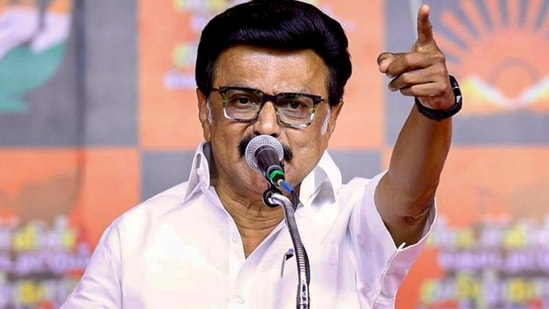
**CHENNAI** — Tamil Nadu Chief Minister M.K. Stalin has sharply criticized the Union government, accusing it of weaponizing the implementation of the Women’s Reservation Act as a political instrument ahead of the highly contentious nationwide delimitation exercise. Speaking at a public forum on Saturday, the Dravida Munnetra Kazhagam (DMK) president demanded the immediate rollout of the 33% parliamentary quota for women, arguing it must be decoupled from the redrawing of electoral constituencies. “The women’s reservation must be implemented immediately without showing delimitation as a reason,” Stalin asserted, highlighting southern India’s growing anxiety over demographic penalization. [Source: Hindustan Times | Additional: Public Statements, April 2026].
## The Core Conflict: Representation vs. Reapportionment
The legislative framework at the center of this debate is the *Nari Shakti Vandan Adhiniyam* (Women’s Reservation Act), passed with near-unanimous support by the Indian Parliament in September 2023. The landmark legislation mandates a 33% reservation for women in the Lok Sabha (the lower house of Parliament) and state legislative assemblies.
However, the Act contains a crucial caveat: its implementation is legally contingent upon the publication of the next decadal Census and the subsequent delimitation process. Delimitation is the exercise of redrawing the boundaries of assembly and parliamentary constituencies to reflect changes in population, ensuring that each vote carries roughly equal weight.
For nearly three years since the bill’s passage, the linkage between these two distinct democratic exercises—gender representation and demographic reapportionment—has been a flashpoint. Opposition leaders, primarily from southern states, argue that tying the quota to delimitation unnecessarily delays gender parity in India’s legislature, turning a universal democratic milestone into a hostage of demographic politics. [Source: Hindustan Times | Additional: Parliamentary Records].
## Southern States’ Anxiety Over Demographics
To understand Chief Minister Stalin’s staunch opposition, one must examine the historical context of India’s population policies. In 1976, through the 42nd Amendment, the Union government froze the number of Lok Sabha seats allocated to each state based on the 1971 Census. This freeze, later extended to 2026 by the 84th Amendment in 2001, was designed to encourage family planning. States that successfully controlled their population growth were assured they would not lose political representation in Parliament.
Southern states, particularly Tamil Nadu, Kerala, and Andhra Pradesh, achieved replacement-level fertility rates decades ahead of their northern counterparts. Consequently, if delimitation proceeds strictly on current population figures, northern states with higher population growth, such as Uttar Pradesh and Bihar, stand to gain a significantly larger share of parliamentary seats, while southern states could see their proportional political power diminish.
Stalin’s recent remarks reflect a deeply rooted fear among regional parties in the south. The allegation is that the Union government is utilizing the universally popular cause of women’s empowerment to force through a delimitation exercise that fundamentally alters the federal balance of power.
“The demand for women’s reservation is decades old and stands on its own merit,” notes Dr. Harish Rajan, a senior political analyst based in Chennai. “The CM’s statement underscores a broader regional strategy to resist any reapportionment that punishes the south for its socio-economic successes, using the delay in the women’s quota as proof of the Center’s ulterior motives.” [Source: Independent Expert Analysis].
## Political Weaponization Claims Analyzed
The DMK president’s assertion that the quota is being used as a “political tool” taps into the broader narrative of federal friction in India. By demanding that the reservation be implemented “immediately without showing delimitation as a reason,” Stalin challenges the legal necessity of the sequence outlined in the 2023 Act.
Supporters of Stalin’s view propose that Parliament could amend the Act to apply the 33% quota to the existing 543 Lok Sabha seats. They argue that identifying which constituencies to reserve for women could be achieved through a lottery system or rotational basis within the current electoral map, bypassing the need for a lengthy and controversial boundary-drawing exercise.
**Key arguments for decoupling the issues:**
* **Urgency of Gender Parity:** India currently ranks lower than the global average for female representation in national parliaments. Delays extending into the late 2020s or 2030s are viewed as a denial of immediate democratic rights.
* **Protecting Federal Equity:** Decoupling ensures that a vital social justice measure is not entangled with a demographic dispute that could fracture federal relations.
* **Administrative Feasibility:** Proponents argue the Election Commission of India possesses the institutional capacity to implement quotas within existing territorial boundaries.
## The Constitutional and Logistical Counterpoint
Conversely, the Union government and constitutional experts defending the current statutory timeline argue that decoupling the two exercises is practically and legally perilous.
The primary argument centers on the complexities of nested quotas. The Indian Constitution mandates reserved parliamentary seats for Scheduled Castes (SC) and Scheduled Tribes (ST) based on their proportion of the population. The Women’s Reservation Act stipulates that one-third of these already reserved SC/ST seats must also be allocated to women.
Legal scholars argue that determining the accurate proportion and geographical distribution of SC and ST populations requires updated Census data. Attempting to overlay a 33% women’s quota on 50-year-old constituency boundaries based on the 1971 Census could trigger immense legal challenges regarding equitable representation.
“The structural reality is that introducing a sweeping one-third reservation alters the fundamental electoral dynamic of the country,” explains Meera Vasudevan, a constitutional lawyer based in New Delhi. “The Union government’s stance is that a fresh Census followed by a Delimitation Commission is the only constitutionally sound method to identify which seats should be reserved. Doing it arbitrarily on an outdated map risks judicial invalidation under Article 14 (Right to Equality).” [Source: Legal Analysis Commentary].
Furthermore, the government has repeatedly maintained that a Delimitation Commission—an independent body headed by a retired Supreme Court judge—operates objectively. The Union leadership has assured states that federal concerns will be taken into account, though the exact mechanism to protect southern states’ seat shares remains unclarified as of early 2026.
## The National Census Roadblock
Adding complexity to this political impasse is the ongoing delay regarding the national Census. Originally scheduled for 2021, the decadal head-count was postponed due to the COVID-19 pandemic. As of April 2026, the comprehensive socio-demographic data required to initiate the delimitation process has not been fully finalized or published.
Without the Census, the Delimitation Commission cannot be constituted. Without the Commission’s final report on new electoral boundaries, the women’s quota remains suspended in legislative limbo. Stalin’s critique capitalizes on this administrative bottleneck. By pointing out the indefinite timeline of the Census and subsequent delimitation, regional leaders are framing the linkage not just as a delay tactic, but as a deliberate shelving of women’s rights to serve future electoral engineering.
## Implications for Federalism and Democracy
The standoff articulated by the Tamil Nadu Chief Minister has profound implications for the future of Indian federalism. It exposes the growing fissure between the demographic realities of the north and the economic and developmental realities of the south.
For the DMK and similar regional parties, the women’s quota debate is merely the tip of the spear. The underlying battle is about ensuring that the principle of “one person, one vote” does not inadvertently punish states that aligned with national family planning goals. If a consensus is not reached on how to handle the impending 2026 delimitation freeze expiration, the country could face an unprecedented constitutional crisis over parliamentary representation.
On the gender front, women’s rights advocates find themselves caught in the political crossfire. While activists universally laud the passage of the reservation bill as a historic triumph, the frustration over its suspended animation is palpable. Many civil society groups have echoed Stalin’s sentiment, urging the Union government to find a legal pathway to enact the reservation immediately, arguing that gender justice should not wait for demographic disputes to be settled.
## Conclusion and Future Outlook
Chief Minister M.K. Stalin’s demand to decouple the women’s reservation from delimitation brings a critical national debate to the forefront as India navigates its post-2024 political landscape. By explicitly labeling the linkage a “political tool,” Stalin is coalescing southern resistance against a purely population-based constituency redrawing.
As 2026 progresses, pressure will invariably mount on the Union government. The central administration must navigate a precarious tightrope: fulfilling its historic promise to empower women legislatively while addressing the legitimate federal concerns of southern states regarding their future voice in New Delhi.
Whether Parliament chooses to amend the Act for immediate implementation or proceeds with the long-awaited Census and subsequent boundary redrawing, the resolution of this conflict will redefine the demographic and gender dynamics of the world’s largest democracy for decades to come. [Source: Hindustan Times | Additional: Policy Review Projections].





