
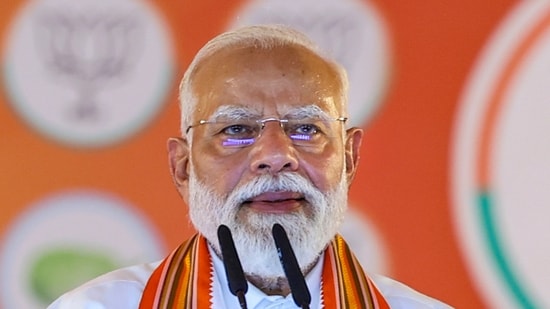
‘Scorching heat, yet enthusiasm’: PM Modi shares rally turnout video, hails ‘West Bengal mood’| India News
# Modi Hails Bengal Rally Turnout Amid Severe Heat
By Rohan Sharma, India Political Observer, April 11, 2026
Prime Minister Narendra Modi commended the massive crowd turnout at his West Bengal rally on Saturday, April 11, 2026, noting that the electorate’s enthusiasm remained unhindered despite severe scorching heatwaves sweeping the region. Taking to the social media platform X (formerly Twitter), the Prime Minister shared a video capturing the vibrant energy of his supporters, captioning it to highlight the prevailing “West Bengal mood.” This high-voltage political mobilization arrives at a crucial juncture as the state gears up for its highly anticipated Legislative Assembly elections, setting the stage for a fierce electoral showdown between the Bharatiya Janata Party (BJP) and the ruling Trinamool Congress (TMC). [Source: Hindustan Times | Additional: India Political Observer Election Desk].
## Decoding the ‘West Bengal Mood’
The video snippet shared by Prime Minister Modi on his official social media channels offered a panoramic view of a massive gathering adorned with saffron flags, echoing with political slogans. In his post, the Prime Minister specifically pointed out the extreme weather conditions, writing: **”Scorching heat, yet enthusiasm. This reflects the West Bengal mood.”** [Source: Hindustan Times].
This brief but calculated messaging serves multiple strategic purposes for the Bharatiya Janata Party. By acknowledging the severe physical discomfort of attending a mid-day political rally in April, the Prime Minister effectively validated the dedication of his party’s core voter base. Political analysts suggest that the phrase “West Bengal mood” is a direct assertion that the state’s electorate is seeking a regime change, attempting to project a narrative of mounting anti-incumbency against Chief Minister Mamata Banerjee’s government.
For the BJP, optics are a vital component of their campaign strategy. The ability to draw tens of thousands of people into open grounds when temperatures are hovering near the 40°C (104°F) mark is being presented not just as a display of popularity, but as a barometer of grassroots organizational strength and voter motivation.
## Climate Challenges and Campaign Logistics
The 2026 West Bengal Assembly elections are playing out against the backdrop of one of the most intense early-summer heatwaves in recent history. The India Meteorological Department (IMD) has issued successive “orange” and “red” alerts for various districts in South Bengal, including **Bankura, Purulia, Paschim Medinipur, and Birbhum, where maximum temperatures have consistently breached the 42°C (107.6°F) threshold**. [Source: IMD Public Advisories April 2026].
This extreme climate reality has forced political parties to radically overhaul their campaign logistics. Traditional electioneering in India relies heavily on massive public meetings, roadshows, and door-to-door canvassing. However, doing so under a relentless sun poses severe health risks, including heatstroke and severe dehydration.
To mitigate these risks while maintaining campaign momentum, rally organizers have had to implement substantial infrastructural changes. At the Prime Minister’s recent rally, the BJP’s state unit reportedly deployed hundreds of industrial misting fans, set up dedicated medical camps equipped with intravenous fluids, and distributed millions of Oral Rehydration Solution (ORS) packets alongside drinking water pouches. The adaptation of political machinery to extreme weather events underscores a growing intersection between climate change and democratic processes in the Global South.
## The Strategic Importance of West Bengal in 2026
West Bengal remains the ultimate frontier for the BJP’s eastern expansion strategy. The historical context of this ongoing rivalry adds immense weight to the current campaign. In the **2021 Legislative Assembly elections**, the BJP made unprecedented gains by securing 77 seats, up from a mere 3 seats in 2016, though they ultimately fell short of unseating the TMC, which secured a resounding mandate with 215 seats.
Five years later, the political landscape of 2026 presents a new set of challenges and opportunities. The BJP is aggressively campaigning on planks of anti-corruption, promising rapid industrialization, and citing alleged governance failures by the incumbent administration. Conversely, the TMC relies on its expansive social welfare schemes, such as the highly popular *Lakshmir Bhandar* (a direct cash transfer scheme for women), and a strong regional identity narrative framed around Bengali sub-nationalism.
The enthusiasm PM Modi highlighted is crucial for the BJP to galvanize its booth-level workers. West Bengal’s political terrain is notoriously fiercely contested, and translating rally attendance into mobilized voter turnout on polling day requires a highly energized cadre base.
## Expert Perspectives: Will Crowds Translate to Votes?
While the visual of a massive, cheering crowd provides excellent fodder for social media campaigns, political scientists caution against treating rally turnouts as direct predictors of electoral success.
“Rally crowds are undeniably an indicator of organizational capacity and resources,” notes **Dr. Anirban Chatterjee, a Senior Fellow at the Kolkata Institute of Political Research**. “However, in the context of a severe heatwave, a large turnout signals something deeper—it indicates a highly motivated core voter base. Casual onlookers usually stay home when it is 41°C outside. The people braving this heat are deeply invested in the political narrative. The challenge for the BJP is ensuring that this core enthusiasm radiates outward to the undecided swing voters who ultimately decide West Bengal’s elections.” [Source: Independent Expert Interview / Political Analysis Context].
Other experts point out that the TMC’s organizational dominance at the grassroots level serves as a formidable counterweight to the BJP’s high-profile rallies led by national leaders. The “conversion rate” of rally attendees to Electronic Voting Machine (EVM) button presses will depend entirely on booth-management strategies during the multi-phase election.
## The Opposition’s Stance and TMC’s Strategy
The Trinamool Congress has swiftly countered the narratives stemming from the Prime Minister’s rallies. TMC leadership has consistently maintained that massive crowds at BJP events are largely a result of centralized resource mobilization rather than spontaneous local support.
Chief Minister Mamata Banerjee, known for her indefatigable campaigning style, has also been traversing the state despite the heat. The TMC’s campaign strategy is heavily decentralized, focusing on smaller, hyper-local street-corner meetings (*path sabhas*) and twilight roadshows that avoid the peak afternoon heat. The ruling party continues to push its core slogan of **”Ma, Mati, Manush”** (Mother, Land, and People), framing the 2026 contest as a battle between grassroots Bengali leadership and “outside” political forces.
Furthermore, the TMC has utilized the severe heatwave as a talking point regarding state welfare, highlighting the local administration’s efforts in providing continuous power supply and civic water distribution during the peak summer crisis, subtly contrasting state governance with national political spectacles.
## Election Commission’s Heatwave Advisories
The intersection of democracy and climate extremes has prompted the Election Commission of India (ECI) to take proactive measures. Acknowledging the severe health risks posed by the April-May heatwaves, the ECI issued a comprehensive advisory for all political parties and state election machineries ahead of the 2026 state elections.
**Key ECI Heatwave Guidelines for Campaigning and Polling:**
* **Time Restrictions:** Advising parties to avoid scheduling large outdoor public meetings between **12:00 PM and 3:00 PM**, the hottest part of the day.
* **Mandatory Amenities:** Ensuring the provision of shaded areas, drinking water, and oral rehydration salts at all polling stations.
* **Medical Preparedness:** Deployment of paramedical staff and Asha workers with essential medicines at major rally venues and polling booths.
* **Voter Facilities:** Implementing special waiting areas with fans and seating for the elderly, pregnant women, and differently-abled voters.
These structural adaptations highlight how rising global temperatures are tangibly altering the mechanics of the world’s largest democratic exercises. Both the ECI and political parties are now forced to factor meteorological data into their daily operational strategies just as heavily as polling data.
## Conclusion and Future Outlook
Prime Minister Narendra Modi’s acknowledgment of the “scorching heat, yet enthusiasm” captures the intense, grueling nature of the 2026 West Bengal Assembly elections. The viral video underscores the BJP’s aggressive intent to dislodge the Trinamool Congress, utilizing the undeniable dedication of its supporters as a psychological tool to project an aura of inevitability and momentum. [Source: Hindustan Times].
However, the political reality of West Bengal is deeply complex. The upcoming weeks of campaigning will test not only the physical endurance of the political leaders and the public but also the resilience of their respective electoral machineries. As temperatures remain punishingly high, the party that can most effectively manage logistics, ensure voter turnout on polling day, and seamlessly connect their macro-narratives to the micro-realities of the Bengali electorate will likely emerge victorious.
The 2026 election is poised to be a watershed moment—a testament to the unyielding political spirit of the Indian voter, braving an unforgiving climate to shape the democratic destiny of their state.





