
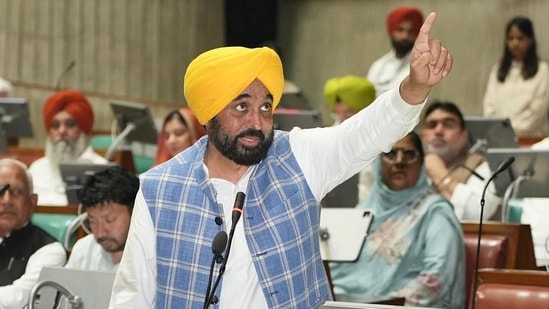
‘Those who break party lines…’: Punjab CM Bhagwant Mann reacts to Raghav Chadha Rajya Sabha ouster| India News
Party Discipline Takes Center Stage as AAP Adjusts Rajya Sabha Roles
In the evolving landscape of Indian politics, internal party dynamics often offer a revealing glimpse into the strategies and priorities of major players. Recently, Punjab Chief Minister Bhagwant Mann offered a straightforward assessment of the Aam Aadmi Party’s decision to remove Rajya Sabha MP Raghav Chadha from his position as the party’s deputy leader in the upper house of Parliament. Mann characterized the move as simply “regular party functioning,” a statement that has prompted political observers and citizens alike to delve deeper into its implications. This report from Omni 360 News examines the context and potential ramifications of this significant internal adjustment within the AAP.
During a press briefing, Chief Minister Mann addressed queries regarding Chadha’s changed role, emphasizing that such decisions are part of the organizational process that any political party undertakes to maintain discipline and ensure its objectives are met. He underscored the party’s commitment to collective welfare, stating that any individual who deviates from the party line or whose actions could be perceived as detrimental to the party’s image and mission would face internal scrutiny. This perspective suggests a firm hand at the helm, prioritizing party unity and adherence to its established principles above individual roles.
For those tracking the recent political narrative, Raghav Chadha’s removal is not an isolated event. It follows closely on the heels of a controversy surrounding the Delhi Services Bill in the Rajya Sabha. Chadha faced serious allegations concerning the alleged forging of signatures from several Members of Parliament on a motion he proposed regarding the bill. While Chadha consistently denied these accusations, the issue led to his suspension from the Rajya Sabha, a matter that remains under parliamentary review. This sequence of events provides critical background to understand why the party might describe his removal as a functional necessity. A party, like any organization, often moves to mitigate potential damage to its reputation or to reinforce its commitment to ethical conduct when faced with public allegations against its prominent members.
The Aam Aadmi Party, since its inception, has prided itself on being a party with a difference, often emphasizing transparency and accountability. However, like all political entities, it faces the constant challenge of managing internal dissent and ensuring strict adherence to party directives. Mann’s statement, therefore, can be interpreted as a clear signal that internal discipline and maintaining a cohesive public image are paramount for the AAP, especially as it seeks to expand its footprint nationally. The party’s leadership appears keen to project an image of a well-oiled machine where individual actions are always aligned with the broader party agenda.
This particular development highlights the intricate balance between individual political aspirations and collective party goals. For a younger leader like Raghav Chadha, who has been a prominent face and articulate spokesperson for the AAP, this shift in role presents a new phase in his political journey. It also serves as a reminder to all party members about the importance of navigating the political landscape within the established boundaries of party conduct. The party’s decision, framed as routine, indicates a pragmatic approach to handling situations that could potentially distract from its core governance agenda or political messaging.
From a broader political perspective, such internal adjustments are not uncommon across party lines. Leaders often make tough decisions to consolidate power, enforce discipline, or streamline operations. Mann’s comments suggest that the AAP leadership views Chadha’s removal as a necessary step to maintain order and effectiveness within its parliamentary group. It reassures the party cadre and its supporters that the leadership is actively managing its internal affairs to ensure stability and focus on policy implementation.
Key Takeaways:
* Bhagwant Mann described Raghav Chadha’s removal as a “regular party functioning” matter.
* The decision is linked to maintaining party discipline and collective welfare within the AAP.
* Chadha’s demotion follows allegations of forging signatures during the Delhi Services Bill debate and his subsequent suspension from the Rajya Sabha.
* The incident underscores AAP’s commitment to presenting a unified and disciplined front to the public.
* This move signals the party’s intention to address internal issues decisively and manage the public perception of its members’ conduct.
As Omni 360 News continues to monitor political developments, the AAP’s handling of this situation offers valuable insight into its internal governance and strategic priorities as it navigates the complexities of national politics. The emphasis on discipline and functionality, as articulated by Chief Minister Mann, underscores a party focused on consolidating its internal structure while pursuing its ambitious political agenda.





