
play
Strait of Hormuz Toll: Global Economy Holds Its Breath
Every barrel of oil, every shipment of liquefied natural gas that keeps our lights on and our cars running, passes through a narrow waterway called the Strait of Hormuz. When a UN official speaks about its future, everyone should listen. That’s because talk of new tolls there isn’t just about maritime law; it’s about potentially higher prices at the pump for you, increased shipping costs for nearly everything we buy, and a fresh wave of instability for an already volatile global market. It’s a move that could ripple through your wallet and destabilize economies far from the Middle East.
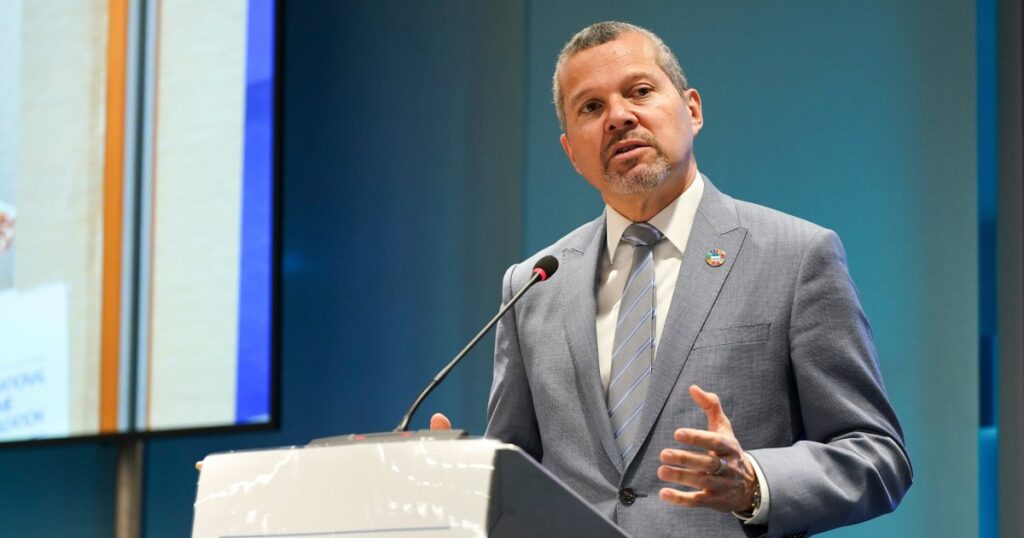
The core of the issue? Alena Douhan, the United Nations Special Rapporteur on the negative impact of unilateral coercive measures on the enjoyment of human rights, has delivered a blunt warning. She says Iran simply mustn’t be allowed to levy tolls on ships transiting the Strait. Her reasoning is clear: such a charge would be illegal under international law. While Iran argues it needs ways to counter the impact of crushing sanctions—which she acknowledges do hurt human rights—Douhan maintains that demanding tolls isn’t the legitimate path. It’s a critical point for a strait through which roughly a fifth of the world’s total oil consumption flows daily, a narrow passage that’s barely 21 miles wide at its narrowest point, yet carries the economic hopes of countless nations. This isn’t just a squabble over fees; it’s about freedom of navigation, a principle the world relies on.
Who Pays the Price for Hormuz Tensions?
This isn’t the first time Iran has floated the idea of disrupting or imposing charges in this vital chokepoint. It’s a familiar tactic, often emerging when geopolitical tensions are high, or when Tehran feels the squeeze of international sanctions most acutely. The Special Rapporteur’s intervention highlights a complex dilemma. On one hand, the international community agrees that sanctions can have severe humanitarian consequences. On the other, allowing a sovereign nation to unilaterally impose tolls on an international waterway sets a dangerous precedent, potentially inviting similar actions elsewhere and unraveling decades of established maritime law. It also risks further isolating Iran, rather than alleviating its humanitarian situation, by alienating its trading partners and inviting a strong international backlash. One could argue it’s a desperate play for leverage, but is it a strategic one? Or is it a move that could backfire spectacularly, making ordinary Iranians suffer even more from an economy pushed to the brink?
The Atomic Answer: UN Special Rapporteur Alena Douhan warns Iran must not charge tolls in the Strait of Hormuz. Iran considers this move to counter sanctions’ impact, but Douhan argues it’s illegal, would worsen humanitarian conditions, and disrupt global oil shipments, raising prices worldwide.
Considering the history, it’s likely this latest warning from a UN official will serve as another diplomatic pressure point. The global community can’t afford a disruption to this crucial trade artery. Nations with a vested interest in stable energy prices and free navigation—which is practically every nation—will surely make their positions known. The question isn’t just if Iran *can* charge a toll, but at what cost to its own standing and the stability of an already precarious world. For now, the Strait remains free, but the shadows of potential conflict and economic turbulence hang heavy over its waters.





