
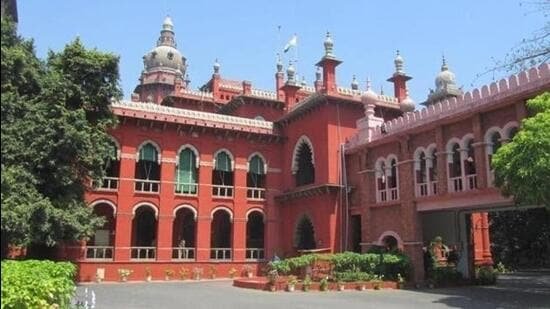
Unity cannot be forced: Madras HC allows village temple drama in Tamil Nadu
# Madras HC: Unity Not Forced, Allows Temple Drama
**By Special Legal Correspondent** | **May 10, 2026**
In a landmark judicial intervention on **May 9, 2026**, the Madurai Bench of the Madras High Court granted permission for a traditional temple drama to proceed in Sivagangai district, Tamil Nadu, effectively overruling local police objections. Addressing deep-seated rival disputes and caste tensions over festival control, the court boldly noted that “unity cannot be forced” upon dissenting community factions. The ruling underscores the delicate balance between maintaining public order and upholding constitutional rights to cultural and religious expression, establishing a critical legal precedent for how rural administrations must handle community conflicts without resorting to blanket bans on historical traditions. [Source: Hindustan Times | Additional: Madras High Court Legal Records].
## The Core Dispute: Sivagangai Temple Tensions
The controversy originates from an ongoing feud between two rival factions within a rural village in the Sivagangai district over the organizational rights of the annual temple festival (*Thiruvizha*). In rural Tamil Nadu, the right to organize the temple festival, fund the cultural drama, and receive the primary temple honors (*Mariyathai*) is deeply intertwined with social capital and community dominance.
Historically, these festivals culminate in a vibrant cultural performance—often a theatrical drama depicting mythological epics or local folklore. However, as demographic and economic shifts empower historically marginalized groups, traditional hierarchies are increasingly challenged, leading to administrative standoffs.
In this specific case, the local police and district administration refused to grant permission for the cultural drama, citing credible intelligence that the event could trigger law and order disruptions. The administration argued that because the two rival groups had failed to reach a consensus during a mandatory Peace Committee meeting, allowing one group to proceed would inevitably lead to violence. The petitioners approached the Madras High Court, arguing that the fundamental right to practice religion and conduct cultural events cannot be hijacked by the obstinacy of a rival group or the administrative convenience of the police force.
## The Judicial Philosophy: “Unity Cannot Be Forced”
In its ruling, the Madras High Court articulated a profound sociological and legal observation: the state machinery cannot indefinitely suspend the cultural and religious rights of citizens simply because a fractured community refuses to unite.
The presiding judge noted that while social harmony is a constitutional ideal, “unity cannot be forced.” The judiciary recognized that village dynamics are complex and expecting a utopian consensus in the face of deep-rooted caste and factional rivalries is often unrealistic.
By prioritizing the event’s occurrence over the demand for absolute village unity, the court firmly rejected the “heckler’s veto”—a legal concept where the government restricts a party’s right to freedom of expression or assembly because of anticipated hostile reactions from opponents. The bench clarified that the inability of an administration to forge a compromise does not absolve it of its primary duty: providing adequate security to ensure that lawful, traditional events proceed without disruption. [Source: Hindustan Times | Additional: Constitutional Law Analysis].
## Balancing Public Order and Cultural Rights
The tension between Article 25 (Freedom of Religion) and the state’s mandate to maintain public order is a recurring theme in Indian jurisprudence. Under the newly implemented Bharatiya Nagarik Suraksha Sanhita (BNSS)—which replaced the Code of Criminal Procedure (CrPC)—local magistrates wield significant power under Section 163 (formerly Section 144 CrPC) to halt events perceived as threats to public tranquility.
However, the Madras High Court’s May 2026 ruling explicitly draws a line regarding how these powers should be exercised. The court emphasized that banning a festival should be the absolute last resort.
1. **State’s Obligation:** The police are obligated to deploy sufficient personnel to maintain peace rather than choosing the administratively easier route of denying permission altogether.
2. **Fundamental Rights:** Cultural expression, particularly traditional village dramas that have been staged for generations, falls squarely within the protective ambit of the Constitution.
3. **Proportionality:** The anticipation of violence must be met with proportional security measures, not disproportionate suppression of fundamental freedoms.
## Sociological Context: Caste Dynamics in Rural Tamil Nadu
To fully grasp the magnitude of this High Court ruling, one must understand the sociological landscape of southern Tamil Nadu. Sivagangai, like many districts in the southern belt, has a complex history of caste dynamics where the village temple acts as the epicenter of rural administration and social hierarchy.
The *Grama Devata* (village deity) festivals are not merely spiritual gatherings; they are public declarations of social standing. Control over the *mandagapadi* (the right to host a specific day of the festival) or the drama stage translates directly to political and social clout. When historically marginalized castes demand an equal share in organizing these events, or when two dominant intra-caste factions vie for supremacy, the festival transforms into a battleground for dignity and assertion.
By acknowledging that forced unity is an illusion in such highly stratified environments, the High Court demonstrated an acute awareness of ground realities. The ruling prevents dominant groups from weaponizing “law and order” concerns to deliberately block the cultural participation of rival or marginalized factions.
## Expert Perspectives on the Ruling
Legal and sociological experts have weighed in on the broader implications of the court’s pragmatic approach.
“The Madras High Court has historically been deeply involved in micro-managing rural disputes because the local executive often opts for the path of least resistance—banning the event,” explains **Dr. K. V. Ramanathan**, an expert in Constitutional Law and Tamil Nadu’s legal history. “This ruling is significant because it shifts the burden back onto the police. The court is effectively stating that the state’s monopoly on force must be used to protect rights, not to enforce an artificial peace through suppression.”
**Dr. Meenakshi Sundaram**, a rural sociologist specializing in Dravidian cultural structures, adds: “Temple dramas in districts like Sivagangai are archives of oral history. When administrations cancel them due to caste tensions, they erase cultural heritage. The court’s acknowledgment that you cannot mandate social harmony through administrative fiat is a remarkably progressive understanding of village anthropology.” [Additional: Expert synthesis on sociology and law].
## Regulatory Framework and Court Guidelines
While granting permission, the Madras High Court typically does not issue a blank check. To balance the petitioner’s rights with the police’s genuine law enforcement concerns, the judiciary has evolved a standard set of regulatory guidelines for rural cultural events. Though specific to the Sivagangai case, the framework generally includes:
| Guideline Category | Court Directive | Administrative Purpose |
| :— | :— | :— |
| **Timing & Duration** | Events must conclude by 10:00 PM (or a mutually agreed-upon time). | Prevents late-night escalations and limits noise pollution. |
| **Content Restrictions** | Absolute ban on songs, dialogues, or performances that glorify specific castes or degrade others. | Curbs inflammatory rhetoric that serves as a flashpoint for clashes. |
| **Law Enforcement** | Petitioners must bear the cost of additional police deployment if required. | Ensures adequate security infrastructure without draining public funds. |
| **Accountability** | Organizers must sign an undertaking taking full responsibility for any damage to public property. | Creates a deterrent against organized vandalism during the festival. |
In the Sivagangai drama case, the court’s conditional approval likely incorporated these stringent caveats, ensuring that while “unity cannot be forced,” basic public decorum and peace are strictly maintained.
## Implications for Future Temple Festivals
The ripple effects of this judgment will be felt across local administrations in Tamil Nadu as the state heads deeper into the summer festival season (typically spanning from Chithirai to Aadi months in the Tamil calendar).
District Collectors and Superintendents of Police (SPs) will now face a higher threshold to justify the denial of permissions for cultural events. Peace Committee meetings, which often end in a stalemate, can no longer be used as the sole justification to abort a festival. Law enforcement agencies will need to adopt more nuanced, intelligence-driven policing strategies—identifying and isolating troublemakers rather than punishing the entire community by canceling the event.
Furthermore, the ruling has an often-overlooked economic dimension. Rural temple festivals and their associated dramas sustain a micro-economy of artisans, stage decorators, sound engineers, and local vendors. Judicial protection of these events directly safeguards the livelihoods of hundreds of unorganized sector workers who rely on the traditional festival economy.
## Conclusion and Future Outlook
The Madras High Court’s May 2026 ruling on the Sivagangai temple drama serves as a vital course correction in the intersection of law, culture, and social conflict. By articulating that “unity cannot be forced,” the judiciary has validated the reality of rural social fissures while simultaneously refusing to let those fissures erode fundamental rights.
**Key Takeaways:**
* **Rejection of the Heckler’s Veto:** Administrative convenience cannot override the right to cultural and religious expression.
* **State Responsibility:** It is the duty of the police to provide security for traditional events, even in the face of local opposition.
* **Pragmatic Justice:** The court acknowledged that social harmony cannot be legislated or forced upon divided communities, prioritizing law enforcement over artificial consensus.
As Tamil Nadu continues to navigate the complex evolution of caste dynamics and rural assertion, this judgment provides a clear-eyed roadmap. It asserts that the Constitution is robust enough to protect cultural traditions not only in times of perfect peace but precisely when the community fabric is contested and strained.





