
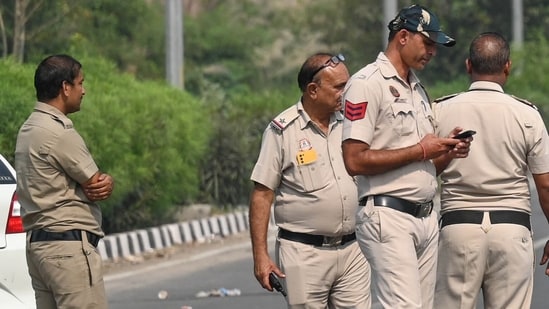
Uttarakhand police issues notice to Haryanvi singer after FIR for abusive language at event| India News
# Singer Gets Notice Over Profane Language
By Senior Correspondent, India News Desk | April 14, 2026
On Tuesday, April 14, 2026, the Uttarakhand Police officially issued a legal notice to prominent Haryanvi singer Masoom Sharma following the registration of a First Information Report (FIR) concerning the alleged use of abusive and objectionable language during a live public performance. The controversial incident occurred on the evening of April 11 at a college campus located in Karanpur, Dehradun, during an annual student cultural festival. Prompted by an official complaint from attendees who found the artist’s onstage remarks and lyrical improvisations offensive, local law enforcement intervened. This swift police action highlights an escalating crackdown on public obscenity in educational institutions, raising critical debates surrounding the boundaries of artistic freedom, the evolving nature of regional pop culture, and the strict enforcement of public decorum laws across North India.
## The Incident: Disruption at the Karanpur Cultural Fest
The annual cultural festival at the Karanpur college campus is typically a celebrated event, drawing hundreds of students, faculty members, and local residents. On April 11, the highly anticipated headlining act featured Masoom Sharma, a Haryanvi artist known for his high-energy performances and chart-topping regional hits. However, what began as a lively musical evening quickly spiraled into controversy.
According to eyewitness accounts and the formally filed police complaint, the atmosphere shifted when the performer allegedly deviated from his standard setlist, incorporating explicit language and objectionable remarks while interacting with the young crowd. The complainant, whose identity remains protected by law enforcement, stated that the terminology used was highly inappropriate for an academic environment and deeply offensive to families and faculty present at the venue. [Source: Original RSS | Additional: Hindustan Times Report, April 2026].
“Cultural festivals are meant to foster a spirit of unity, art, and tradition. The sudden use of vulgarity completely violated the sanctity of the educational institution,” noted a senior faculty member who was present during the event. Following the uproar, a formal written complaint was submitted to the local police station, compelling the authorities to initiate a preliminary inquiry which culminated in the current FIR.
## Police Action and Legal Ramifications
The Uttarakhand Police, acting on the grievance, registered an FIR under the relevant sections of the Bharatiya Nyaya Sanhita (BNS), which governs offenses related to public nuisance, obscenity, and acts intended to outrage the modesty or disturb the peace of a community. The formal notice issued to the singer requires him to present himself before the investigating officers to record his statement regarding the events of April 11.
Legal experts suggest that while artists enjoy constitutional protections, these rights are not absolute. “Article 19(1)(a) of the Indian Constitution guarantees the right to freedom of speech and expression, but it is intrinsically tied to Article 19(2), which imposes reasonable restrictions in the interest of public order, decency, and morality,” explains Dr. Vikram Desai, a constitutional law analyst based in New Delhi. “When an artist performs in a public, mixed-age gathering, especially within a university or college campus, the threshold for what constitutes ‘obscene’ or ‘offensive’ is stringently applied by the courts.” [Source: Independent Legal Analysis].
The police notice is a preliminary step in the investigative process. If the investigating officers find substantial digital or testimonial evidence supporting the complainant’s claims—such as unedited smartphone recordings of the concert—the singer could face fines or a protracted legal battle. Authorities have already begun gathering video footage from the campus and interviewing event organizers to establish an exact timeline and verbatim record of the statements made onstage.
## The Thin Line: Artistic Expression vs. Public Decency
This incident in Karanpur is not an isolated event but rather a flashpoint in a much larger, ongoing cultural debate. Over the past decade, the definition of mainstream entertainment in India has undergone a massive transformation. Artists frequently argue that their music and onstage personas are reflections of raw, unfiltered reality, designed to resonate with a youth demographic that increasingly rejects sanitized, traditional media.
However, the intersection of this raw artistic expression with conservative public spaces often leads to friction. Critics argue that artists must tailor their performances to their audience. A nightclub or an age-restricted music festival presents a vastly different environment compared to a college campus where minors, academic staff, and local dignitaries might be in attendance.
“There is a growing trend of shock-value entertainment where artists use provocative language to hype up a crowd. While this might go viral on social media platforms, it carries real-world consequences when executed in strictly regulated environments,” says cultural critic and sociologist Meera Tandon. The challenge lies in defining the boundaries of this expression without stifling the vibrant, dynamic nature of live music performances.
## The Changing Landscape of Regional Pop Music
To fully understand the gravity of the Uttarakhand police’s intervention, one must look at the meteoric rise of the Haryanvi and Punjabi pop music industries. By 2026, regional music has effectively bypassed traditional Bollywood soundtracks to dominate the streaming charts and rural-urban entertainment sectors alike. Artists from these industries wield immense influence over millions of young followers.
With this massive reach comes intense scrutiny. Historically, regional music has faced backlash for glorifying gun culture, substance abuse, and using misogynistic or aggressive rhetoric. State governments in Punjab, Haryana, and now Uttarakhand have periodically issued directives urging singers to abstain from promoting violence or using derogatory language.
The commercial pressure to deliver high-octane, rebellious anthems often clashes with municipal and institutional laws. Record labels push for edgy content to drive YouTube views and Spotify streams, but when these internet personas translate to the physical stage, the legal reality of India’s strict public decency laws takes precedence. The Karanpur incident serves as a stark reminder to the industry that regional borders and internet fame do not offer immunity from state law enforcement. [Source: Industry Context, 2026 Music Streaming Trends].
## Educational Institutions Tighten Event Protocols
The fallout from the April 11 event has sent ripples through the administrative offices of universities across Uttarakhand and neighboring states. Historically, student unions and event management committees were given a wide berth to organize their cultural fests, select performers, and manage crowds. Now, institutions are rapidly re-evaluating their standard operating procedures for live events.
Several prominent universities are reportedly drafting “Code of Conduct” clauses to be inserted into performance contracts. These clauses explicitly prohibit the use of profanity, hate speech, political agitation, and the glorification of violence.
“We are moving toward a zero-tolerance policy,” shared an administrator from a Dehradun-based university, speaking on the condition of anonymity. “In the future, artists will be required to submit their setlists in advance. If an artist breaches the contractual obligation regarding public decency, the university will not only withhold payment but will fully support any legal action taken by the state. We cannot risk our institution’s reputation for the sake of a two-hour concert.”
Event management companies are also feeling the heat. Promoters who book artists are now being forced to act as censors, warning performers about the demographic makeup of the crowd and the legal risks associated with their stage banter.
## Broader Implications for India’s Live Music Industry
The notice issued to Masoom Sharma by the Uttarakhand police is indicative of a broader, national trend regarding the policing of live entertainment. As India’s live music industry continues to recover and expand post-pandemic, creating a multi-million-dollar economy, the regulatory framework surrounding it is tightening.
For artists, this presents a significant professional hazard. A registered FIR can severely disrupt a touring schedule, hinder the ability to secure brand sponsorships, and create logistical nightmares for future visa applications if the artist intends to tour internationally. Furthermore, the precedent set by local authorities responding swiftly to audience complaints emboldens conservative civic groups who frequently monitor live events for any perceived infractions of cultural norms.
Conversely, supporters of the police action argue that the live music industry has self-regulated poorly. They maintain that without strict legal enforcement, the race to the bottom for shock value will continue, alienating families and older demographics from enjoying live cultural events. The regulatory intervention ensures that public spaces remain accessible and comfortable for all citizens, irrespective of changing youth trends. [Source: Cultural Policy Analysis, 2026].
## Conclusion: Striking a Balance
The Uttarakhand police’s decision to issue a formal notice to a celebrated Haryanvi singer over his use of abusive language at a Karanpur college fest is a defining moment for regional pop culture and event management in 2026. It brings to the forefront the delicate balancing act between an artist’s right to free expression and the state’s mandate to uphold public decency and order.
As the legal proceedings unfold, the incident will likely serve as a cautionary tale for both performers and event organizers. Moving forward, the live music industry must navigate these complex legal and social landscapes with greater diligence. Artists will need to recalibrate their performances based on venue constraints, while educational institutions will undoubtedly enforce stricter vetting processes to protect their cultural environments. Ultimately, the resolution of this case will set a critical precedent for how artistic freedom is interpreted and regulated in India’s modern, highly connected society.





