
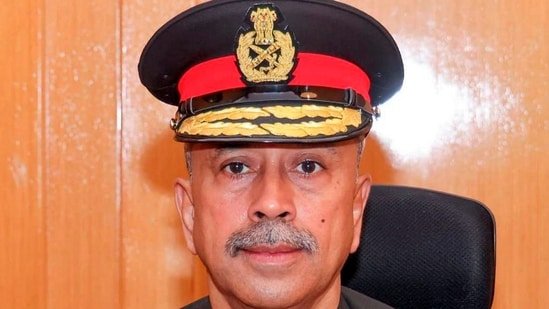
Who is Lt General NS Raja Subramani, the next Chief of Defence Staff of India?
# India Names NS Raja Subramani as New CDS
**By AI Assistant, Defence News Network | May 9, 2026**
**New Delhi:** In a decisive move to strengthen its military apparatus, the Government of India announced on Saturday the appointment of **Lt General NS Raja Subramani** as the country’s next **Chief of Defence Staff (CDS)**. Set to assume the paramount military role, Subramani previously served as the **47th Vice Chief of Army Staff (VCOAS)** before his retirement in July 2025. Selected for his profound operational expertise and strategic acumen, he will be tasked with accelerating the long-pending theaterisation of the Indian Armed Forces. This landmark appointment underlines New Delhi’s unwavering commitment to modernizing military synergy and fortifying the nation against complex regional security challenges. [Source: Hindustan Times | Additional: Ministry of Defence Archives]
## A Historic Appointment Under Amended Defence Rules
The elevation of Lt Gen NS Raja Subramani to the position of Chief of Defence Staff highlights the strategic flexibility granted to the government following the amendment of the Army Rules in 2022. Following the tragic demise of India’s first CDS, General Bipin Rawat, the Ministry of Defence expanded the eligibility criteria for the top post. The revised guidelines allowed the government to appoint any serving or retired three-star officer—Lieutenant General, Air Marshal, or Vice Admiral—under the age of 62 to the position of CDS.
Having retired as the Vice Chief of Army Staff in July 2025, Lt Gen Subramani perfectly fits this demographic and experiential matrix. His recall from retirement to assume the mantle of India’s highest-ranking military officer mirrors the precedent set by his predecessor, General Anil Chauhan, who was also appointed after retiring as an Army Commander.
“The decision to appoint Lt Gen Subramani reflects a meticulous selection process prioritizing jointness, extensive field experience, and a deep understanding of India’s evolving strategic needs over conventional seniority matrixes,” notes Dr. Harsh V. Pant, a leading defense analyst and geopolitical expert. “His tenure as the VCOAS gave him a panoramic view of the Army’s structural reforms, making him the ideal candidate to implement tri-service integration.” [Source: Independent Expert Analysis | Public Domain Records]
## Illustrious Military Origins and Career Trajectory
Lt Gen NS Raja Subramani’s journey to the pinnacle of India’s defense establishment is characterized by rigorous academic foundations and deeply entrenched field experience. Commissioned into the revered **Garhwal Rifles** in December 1985, Subramani is an esteemed alumnus of the National Defence Academy (NDA), Khadakwasla, and the Indian Military Academy (IMA), Dehradun.
Over a decorated career spanning four decades, he has operated across a diverse array of terrains and threat environments. His command tenures have been particularly notable for their strategic sensitivity. He commanded an infantry battalion during **Operation Rhino** in Assam, tackling complex counter-insurgency dynamics. Later, he commanded an infantry brigade along the International Boundary and a Mountain Division in the high-altitude, rugged terrain of the Eastern Command, giving him firsthand experience in managing the Line of Actual Control (LAC).
### Key Career Milestones of the New CDS
| Designation | Key Responsibilities & Highlights |
| :— | :— |
| **GOC, Kharga Strike Corps** | Commanded the pivotal II Corps (Ambala), responsible for offensive operations and deep-strike capabilities on the western front. |
| **GOC-in-C, Central Command** | Managed the strategic Surya Command in Lucknow, overseeing critical logistical hubs and the central sector of the LAC. |
| **Vice Chief of Army Staff (VCOAS)** | Served as the 47th VCOAS until July 2025, driving capital procurement, modernization, and policy implementation. |
| **Chief of Defence Staff (CDS)** | Appointed May 2026 to lead tri-service integration and function as the Principal Military Advisor to the Defence Minister. |
Beyond his tactical field commands, Lt Gen Subramani has held pivotal staff appointments, including a crucial role in the Military Intelligence Directorate and as the Chief of Staff at the Headquarters of the Northern Command in Udhampur. This rare blend of eastern, northern, and central theatre experience provides him with a 360-degree perspective of India’s border defense architecture.
## The Primary Mandate: Accelerating Theaterisation
The most pressing item on Lt Gen Subramani’s agenda as the new CDS is the implementation of **theaterisation**—the ambitious restructuring of the Indian Army, Navy, and Air Force into integrated, cohesive theatre commands. First envisioned under Gen Bipin Rawat and carefully nurtured by Gen Anil Chauhan, the blueprint for joint commands is now reaching its critical execution phase.
Currently, India’s armed forces operate under 17 single-service commands, which defense planners argue is inefficient for modern, multi-domain warfare. The proposed restructuring aims to consolidate these into geographical and functional theatre commands, such as a dedicated Maritime Theatre Command, an Air Defence Command, and unified commands for the adversaries along the northern and western borders.
“Creating integrated theatre commands is no longer a choice but a strategic imperative,” remarks retired Air Marshal Rajesh Kumar. “Lt Gen Subramani’s primary hurdle will be smoothing over the operational apprehensions of the individual services, particularly regarding the distribution of scarce aerial assets. His reputation as a consensus-builder, honed during his time as Vice Chief, will be heavily tested here.”
Subramani is expected to leverage his authority as the permanent Chairman of the Chiefs of Staff Committee (COSC) to fast-track joint logistics nodes, unified communication grids, and standardized procurement protocols across all three branches of the military. [Source: Hindustan Times | Additional: Defence Strategic Studies]
## Navigating the Dual-Front Threat Matrix
As India’s Principal Military Advisor to the Defence Minister, the incoming CDS assumes his role amid a volatile geopolitical climate. The persistent “two-front” threat posed by a modernizing People’s Liberation Army (PLA) of China and a highly unpredictable Pakistan requires a calibrated, unified military posture.
Lt Gen Subramani’s past tenures make him uniquely suited for this reality. Having served extensively in the Northern Command and commanded the Central Command (which oversees the crucial Uttarakhand-Himachal Pradesh LAC sectors), he possesses an intricate understanding of Chinese military maneuverings and border infrastructure developments.
Simultaneously, his leadership of the **Kharga Strike Corps**—India’s premier offensive formation tasked with decisive cross-border thrusts in the event of a conflict with Pakistan—ensures he is intimately familiar with the western front’s operational realities.
Under his leadership, the Department of Military Affairs (DMA) is expected to prioritize intelligence sharing, cyber warfare capabilities, and space-based surveillance assets to counter the asymmetric warfare strategies frequently deployed by hostile neighbors.
## Championing ‘Aatmanirbhar Bharat’ in Defence Manufacturing
A core responsibility of the CDS is the prioritization of capital acquisitions for the armed forces, aligning procurement with the government’s flagship **’Aatmanirbhar Bharat’** (Self-Reliant India) initiative. During his stint as the Vice Chief of Army Staff until 2025, Lt Gen Subramani was a vocal advocate for indigenous defense hardware, pushing for the integration of domestic drones, loitering munitions, electronic warfare suites, and advanced artillery systems.
As CDS, he will preside over the Defence Acquisition Council’s (DAC) prioritization processes. His task will involve balancing the immediate operational requirements of the military—which sometimes necessitate emergency foreign procurements—with the long-term goal of nurturing the domestic defense industrial base.
Industry leaders are optimistic about his appointment. “General Subramani understands the capability gaps of the armed forces but is equally committed to holding the hand of private Indian defense contractors,” states a senior executive from the Society of Indian Defence Manufacturers (SIDM). “We expect a sustained push towards procuring indigenous light tanks, advanced medium combat aircraft (AMCA), and next-generation naval vessels under his tenure.”
## Academic Brilliance and Strategic Vision
What sets Lt Gen Subramani apart from many of his contemporaries is his robust academic pedigree, which deeply influences his strategic outlook. He is a graduate of the prestigious **Joint Services Command and Staff College in the United Kingdom**, an experience that provided him with vital insights into NATO’s joint-command structures—knowledge that will prove invaluable as he builds India’s theatre commands.
Furthermore, he holds a Master of Arts degree from King’s College London and an M.Phil in Defence Studies from Madras University. He is also a distinguished alumnus of the National Defence College in New Delhi. Colleagues often describe him as a “scholar-warrior,” possessing a measured, highly analytical approach to crisis management rather than relying solely on kinetic responses.
This intellectual depth is crucial as the nature of warfare rapidly evolves. The new CDS will be expected to guide the Indian Armed Forces through the integration of Artificial Intelligence (AI), quantum computing, and unmanned combat systems into their standard operating procedures.
## Conclusion: A Defining Era for the Indian Military
The appointment of Lt Gen NS Raja Subramani as the Chief of Defence Staff marks a defining chapter in the modernization saga of the Indian military. By bringing back a battle-hardened, recently retired Vice Chief, the government has signaled its intent to maintain continuity in reforms while injecting fresh operational momentum into the armed forces.
As he prepares to don the four-star rank and take the helm at South Block, the expectations are monumental. From finalizing the contours of theaterisation and deterring border aggression to championing domestic defense manufacturing, Lt Gen Subramani’s tenure will be scrutinized by both allies and adversaries.
Ultimately, his success will be measured not just by the structural changes he implements, but by his ability to forge an unbreakable, unified ethos among the Army, Navy, and Air Force. In an era where future conflicts will be fought across multiple, overlapping domains, Lt Gen Subramani’s leadership could very well dictate the strategic trajectory of India for decades to come.





