
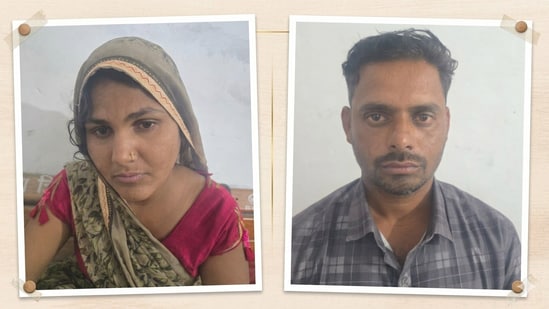
Woman, boyfriend kill husband in MP; body chopped, burnt and buried in a pit using a JCB| India News
# MP Murder Cover-Up: Wife, Accomplice Arrested
**By Senior Staff Reporter, National News Desk** | **April 14, 2026**
In a severe breach of law and order that has prompted a high-level forensic investigation in Madhya Pradesh, local authorities have arrested a woman and her alleged partner for the premeditated murder of her husband. According to police reports filed on Tuesday, April 14, 2026, the suspects orchestrated an elaborate cover-up operation following the homicide. After a failed attempt to destroy the victim’s dismembered remains using fire, the accused reportedly procured a JCB earthmoving machine to excavate a deep pit, concealing the evidence underground. Swift intervention by law enforcement has brought the perpetrators into custody, triggering a comprehensive legal and scientific inquiry. [Source: Hindustan Times | Additional: Madhya Pradesh Police Press Briefing].
## The Anatomy of the Investigation
The case came to the attention of the authorities following a missing person complaint lodged by the victim’s extended family, who had grown suspicious of his sudden and unexplained disappearance. Initial inquiries conducted by the local constabulary were met with misleading statements from the deceased’s wife, who allegedly attempted to misdirect investigators by claiming her husband had left the state for sudden employment opportunities.
However, glaring discrepancies in her timeline, combined with digital footprints recovered by cyber cell investigators, led authorities to suspect foul play. **Call Detail Records (CDR)** indicated constant communication between the wife and her alleged accomplice during the crucial hours surrounding the victim’s disappearance. Upon sustained interrogation, the facade crumbled, and the suspects confessed to the crime, leading law enforcement officials directly to the concealed burial site.
## Earthmoving Machinery Used in Evidence Tampering
One of the most highly unusual aspects of this case is the suspects’ use of heavy industrial machinery to facilitate their cover-up. According to the preliminary police dossier, when their initial attempts to incinerate the remains failed—likely due to a lack of understanding regarding the extreme temperatures required for complete thermal destruction—the accused resorted to a secondary plan.
They allegedly hired a commercial JCB earthmover under false pretenses, utilizing the machine to dig a massive pit in an isolated area. This action highlights a profound level of premeditation and logistical planning rarely seen in spontaneous domestic crimes.
“The utilization of heavy excavation machinery indicates a chillingly calculated approach to evidence tampering,” notes Dr. Avinash Sharma, a seasoned criminologist based in Bhopal. “Criminals often operate under the ‘disposal paradox,’ where the sheer complexity of their cover-up—such as renting identifiable commercial equipment—inadvertently leaves a massive trail of administrative and physical evidence for investigators to follow.” [Source: Independent Criminology Analysis].
## Advanced Forensic Recovery and Challenges
Retrieving evidence from a subterranean site involving thermal damage presents a multi-layered challenge for forensic anthropologists and crime scene investigators (CSI). Law enforcement quickly cordoned off the excavation site, bringing in state forensic teams to conduct a methodical exhumation.
The primary objective for forensic scientists in such scenarios is to establish the identity of the victim beyond a reasonable doubt and to determine the exact cause of death, despite the severe degradation of the remains.
1. **DNA Profiling:** Even when biological material is subjected to high temperatures, forensic teams can often extract viable DNA from deep bone marrow or dental pulp, which are highly resistant to thermal damage.
2. **Forensic Odontology:** Dental records remain one of the most reliable methods of identification in cases involving severe tissue destruction.
3. **Soil and Micro-Trace Analysis:** Investigators analyze the soil composition around the burial site for chemical accelerants, which can corroborate the suspects’ confessions regarding their failed attempts to start a fire.
The meticulous nature of the exhumation ensures that the chain of custody is maintained, a vital requirement for the evidence to be admissible in a court of law.
## Prosecuting Under the Bharatiya Nyaya Sanhita (BNS)
As the investigation progresses, the legal framework governing the prosecution will rely on the newly implemented **Bharatiya Nyaya Sanhita (BNS), 2023**, which replaced the colonial-era Indian Penal Code (IPC). The transition to the BNS modernizes the legal definitions and standardizes the penalties for severe infractions.
Legal experts anticipate that the authorities will file a comprehensive chargesheet invoking several stringent sections of the BNS to address both the homicide and the subsequent cover-up.
| Legal Violation | BNS Section | Description of Offense | Potential Penalties |
| :— | :— | :— | :— |
| **Murder** | Section 103 | Whoever commits murder shall be punished with death or imprisonment for life. | Death penalty or Life Imprisonment, plus fines. |
| **Destruction of Evidence** | Section 238 | Causing disappearance of evidence of offense, or giving false information to screen offender. | Imprisonment up to 7 years and fines (depending on the primary crime). |
| **Criminal Conspiracy** | Section 61 | When two or more persons agree to do an illegal act. | Punished in the same manner as if they had abetted the offense. |
*Disclaimer: The above table reflects the legal statutes under the BNS applicable to general crimes of this nature. Final charges are subject to magisterial discretion based on the finalized police chargesheet.*
## Technological Surveillance in Modern Policing
The swift apprehension of the suspects underscores the growing reliance of Madhya Pradesh Police on digital forensics and urban technological surveillance. The hiring of the JCB machine proved to be a critical error for the accused. By triangulating the mobile tower data of the suspects with the GPS tracking commonly installed in modern commercial earthmovers, police were able to pinpoint the exact location and time of the excavation.
Furthermore, Route mapping via **CCTV analytics** on local toll plazas and intersections provided visual confirmation of the suspects’ movements. “In the modern policing era, the concept of a ‘perfect crime’ is continually eroded by the digital footprints individuals leave behind,” stated a senior cyber-cell official associated with the state police headquarters. “From mobile payment gateways used to rent equipment to automated license plate readers, the technological net is incredibly tight.” [Source: General Police Methodology Context].
## Psychological Profiling of Intimate Partner Homicides
The psychological dynamics at play in this incident align with complex patterns of intimate partner violence and extreme concealment strategies. Dr. Meera Verma, an independent forensic psychologist, provides insight into the cognitive dissonance required to commit such acts.
“When a domestic homicide transitions from the act of killing to an elaborate, multi-stage concealment process involving dismemberment, fire, and heavy machinery, it marks a shift from emotional volatility to cold, instrumental logic,” Dr. Verma explains. “The perpetrators often experience a complete detachment from the moral reality of their actions, viewing the victim no longer as a human being, but strictly as a logistical problem that must be eradicated to preserve their own freedom.”
This emotional detachment is a critical component that prosecutors will likely highlight during trial to demonstrate premeditation and counter any potential defense claims of a “crime of passion” or accidental death.
## Judicial Outlook and Community Impact
The revelation of the crime has sent shockwaves through the local community, prompting discussions on public safety and domestic disputes. Local civic leaders have urged the public to remain calm and allow the judicial process to unfold without prejudice.
Given the high-profile nature of the crime and the gruesome methods employed to conceal it, there is strong public pressure for a swift trial. Legal commentators suggest that the state prosecution may petition for the case to be heard in a Fast-Track Court. These specialized courts are designed to expedite the judicial process in heinous cases, minimizing the trauma for the victim’s family and ensuring rapid delivery of justice.
The police have established a secure perimeter around the crime scene as the final stages of the forensic collection are completed. The recovered remains have been securely transported to the state forensic laboratory for the requisite post-mortem and toxicological examinations.
## Conclusion and Key Takeaways
The arrest of the wife and her partner in Madhya Pradesh serves as a grim testament to the lengths some individuals will go to conceal criminal activity, as well as the robust capabilities of modern law enforcement to uncover it.
**Key Takeaways:**
* **Rapid Law Enforcement Response:** Utilizing digital tracking and traditional detective work, authorities swiftly dismantled the suspects’ alibis.
* **Forensic Resilience:** Despite extreme attempts to destroy evidence using fire and deep burial via a JCB, scientific methodologies ensure that critical evidence can still be recovered for trial.
* **Legal Accountability:** The accused face severe penalties under the Bharatiya Nyaya Sanhita, emphasizing the state’s stringent stance on premeditated murder and evidence tampering.
As the judicial proceedings commence, this case will likely serve as a crucial benchmark in Madhya Pradesh’s legal history regarding the intersection of complex forensic exhumation, digital evidence tracking, and prosecution under the newly established BNS penal code. Authorities are expected to file the preliminary chargesheet within the mandated 90-day window, paving the way for a rigorous trial.





