‘37.9% of TMC's LS members are women’: Mamata Banerjee points her party's data to counter PM Modi's claim on women quota| India News
# Mamata Slams Modi Over Women Quota
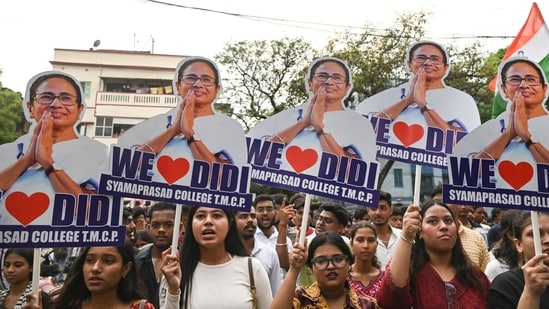
On April 19, 2026, West Bengal Chief Minister Mamata Banerjee launched a fierce counter-narrative against Prime Minister Narendra Modi’s assertions regarding women’s political empowerment. Speaking from Kolkata, Banerjee highlighted that a staggering 37.9% of the Trinamool Congress (TMC) Lok Sabha members are women, challenging the central government’s delayed implementation of the national gender quota. She accused the Modi administration of using the promised Women’s Reservation Act as a convenient “shield” to discreetly enforce a highly controversial delimitation exercise. This escalating confrontation underscores a profound political rift between regional powers and New Delhi over demographic representation and federal equity.
## Setting the Record Straight: TMC’s 37.9% Benchmark
For years, the political discourse in India has been dominated by promises of elevating women to top legislative roles. While the Bharatiya Janata Party (BJP) has frequently cited the passage of the Nari Shakti Vandan Adhiniyam (Women’s Reservation Act) in late 2023 as a landmark achievement, opposition parties have consistently targeted the legislation’s inherent delays. Mamata Banerjee’s latest strategic move shifts the focus from legislative promises to tangible, immediate results.
By pointing out that **37.9% of TMC’s current Lok Sabha MPs are women**, Banerjee is setting a numerical benchmark that far exceeds the national average, which hovers significantly lower. [Source: Hindustan Times | Additional: Election Commission of India historical data]. The TMC has historically utilized its ticket distribution as a tool for gender equity, famously fielding 41% female candidates in recent general elections without the compulsion of a constitutional mandate.
Banerjee’s data-driven approach is designed to systematically dismantle the Prime Minister’s campaign claims. By showcasing organic, party-level implementation of female representation, the West Bengal Chief Minister is effectively asking why the central government requires an elaborate, multi-year constitutional overhaul to achieve what regional parties have already operationalized.
## The ‘Shield’ Analogy: Unpacking Banerjee’s Accusation
The crux of Banerjee’s April 19 statement lies in her provocative assertion regarding the central government’s ulterior motives. “What we are fundamentally opposed to is the delimitation exercise that the Modi govt was plotting to push through by using women as a shield,” CM Banerjee stated emphatically. [Source: Hindustan Times].
To understand this accusation, one must untangle the legal stipulations of the Women’s Reservation Act. The 2023 legislation, which reserves 33% of seats in the Lok Sabha and state assemblies for women, contains a crucial caveat: it will only come into effect after a new national census is conducted, followed by a nationwide delimitation exercise to redraw constituency boundaries.
Banerjee is arguing that the BJP’s genuine goal is not the immediate empowerment of women, but rather the execution of the delimitation process. By inextricably linking the universally popular concept of women’s reservation to the highly contentious process of delimitation, the central government has created a political framework where opposing delimitation can be weaponized and framed as being “anti-women.” The TMC leader is actively attempting to decouple these two issues in the public consciousness.
## The Delimitation Dilemma: A Demographic Penalty?
The conflict over delimitation is arguably one of the most significant constitutional flashpoints in modern Indian history. Delimitation is the process of fixing limits or boundaries of territorial constituencies based on population changes. In 2001, the 84th Constitutional Amendment froze the reapportionment of Lok Sabha seats until the first census conducted after the year 2026.
Now that 2026 has arrived, the expiration of this freeze looms large. States in Southern and Eastern India, including West Bengal, Tamil Nadu, and Kerala, have successfully implemented aggressive family planning and population control measures over the last four decades. Consequently, their population growth has stabilized compared to northern states like Uttar Pradesh and Bihar.
If Lok Sabha seats are redistributed purely based on the latest demographic data, northern states will see a massive increase in their parliamentary representation, while southern and eastern states will face a relative decline in their political power at the center. Banerjee’s resistance to the Modi government’s delimitation push is rooted in the fear that West Bengal will suffer a “demographic penalty” for its progressive population management. [Source: Public policy records on Indian federalism].
## Constitutional Mechanics and the Post-2026 Timeline
The timeline of these intersecting policies is critical to the current political deadlock. The decennial census, originally scheduled for 2021, was indefinitely delayed, initially due to the COVID-19 pandemic and subsequently due to administrative inertia. As of early 2026, the central government has signaled intentions to finally execute the census, which will sequentially trigger the Delimitation Commission’s mandate.
However, executing delimitation requires political consensus, especially when the balance of power across the Indian federation is at stake. The BJP, which enjoys a strong political base in the populous northern belt, stands to benefit mathematically from a reapportionment of seats. Conversely, regional parties forming the opposition block view the impending delimitation as an existential threat to their influence in New Delhi.
By tying the rollout of the 33% women’s quota to this delayed and fraught process, the central government has effectively placed the burden of the timeline on bureaucratic and demographic restructuring. Mamata Banerjee’s critique exposes this dependency, demanding to know why the reservation cannot be implemented within the existing parliamentary framework immediately.
## Expert Perspectives on the Impasse
Political analysts and constitutional experts are closely monitoring the standoff, noting that Banerjee’s strategic messaging is resonating across state lines.
“Mamata Banerjee is effectively preempting the central government’s narrative heading into the delimitation battle,” explains Dr. Arindam Sen, a political sociologist specializing in federal relations at the New Delhi Centre for Policy Studies. “By putting forth the undeniable 37.9% statistic, she neutralizes the BJP’s ability to paint the opposition as regressive on gender issues. She has successfully reframed the debate from ‘who supports women’ to ‘who is trying to alter the federal balance of power’.”
Similarly, constitutional law expert Meera Desai highlights the legal complexities of the situation. “The Nari Shakti Vandan Adhiniyam was drafted with a structural delay built into it. Legally, the government is bound to wait for the census and delimitation. However, politically, Banerjee is correct in pointing out that if a party truly prioritizes women’s representation, it does not need a constitutional mandate to issue election tickets to female candidates. The TMC’s internal party policy has bypassed the legislative gridlock.” [Source: Independent expert analysis].
## Implications for India’s Federal Structure
The clash between the TMC and the BJP over this issue is not merely a regional dispute; it is a preview of the massive federal battles that will dominate Indian politics in the late 2020s. As the delimitation freeze expires, the core question of how India balances the principle of “one person, one vote” with the necessity of protecting the political agency of states that have successfully managed their populations remains entirely unresolved.
Banerjee’s rhetoric aims to build a coalition of states that share her apprehensions. Political leaders in Tamil Nadu, Karnataka, and Kerala have expressed similar sentiments, fearing that the upcoming delimitation will dilute their states’ voices in the Lok Sabha. By framing the central government’s actions as a deceptive maneuver—using the universally lauded goal of female empowerment as a trojan horse for a politically advantageous delimitation—Banerjee is providing a unified talking point for the national opposition.
## Conclusion: A High-Stakes Political Chess Game
Mamata Banerjee’s declaration that 37.9% of her party’s Lok Sabha members are women is far more than a simple assertion of feminist credentials; it is a calculated, strategic strike against the structural foundations of the Modi government’s long-term political roadmap.
As India steps into a critical phase of demographic counting and subsequent political restructuring, the debate over the Women’s Reservation Act has been transformed. It is no longer just a question of gender equity, but a fiercely contested battleground over the future shape of Indian federalism. The Prime Minister’s claims of championing women’s quotas will continue to be met with intense scrutiny from regional leaders who demand immediate action rather than future promises tied to demographic reapportionment.
Whether the central government will choose to decouple the women’s quota from the explosive issue of delimitation remains to be seen. However, as the Chief Minister of West Bengal has made abundantly clear, regional parties are well-prepared to fight the numbers game on their own terms, armed with their own data and an uncompromising defense of their state’s political weight.
By Vikram Chatterjee, India Polity Review, April 19, 2026