
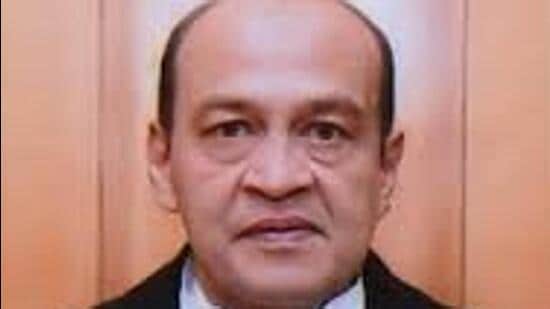
Justice Yashwant Varma resigns amid cash probe, impeachment inquiry set to lapse| India News
# Justice Varma Quits Amid Cash Probe
**By Senior Legal Correspondent, New Delhi Chronicle, April 10, 2026**
**NEW DELHI** — In a dramatic turn of events that has sent shockwaves through India’s legal and political establishments, Justice Yashwant Varma has officially resigned from his judicial post as of Friday, April 10, 2026. The resignation comes amidst an intensifying multi-agency probe into unaccounted cash allegedly found at his official Delhi residence. Crucially, his decision to step down means that the highly publicized parliamentary impeachment inquiry, which was gathering momentum, is now set to lapse. This development raises profound questions regarding judicial accountability, the limits of constitutional oversight, and the ongoing criminal investigation into the origins of the scorched currency.
[Source: Hindustan Times | Additional: Constitutional Framework of India]
## The Catalyst: The 2025 Residence Fire
The controversy that ultimately derailed Justice Varma’s judicial career traces its origins back to a mysterious fire incident at his official bungalow in central Delhi in late 2025. What was initially reported as a routine electrical short-circuit rapidly devolved into a national scandal.
First responders from the Delhi Fire Services, while securing the premises and assessing the structural damage, reportedly stumbled upon a startling discovery. Hidden within the charred remnants of a reinforced storage room were partially burnt wads of currency notes. Initial estimates from law enforcement suggested the amount of unaccounted cash ran into several crores, though exact figures remain heavily guarded by investigating authorities.
The visual evidence of scorched currency bundles—leaked to the press shortly after the incident—sparked widespread public outrage. Consequently, civil society groups and legal watchdog organizations demanded immediate transparency, forcing the government and the higher judiciary to take unprecedented steps to address the breach of judicial integrity.
## The Impeachment Motion and Legislative Fallout
Under the Indian Constitution, removing a sitting judge of a High Court or the Supreme Court is an intentionally arduous process designed to protect judicial independence. Dictated by **Article 124(4)** and regulated by the **Judges (Inquiry) Act, 1968**, an impeachment requires a motion signed by either 100 members of the Lok Sabha or 50 members of the Rajya Sabha.
Following the fire incident and the ensuing Directorate of Enforcement (ED) reports, an impeachment motion was successfully admitted in Parliament in early 2026. A statutory three-member committee—comprising a Supreme Court judge, a Chief Justice of a High Court, and a distinguished jurist—was constituted to investigate the charges of “proved misbehaviour” and gross financial impropriety.
However, Justice Varma’s resignation abruptly halts this legislative machinery. Legal precedents dictate that if a judge resigns before the parliamentary vote is conducted, the impeachment motion becomes infructuous and automatically lapses.
“The constitutional mechanism of impeachment is strictly meant to remove a judge from office. Once the individual voluntarily relinquishes that office, Parliament loses its jurisdiction to proceed with the inquiry,” explained Dr. Arvind Chaturvedi, a senior constitutional scholar and former Secretary-General of the Lok Sabha. “While the constitutional inquiry lapses, the individual does not gain immunity from the law of the land.”
## Historical Context: When Judges Resign Amid Probes
Justice Varma’s resignation is not an isolated phenomenon in Indian judicial history. The lapsing of an impeachment motion due to a preemptive resignation has occurred several times, frequently leaving the public frustrated by the lack of a conclusive parliamentary verdict.
**Notable Past Impeachment Motions in India:**
| Judge Name | Year | Allegations | Outcome |
| :— | :— | :— | :— |
| **Justice V. Ramaswami** | 1993 | Financial irregularities | Motion failed in Lok Sabha due to abstentions. |
| **Justice P.D. Dinakaran** | 2011 | Corruption and land grab | Resigned before the inquiry committee could complete its probe; motion lapsed. |
| **Justice Soumitra Sen** | 2011 | Misappropriation of funds | Resigned after Rajya Sabha passed the motion, but before the Lok Sabha vote; motion lapsed. |
| **Justice Yashwant Varma** | 2026 | Unaccounted cash discovery | Resigned before inquiry committee findings were tabled; motion lapsed. |
[Source: Historical Judicial Records | Additional: Legislative Archives of India]
## The Ongoing Financial and Criminal Investigations
While Justice Varma has successfully bypassed the ignominy of a parliamentary removal, his legal troubles are far from over. Now stripped of the constitutional protections and immunities afforded to a sitting judge, he faces the full brunt of India’s investigative agencies as a private citizen.
The **Central Bureau of Investigation (CBI)** and the **Directorate of Enforcement (ED)** have reportedly registered preliminary inquiries under the Prevention of Corruption Act, 1988, and the Prevention of Money Laundering Act (PMLA), 2002. Investigators are meticulously tracing the serial numbers of the unburnt currency, analyzing banking trails, and questioning individuals who frequented the residence prior to the 2025 fire.
A key focus of the investigation is establishing a *quid pro quo*. Authorities are cross-referencing high-stakes commercial and corporate verdicts delivered by Justice Varma over the past three years to determine if the unaccounted wealth is tied to judicial bribery. Furthermore, the Income Tax Department is simultaneously running a tax evasion probe concerning the disproportionate assets.
“The resignation only closes the constitutional chapter; the criminal chapter has just been thrust wide open,” stated Meenakshi Sundaram, a Senior Advocate at the Supreme Court. “As a private citizen, Mr. Varma can now be summoned, interrogated, and even subjected to custodial interrogation if the investigating agencies deem it necessary and acquire the requisite warrants.”
## Public Perception and the Crisis of Judicial Trust
The judiciary in India has historically enjoyed a revered status, often viewed as the last bastion of hope and moral rectitude by the common citizen. However, scandals of this magnitude risk eroding that foundational public trust.
The discovery of physical cash—especially in a digital-first economy heavily scrutinized since the demonetization era—paints a grim picture of systemic vulnerabilities. Legal commentators argue that the current collegium system and the in-house mechanisms for addressing judicial misconduct require urgent reform. Relying solely on the cumbersome impeachment process has proven ineffective, as judges can easily utilize the “resignation loophole” to avoid parliamentary censure and secure their post-retirement benefits, though the latter may be frozen depending on the outcome of the criminal probes.
The Bar Council has issued strong statements urging the investigating agencies to pursue the matter without prejudice or delay. “The integrity of the institution is paramount. No individual, no matter how high they once sat on the bench, is above the law. A swift, transparent, and logical conclusion to this cash probe is essential to restore faith in our justice delivery system,” a spokesperson for the Bar Association told reporters outside the Supreme Court on Friday morning.
## Moving Forward: Implications for the Indian Judiciary
The lapse of Justice Varma’s impeachment inquiry is a stark reminder of the limitations of the Judges (Inquiry) Act. As lawmakers convene for the upcoming Monsoon Session, there is a renewed, bipartisan push to introduce amendments that would allow parliamentary inquiries to conclude and publish their findings even if a judge resigns mid-process. Such an amendment would ensure that the historical record reflects the truth of the allegations, preventing disgraced officials from quietly returning to lucrative private practice or arbitration roles.
Additionally, this incident has accelerated discussions regarding the implementation of the long-pending **Judicial Standards and Accountability Bill**, which aims to create a more robust, independent oversight mechanism to investigate complaints against judges without immediately resorting to the nuclear option of impeachment.
## Conclusion
The resignation of Justice Yashwant Varma on April 10, 2026, marks the end of a tumultuous constitutional crisis, but it signifies the beginning of a complex legal battle. The 2025 residence fire did more than damage a government bungalow; it illuminated alleged financial improprieties that threaten the sanctity of the judicial institution.
While the impeachment inquiry has lapsed, the burden now falls entirely on India’s premier investigative agencies to unearth the truth behind the burnt wads of cash. The coming months will be critical. The nation watches closely not just to see the fate of one former judge, but to witness whether the Indian state possesses the institutional fortitude to hold its most powerful arbiters of justice accountable under the very laws they once upheld.





