
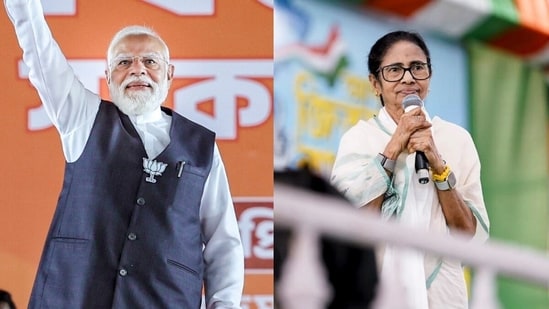
Elections 2026 LIVE: Modi to address 3 rallies in Bengal; TMC says BJP wants to 'erase India's diversity'| India News
# Bengal Polls: Modi Rallies as TMC Slams UCC Push
Prime Minister Narendra Modi is scheduled to address three major political rallies in West Bengal this Saturday, April 11, 2026, marking a significant escalation in the Bharatiya Janata Party’s (BJP) campaign for the impending state assembly elections. Simultaneously, the ruling Trinamool Congress (TMC), led by Chief Minister Mamata Banerjee, has launched a fierce critique of the BJP’s electoral promise to implement the Uniform Civil Code (UCC) in the state. According to TMC leadership, the introduction of the UCC threatens to dismantle and “erase India’s diversity.” As the high-stakes 2026 electoral battle intensifies, the clash over cultural identity, legal uniformity, and regional autonomy is swiftly becoming the defining narrative of the campaign. [Source: Hindustan Times RSS | Additional: Indian Electoral Context 2026].
## Prime Minister Modi’s Strategic Campaign Blitz
With the West Bengal legislative assembly elections approaching, the BJP is deploying its top leadership to galvanize grassroots support across the state. **Prime Minister Narendra Modi’s three planned rallies on Saturday are strategically positioned in critical electoral battlegrounds.** While the exact venues have been closely guarded for security reasons, party insiders indicate the focus will heavily target North Bengal, the tribal-dominated Jangalmahal region, and the politically volatile South 24 Parganas district.
The Prime Minister’s speeches are expected to highlight the central government’s welfare schemes, infrastructure development initiatives, and a strong anti-corruption narrative directed at the incumbent TMC government. However, the cornerstone of the BJP’s 2026 manifesto in the state has increasingly shifted toward sweeping legislative reforms, most notably the implementation of the Uniform Civil Code.
The BJP has long maintained that West Bengal requires a “double-engine government”—referring to the same party holding power at both the state and national levels—to accelerate economic growth and ensure the direct transfer of central benefits to the state’s populace. Modi’s rallies are expected to draw massive crowds, underscoring the BJP’s determination to improve upon its performance in the 2021 assembly elections, where it emerged as the principal opposition party. [Source: Hindustan Times RSS | Additional: Historical Election Data].
## The Uniform Civil Code (UCC): A Core Ideological Battle
The debate surrounding the **Uniform Civil Code (UCC)** has rapidly evolved into the most contentious issue of the 2026 Bengal election cycle. The UCC proposes to replace the personal laws based on the scriptures and customs of various religious communities with a common set of laws governing every citizen in matters such as marriage, divorce, inheritance, and adoption.
For the BJP, the implementation of the UCC is a foundational ideological commitment, rooted in **Article 44 of the Directive Principles of State Policy** in the Indian Constitution. The party argues that a uniform code is essential for fostering national integration and ensuring gender justice. Proponents of the UCC assert that disparate personal laws often disproportionately disadvantage women and that a standardized legal framework would uphold the constitutional mandate of equality before the law.
Following the successful passage of UCC legislation in states like Uttarakhand in early 2024, the BJP has promised to replicate the model in West Bengal if voted into power. The party’s state leadership has actively campaigned on the premise that a uniform civil code will eliminate discriminatory practices and modernize the state’s social framework.
## Trinamool Congress Mounts a Stiff Resistance
The Trinamool Congress has unequivocally rejected the BJP’s UCC proposal, framing it as an existential threat to the secular and pluralistic fabric of India. **Reacting to the BJP’s campaign, the TMC issued a strong statement asserting that the push for a Uniform Civil Code is a deliberate attempt to “erase India’s diversity.”**
TMC leaders argue that India’s strength lies in its diverse cultural, linguistic, and religious traditions, which are protected by the Constitution. Chief Minister Mamata Banerjee has historically maintained that any attempt to impose a monolithic legal code would alienate minority communities and disrupt social harmony.
“The BJP’s obsession with the Uniform Civil Code is not about legal parity; it is about political homogenization,” stated a senior TMC spokesperson during a recent press briefing. “In a state like West Bengal, which prides itself on syncretic traditions and communal harmony, forcing a singular civil code is an affront to our pluralistic ethos. We will not allow the BJP to bulldoze the rights of minorities and indigenous communities under the guise of uniformity.” [Source: Hindustan Times RSS].
## Demographic Dynamics and Voter Ramifications
The UCC debate in West Bengal cannot be understood without analyzing the state’s complex demographic realities. West Bengal is home to a substantial Muslim population, officially recorded at over 27% in the last census, though current estimates suggest it may be higher in specific border districts. This demographic bloc has traditionally been a crucial support base for the TMC. The proposed abolition of the Muslim Personal Law under the UCC has generated widespread apprehension within the community, an anxiety the TMC is actively addressing in its campaign.
Furthermore, the state’s tribal populations, particularly the Santhals, Mundas, and Oraons in the western districts, have distinct customary laws governing marriage and inheritance. **Key demographic factors influencing the UCC debate include:**
* **Minority Apprehensions:** Concerns over the loss of religious personal laws regarding marriage and inheritance.
* **Tribal Customary Laws:** Fear among Adivasi communities that a uniform code might override their constitutionally protected traditional practices and land inheritance rights.
* **The Matua Factor:** The Matua community, a significant Hindu Dalit voting bloc, is also closely monitoring the legal landscape. While largely supportive of the Citizenship Amendment Act (CAA), their stance on the UCC remains nuanced, with community leaders seeking assurances regarding their specific social customs.
By vigorously opposing the UCC, the TMC aims to consolidate these diverse voting blocs, presenting itself as the ultimate protector of minority and regional identities against perceived overreach by the central government.
## Political Analysts Weigh In on the High-Stakes Duel
Independent political analysts view the escalating rhetoric around the UCC as a deliberate polarization strategy by both the BJP and the TMC, designed to energize their respective core constituencies.
“The introduction of the Uniform Civil Code into the Bengal election discourse serves as a dual-edged sword,” observes Dr. Amitava Lahiri, a prominent political scientist based in Kolkata. “For the BJP, it is a masterstroke to consolidate the conservative Hindu vote by fulfilling a longstanding ideological promise. It aligns perfectly with their national narrative of ‘One Nation, One Law.’ Conversely, for the TMC, opposing the UCC is the most effective mechanism to prevent any fragmentation of the minority vote, ensuring it remains solidly behind Mamata Banerjee.”
Professor Ananya Sen, an expert in constitutional law and state politics, adds context regarding the legal feasibility of the promise. “While a state can technically pass its own UCC, as seen in Uttarakhand, doing so in a demographically complex and politically volatile state like West Bengal poses immense administrative and social challenges. The rhetoric currently outpaces the practical legislative roadmap, making it primarily an electoral tool rather than an imminent policy shift.” [Source: Independent Expert Analysis based on Indian Constitutional Law].
## Echoes of the 2021 Assembly Elections
The current political climate is heavily influenced by the aftermath of the 2021 West Bengal Assembly elections. In that highly charged contest, the TMC secured a landslide victory, winning 213 of the 292 contested seats, effectively halting the BJP’s formidable electoral machinery. However, the BJP successfully established itself as the primary opposition, securing 77 seats and marginalizing traditional forces like the Left Front and the Indian National Congress.
As the state heads into the 2026 elections, the dynamics have evolved. The TMC faces the natural challenges of anti-incumbency, having been in power since 2011. The party is countering this by expanding its popular cash-transfer welfare schemes, such as *Lakshmir Bhandar*, which have generated massive goodwill among female voters.
The BJP, meanwhile, has recalibrated its strategy. While continuing to attack the state government on issues of alleged corruption and political violence, the party is heavily pivoting to ideological cornerstones like the UCC to create a clear, binary choice for the electorate. PM Modi’s upcoming rallies are expected to be the launchpad for this intensified, ideologically driven phase of the campaign.
## Security and Election Commission Preparations
Given West Bengal’s history of politically motivated violence during election seasons, the Election Commission of India (ECI) has initiated unprecedented preparatory measures for the 2026 polls. Anticipating a highly polarized environment exacerbated by sensitive topics like the UCC, the ECI is planning a multi-phase voting schedule to ensure adequate security coverage.
**Key logistical preparations include:**
* **Deployment of CAPF:** Massive deployment of Central Armed Police Forces (CAPF) to sensitive districts well in advance of the polling dates.
* **Vulnerability Mapping:** The ECI has been conducting extensive vulnerability mapping to identify booths prone to intimidation or violence.
* **Strict Model Code Enforcement:** The Commission has issued stern warnings to all political parties to refrain from hate speech or rhetoric that could incite communal disharmony, a particularly challenging directive given the emotive nature of the UCC debate.
## Conclusion: Key Takeaways and Future Outlook
The 2026 West Bengal Assembly elections are shaping up to be a profound ideological battle, moving beyond traditional metrics of development and incumbency. The BJP’s strategic push for the Uniform Civil Code, spearheaded by high-profile rallies from Prime Minister Narendra Modi, represents a calculated gamble to unify its voter base around a core nationalistic policy.
In stark contrast, the Trinamool Congress’s vehement opposition, characterizing the UCC as an assault on India’s intrinsic diversity, highlights the party’s reliance on a coalition of minorities, regionalists, and marginalized communities.
As Saturday’s rallies unfold, the political temperature in West Bengal will undoubtedly rise. The outcome of this election will not only determine the governance of one of India’s most populous states but will also serve as a crucial referendum on the national acceptance of the Uniform Civil Code, setting the legislative agenda for the remainder of the decade. The coming weeks will reveal whether the promise of legal uniformity or the defense of cultural diversity resonates more powerfully with the Bengali electorate.
***
*By Vikram Chatterjee, India Electoral Desk, April 11, 2026.*





