
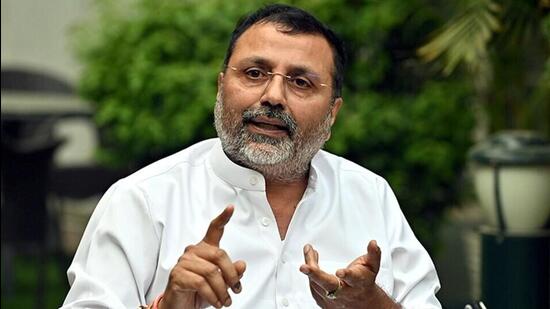
Parl panel suggests X ‘Community Notes’ may be treated as publishing activity: Chairperson| India News
# X Community Notes Face Publisher Tag in India
In a significant regulatory shift that could redefine the boundaries of social media governance, an Indian Parliamentary panel has recommended that X’s (formerly Twitter) “Community Notes” feature be classified as a publishing activity rather than a neutral platform function. On Saturday, April 11, 2026, the chairperson of the Standing Committee on Communications and Information Technology urged the Ministry of Electronics and Information Technology (MeitY) to reassess the platform’s safe harbor status. The panel suggested implementing a “publisher tax model” if the platform continues to curate content through its crowd-sourced fact-checking system. As the government contemplates this unprecedented classification, digital rights experts are warning that the move could severely impact free speech and alter the operational reality for all tech intermediaries in India. [Source: Hindustan Times]
## Intermediary Liability vs. Editorial Control
At the heart of this brewing regulatory storm is the legal distinction between an “intermediary” and a “publisher.” Under **Section 79 of the Information Technology Act, 2000**, social media platforms enjoy “safe harbor” protections. This legal shield ensures that platforms are not held legally liable for the content posted by their users, provided they act merely as a conduit for information and strictly follow government takedown orders and due diligence guidelines. [Source: Public Domain Legal Knowledge]
However, the Parliamentary panel argues that the introduction and active promotion of Community Notes fundamentally alters this dynamic. By allowing a system that appends context, warnings, or fact-checks directly to user posts, the platform is arguably exercising editorial discretion. The panel’s chairperson highlighted that adding contextual labels to specific posts curates the narrative, a core function traditionally associated with news publishers and editorial boards.
If MeitY adopts this recommendation, X could be stripped of its intermediary status. Losing this protection means the platform could face civil and criminal liability for every piece of user-generated content hosted on its servers. This paradigm shift would not only affect X but could set a legal precedent for other platforms like Meta, Google, and Reddit, forcing them to re-evaluate their own content moderation and contextual labeling tools.
## The Mechanics of the ‘Community Notes’ Dilemma
To understand the parliamentary panel’s stance, it is crucial to analyze how Community Notes functions. Introduced as a decentralized, crowd-sourced alternative to centralized corporate content moderation, Community Notes relies on users to write and rate contextual additions to posts. An open-source “bridging algorithm” then determines which notes are displayed publicly, requiring a consensus across users who typically disagree on various topics to ensure neutrality.
Despite its decentralized facade, the panel asserts that X maintains the ultimate architecture of this system. The company designs the algorithm, sets the parameters for what constitutes a “helpful” note, and physically integrates the final output into the reading experience of millions of Indian citizens.
“When a platform determines the veracity or context of a statement—even through a decentralized, algorithm-driven mechanism—it steps out of its role as a mere conduit of information and steps into the shoes of an editor,” notes Dr. Arindam Sen, a prominent digital policy researcher. “The parliamentary panel is essentially arguing that the algorithmic curation of facts is synonymous with editorial publishing.” [Source: Industry Expert Analysis]
This presents a complex dilemma for tech companies. Features like Community Notes were developed specifically to combat misinformation and comply with global demands for cleaner digital ecosystems. Yet, under the panel’s proposed framework, the very tools designed to moderate harmful content could legally transform the platform into a traditional publisher, subjecting it to a vastly different and highly stringent regulatory regime.
## Proposing a Publisher Tax Model
Perhaps the most economically disruptive element of the panel’s recommendation is the urging of MeitY to implement a “publisher tax model” for platforms that cross the line into publishing activities. [Source: Hindustan Times]
If X and similar platforms are legally recognized as publishers, the panel suggests they should be subject to the same tax liabilities and regulatory compliances as traditional media entities. This includes traditional corporate taxes associated with media companies, as well as potential revenue-sharing mandates.
The publisher tax model debate is rooted in the long-standing grievance of traditional Indian news media. Legacy publishers have argued for years that Big Tech platforms disproportionately profit from digital advertising while relying on the journalistic output of traditional newsrooms. By reclassifying X’s Community Notes as a publishing activity, the government could leverage this framework to force tech giants to pay a specialized tax or negotiate mandatory compensation agreements with registered Indian news publishers.
**Key components of the proposed publisher tax model could include:**
* **Equalization Levies:** Enhanced digital taxes specifically targeting revenues generated from algorithmic content curation.
* **Mandatory Revenue Sharing:** Forcing platforms to distribute a percentage of their advertising revenue to verified local news outlets.
* **FDI Restrictions:** Subjecting social media platforms to the stringent Foreign Direct Investment (FDI) caps currently applied to digital news media in India (capped at 26%).
## Potential Impact on Free Speech and Digital Expression
While the economic implications are profound, legal experts are sounding the alarm over the potential collateral damage to free speech in the world’s largest democracy. Stripping a platform of its safe harbor protections inherently alters its risk calculus.
If X is held legally responsible for every tweet that receives a Community Note—or worse, every tweet on the platform because the platform is now deemed a publisher—the company’s logical response would be extreme risk aversion. This phenomenon, known as the “chilling effect,” would likely result in aggressive, preemptive censorship.
Shalini Mehta, a constitutional lawyer specializing in technology, outlines the potential fallout: “Stripping safe harbor protections due to a feature designed to combat misinformation is a paradoxical regulatory approach. If X is legally liable for user content, it will no longer give users the benefit of the doubt. The platform will inevitably resort to over-blocking legitimate political discourse, dissenting opinions, and citizen journalism simply to avoid government prosecution or civil lawsuits.” [Source: Legal Policy Analysis]
Experts warn that this could disproportionately affect independent creators, activists, and ordinary citizens who rely on X as a democratized public square. The threat of legal liability could force platforms to implement draconian automated filters, fundamentally stifling the vibrant, albeit chaotic, digital discourse that characterizes the Indian internet. [Source: Hindustan Times]
## MeitY’s Next Steps and Legal Implications
The ball is now firmly in the court of the Ministry of Electronics and Information Technology (MeitY). As the nodal ministry responsible for digital governance, MeitY must decide whether to formally adopt the Parliamentary panel’s recommendations and initiate the complex process of amending the Information Technology Rules.
Historically, MeitY has maintained a stringent approach to platform compliance, frequently engaging in legal friction with X over content takedown orders. The current recommendations align with the government’s broader ambition to tighten oversight over Big Tech, as anticipated in the upcoming drafts of the Digital India Act, which aims to replace the two-decade-old IT Act. [Source: Public Domain Policy Knowledge]
If MeitY issues a directive classifying Community Notes as a publishing activity, X will face a critical juncture. The platform could choose to:
1. **Disable Community Notes in India:** Disabling the feature entirely to retain safe harbor status, though this would leave the platform vulnerable to unchecked misinformation.
2. **Challenge the Directive in Court:** Initiating a lengthy legal battle in the Indian Supreme Court, arguing that crowdsourced context does not equate to centralized editorial control.
3. **Comply and Restructure:** Accepting the publisher classification, overhauling its corporate structure in India, and facing severe censorship liabilities and potential publisher taxes.
## Global Precedents and Big Tech Regulations
India’s regulatory pivot does not exist in a vacuum. Governments worldwide are grappling with how to regulate the immense power of digital platforms. However, India’s approach of tying a crowdsourced moderation tool directly to publisher status is uniquely aggressive.
In the European Union, the Digital Services Act (DSA) mandates that very large online platforms implement robust risk mitigation tools—such as Community Notes—without automatically stripping them of liability exemptions. The EU focuses on systemic risk rather than redefining platforms as traditional publishers.
Similarly, Australia pioneered the News Media Bargaining Code, and Canada implemented the Online News Act to force tech giants to compensate local media. However, these laws focus on the aggregation and distribution of traditional news links, rather than the intrinsic contextual labels generated by users on the platform itself.
If India successfully enforces the publisher tag and tax model based on Community Notes, it will establish a radical new global precedent. It would signal to the world that any algorithmic or user-consensus-based context addition is legally synonymous with traditional journalism and editing.
## Conclusion and Future Outlook
The Parliamentary panel’s recommendation to treat X’s Community Notes as a publishing activity represents a watershed moment in digital regulation. It highlights the increasingly blurred lines between hosting content, moderating misinformation, and traditional publishing.
For MeitY, the challenge lies in balancing the desire to hold Big Tech accountable and support local news ecosystems with the constitutional imperative to protect free speech. Implementing a publisher tax model might provide economic redress for traditional media, but stripping platforms of safe harbor protections could irreparably damage the free flow of information online.
As the April 2026 digital landscape awaits MeitY’s official response, tech platforms, digital rights advocates, and policymakers worldwide are watching closely. The outcome of this regulatory debate in India will likely shape the future architecture of the global internet, dictating how—and if—platforms can safely combat misinformation without becoming legally liable for the very content they seek to contextualize.
By Tech Desk, Digital Policy Review, April 11, 2026.





