
Mamata Banerjee says BJP misused Election Commission to invalidate her candidature in Bhabanipur| India News
# Mamata: BJP Used EC to Scrap Bhabanipur Bid
By Staff Reporter, India News Watch, April 11, 2026
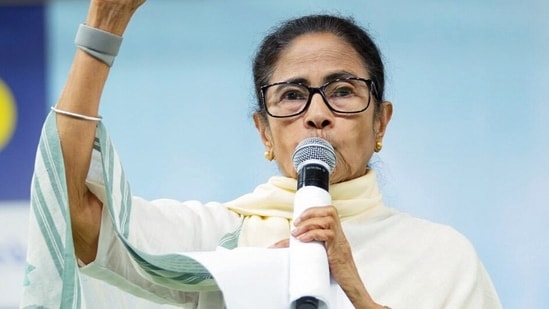
West Bengal Chief Minister Mamata Banerjee on Saturday accused the Bharatiya Janata Party (BJP) of weaponizing the Election Commission of India (ECI) to purposefully invalidate her candidacy in the Bhabanipur constituency. Speaking to the press in Kolkata on April 11, 2026, the Trinamool Congress (TMC) supremo claimed the ruling national party orchestrated the forceful deletion of 90 lakh legitimate voters from the state’s electoral rolls. Banerjee alleged this mass disenfranchisement occurred under the guise of the Special Intensive Revision (SIR) in a deliberate attempt to subvert the state’s democratic mandate ahead of the critical assembly polls.
## The Bhabanipur Candidature Controversy
The allegations bring the high-stakes political battle of West Bengal to a boiling point. Bhabanipur is not just any constituency; it is the traditional stronghold and political fortress of Mamata Banerjee. Her claim that the Election Commission is being used as a partisan tool to scrap her nomination has sent shockwaves through the national political landscape. According to the Chief Minister, minor technical discrepancies in her nomination papers were deliberately amplified by election officials under pressure from the central government, leading to an unwarranted invalidation of her candidacy [Source: Hindustan Times].
Banerjee’s legal team has reportedly characterized the objections raised against her nomination as “frivolous” and “unprecedentedly pedantic,” arguing that similar affidavits filed by candidates from the BJP were cleared without scrutiny. The invalidation of a sitting Chief Minister’s candidacy in her own bastion raises profound questions about the administrative processes governing Indian elections. Political commentators note that removing Banerjee from the ballot in Bhabanipur is a strategic maneuver designed to keep her tied up in legal battles, thereby preventing her from campaigning extensively across the state.
## The ‘Special Intensive Revision’ Scrutiny
Beyond her personal candidacy, the most explosive aspect of Banerjee’s press conference was her assertion regarding the systematic disenfranchisement of West Bengal voters. She accused the BJP-led central apparatus of “forcefully” deleting the names of 90 lakh voters from the state’s electoral rolls during the ECI’s recent Special Intensive Revision (SIR) [Source: Hindustan Times].
The Special Intensive Revision is a standard demographic exercise undertaken by the Election Commission to clean up electoral rolls—removing deceased voters, eliminating duplicates, and updating residential addresses. However, the sheer volume of the alleged deletions—90 lakh, which accounts for over 12% of West Bengal’s total electorate—has raised massive red flags among civil rights groups and opposition parties.
Banerjee alleged that the deletions disproportionately targeted minority neighborhoods, marginalized communities, and regions historically known to be TMC strongholds. “This is not an administrative cleanup; this is a calculated demographic manipulation,” she stated, adding that legitimate voters turning up with valid Aadhaar cards and Voter ID cards are suddenly finding themselves erased from the democratic process.
## BJP Repudiates the Allegations
The Bharatiya Janata Party has vehemently denied the accusations, framing Banerjee’s outburst as a symptom of political desperation. Senior BJP leaders in West Bengal swiftly convened a counter-press conference, dismissing the Chief Minister’s claims as “baseless fabrications.”
“Mamata Banerjee can see the writing on the wall. She knows the people of West Bengal have rejected her politics of appeasement and violence, so she is preparing an excuse for her inevitable defeat,” a senior BJP spokesperson remarked. The party emphasized that the Election Commission is an autonomous constitutional body and that the Special Intensive Revision was conducted under strict, transparent guidelines.
According to the BJP, the deletion of names was a necessary correction of “bloated and fraudulent” electoral rolls that the TMC had allegedly manipulated over its decade-and-a-half in power. The BJP claims the 90 lakh removed names consisted entirely of deceased individuals, ghost voters, and illegal immigrants who had been unlawfully granted voting rights to serve as a captive vote bank for the Trinamool Congress.
## Expert Perspectives on Institutional Integrity
The clash has ignited a fierce debate among constitutional experts regarding the independence of the Election Commission and the mechanics of voter roll management. The integrity of the electoral roll is the foundational bedrock of any functional democracy, and accusations of mass, targeted deletions warrant intense independent scrutiny.
Dr. Rajendra Desai, a New Delhi-based constitutional scholar and former advisor on electoral reforms, notes the gravity of the situation. “If even a fraction of the Chief Minister’s claims regarding the deletion of 90 lakh voters is true, it represents a catastrophic failure of electoral justice. Conversely, if 90 lakh fraudulent names were indeed lingering on the rolls, it highlights a deep, systemic rot in prior electoral management. In either scenario, the Election Commission must release a detailed, transparent demographic breakdown of the deleted names to restore public faith.” [Additional: Constitutional Expert Analysis].
Similarly, Sunita Chakraborty, a political analyst focusing on East Indian electoral dynamics, points out the timing of the SIR. “Conducting a sweeping intensive revision so close to a highly polarized assembly election inherently invites suspicion. The ECI’s mandate is not just to be fair, but to be overtly seen as fair. The invalidation of a major leader’s candidacy combined with mass deletions creates a narrative of institutional bias that damages the democratic fabric, regardless of the technical legalities.”
## Historical Context: The Escalating TMC-BJP Rivalry
To understand the magnitude of the April 2026 allegations, one must view them through the lens of the deeply entrenched rivalry between the TMC and the BJP. The political landscape of West Bengal has been highly volatile since the landmark 2021 Assembly elections. In that cycle, despite a massive central push by the BJP, Mamata Banerjee secured a resounding victory for the TMC. However, in a dramatic twist, she lost her personal election in Nandigram to her former protégé-turned-BJP leader, Suvendu Adhikari.
Following that defeat, Banerjee had to win a critical by-poll in Bhabanipur later that year to retain her Chief Ministerial seat. Bhabanipur thereby evolved into more than just a constituency; it became a symbol of her political resilience against the BJP’s national machinery.
The BJP has spent the intervening years aggressively expanding its grassroots presence in Bengal, capitalizing on anti-incumbency sentiments, local corruption scandals, and political violence. By invalidating her candidacy in the very constituency that secured her survival in 2021, the current controversy strikes at the heart of Banerjee’s political identity.
## Mechanics of Electoral Roll Management and Legal Recourse
Under the Representation of the People Act, 1950, the Election Commission is empowered to maintain and update electoral rolls. The process of deleting a voter (Form 7) requires specific criteria to be met: the person must be deceased, have shifted residence permanently, or be a duplicate entry. Crucially, the law mandates that notice must be served to the voter, and an opportunity for a hearing must be provided before their name is struck off the rolls.
The TMC alleges that in the case of the 90 lakh deleted voters, these statutory procedures were completely bypassed. Party officials claim that block-level officers (BLOs) were intimidated or sidelined, and deletions were executed centrally using flawed algorithmic matching that disproportionately impacted legitimate, minority voters.
In response to what it terms an “electoral coup,” the Trinamool Congress has announced its intention to approach the Supreme Court of India. The party is seeking an immediate injunction against the ECI’s current electoral roll and a fast-track judicial review of the Bhabanipur Returning Officer’s decision to invalidate Banerjee’s nomination. Furthermore, the TMC has called for statewide peaceful protests to “protect democracy” and has urged the President of India to intervene.
## Conclusion and Future Outlook
The allegations leveled by West Bengal Chief Minister Mamata Banerjee against the BJP and the Election Commission represent a critical stress test for India’s democratic institutions. The claims of invalidating a key opposition figure’s candidacy and the mass deletion of 90 lakh voters are unprecedented in their scale and potential impact.
As the 2026 assembly elections loom, the immediate future hinges on the intervention of the judiciary. The Supreme Court’s impending decisions regarding the electoral rolls and the Bhabanipur nomination will not only dictate the trajectory of the West Bengal elections but will also set critical precedents regarding the boundaries of Election Commission authority and the rights of the electorate.
If the public perceives the electoral referee as compromised, the legitimacy of the ultimate election results will be fundamentally fractured. In the coming weeks, the ECI faces the monumental task of providing transparent, incontrovertible data to justify the massive voter deletions, while the political war of words between the TMC and the BJP is guaranteed to escalate into one of the most contentious electoral battles in modern Indian history.





