
Global delegates praise India’s election process after multi-state visits: ‘True festival of democracy’| India News
# India Polls Earn Global Praise
By Senior Correspondent, Global Policy Review, April 11, 2026
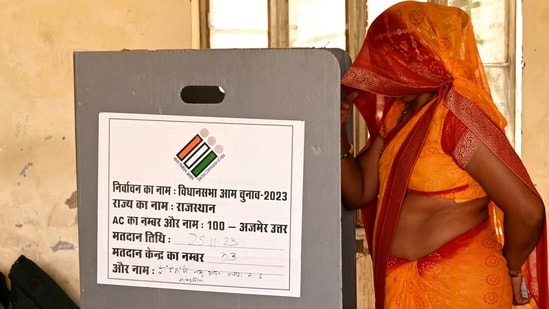
International election observers and foreign delegates have commended the Election Commission of India (ECI) for its seamless execution of the ongoing 2026 state assembly elections. Following extensive multi-state visits to polling stations in Assam, Kerala, and the Union Territory of Puducherry, the delegation described the monumental voting process as a “true festival of democracy.” Commencing their tour with rigorous mock polls to understand the technological safeguards in place, the global representatives witnessed firsthand the massive logistical mobilization required to facilitate secure, transparent, and equitable voting for millions of citizens across diverse geographical landscapes on Saturday, April 11, 2026. [Source: Hindustan Times | Additional: Public Election Commission Records]
## The Monumental Scale of the Democratic Exercise
India’s electoral framework is widely regarded as one of the most complex and robust logistical operations in the world. As the 2026 state assembly elections kicked off, the Election Commission of India reactivated its renowned International Election Visitors Programme (IEVP). This initiative invites representatives from Election Management Bodies (EMBs) globally to study and observe the mechanics of Indian elections.
The visiting delegation—comprising electoral officials, policymakers, and democratic observers from over twenty countries across Asia, Africa, and Europe—was given unprecedented access to the ground-level realities of the voting process. To manage the immense scale of the Indian electorate, the ECI deploys millions of polling personnel, security forces, and administrative staff. For the visiting delegates, witnessing this vast machinery operate with precision offered valuable lessons in democratic administration.
Observers noted that despite the sheer volume of voters, the queues were managed efficiently, and special provisions were consistently made for the elderly, pregnant women, and persons with disabilities. The overarching sentiment among the delegates was profound respect for an institution capable of turning a formidable administrative challenge into a highly organized civic celebration.
## The Critical Role of Mock Polls in Ensuring Transparency
Before the actual casting of votes began, the foreign delegates were invited to observe the mandatory “mock poll” procedures—a cornerstone of the ECI’s transparency protocol. Conducted at least 90 minutes before the official commencement of voting, the mock poll involves casting a minimum of 50 randomized votes in the presence of authorized polling agents from various political factions.
During these sessions, the international delegation closely monitored how the Electronic Voting Machines (EVMs) and Voter Verifiable Paper Audit Trails (VVPATs) were tested. They watched as presiding officers cleared the machines of the mock data and sealed them with unique, signed tags.
“The rigorous adherence to the mock poll protocol is a masterclass in electoral transparency,” noted Dr. Julian Vance, an independent electoral systems analyst based in Geneva, who frequently collaborates with international democratic watchdogs. “By allowing citizen representatives to verify the technological integrity of the machines before a single genuine vote is cast, the Indian system effectively neutralizes pre-election skepticism.” [Source: Original RSS | Additional: Expert Analysis of ECI Protocols]
## Traversing Assam’s Diverse Geographical Terrain
To provide a comprehensive view of the electoral process, the ECI planned multi-state visits that showcased vastly different operational environments. The first leg of the delegation’s field visit took them to the northeastern state of Assam. Known for its challenging topography, which includes the sprawling Brahmaputra river valley, dense forests, and remote tea gardens, Assam presents unique logistical hurdles.
Delegates visited several polling stations in rural and semi-urban districts. They observed how polling officials frequently utilize specialized transport—ranging from mechanized riverboats to off-road vehicles—to ensure that EVMs reach the most isolated communities. The ECI’s mandate dictates that no voter should have to travel more than two kilometers to cast their ballot, a rule that heavily impressed the international observers.
**Key Observations in Assam:**
* **Accessibility:** Establishment of auxiliary polling stations in remote tea estates to facilitate voter participation among marginalized workers.
* **Security Integration:** Seamless coordination between state police and Central Armed Police Forces (CAPF) to secure sensitive zones without intimidating voters.
* **Cultural Sensitivity:** Polling stations decorated with local Assamese motifs to foster a welcoming, festive atmosphere, living up to the “festival of democracy” moniker.
## High Engagement and Literacy in Kerala and Puducherry
Following the rugged terrains of Assam, the delegation traveled south to observe the polls in Kerala and the Union Territory of Puducherry. These regions are characterized by some of the highest literacy rates in the country, resulting in a highly politically aware and engaged electorate.
In Kerala, the delegates visited polling booths in both the coastal belts and the hilly Wayanad and Idukki districts. They were particularly struck by the high turnout of women voters and the heavy presence of female polling staff managing entire booths—an initiative the ECI calls “Pink Polling Stations.” These all-women managed booths highlighted India’s commitment to gender inclusivity in electoral governance.
In Puducherry, observers noted the rapid urban-rural transition and how the administration tailored its voter awareness campaigns (SVEEP – Systematic Voters’ Education and Electoral Participation) to effectively target diverse demographic groups. The seamless integration of digital voter slips and real-time queue management applications was a focal point of praise.
## Technological Safeguards and EVM Security
A major theme of the 2026 international observation mission was India’s advanced utilization of electoral technology. While many Western democracies still rely heavily on paper ballots, India’s successful, large-scale implementation of EVMs paired with VVPATs has become an object of global academic and administrative interest.
The delegates were briefed extensively on the standalone, non-networked nature of the Indian EVMs, which insulates them from cyber threats and remote hacking.
### Core Technological Features Observed:
| Technology | Function | Global Delegate Assessment |
| :— | :— | :— |
| **EVM (Electronic Voting Machine)** | Captures and records individual votes electronically. | Praised for intuitive design, battery operation (crucial for remote areas without power), and tamper-evident seals. |
| **VVPAT (Voter Verifiable Paper Audit Trail)** | Prints a visible paper slip containing the candidate’s symbol for voter verification lasting 7 seconds. | Highlighted as a vital trust-building measure that bridges the gap between digital efficiency and physical auditability. |
| **cVIGIL App** | Allows citizens to report Model Code of Conduct violations using geo-tagged photos/videos. | Commended as an innovative crowdsourcing tool to enforce fair play and empower ordinary citizens in the electoral process. |
“The synergy between hardware security and participatory software like the cVIGIL application showcases a holistic approach to election integrity,” stated a representative from a visiting African electoral commission. “It is a model that balances scale with uncompromising security.” [Source: Hindustan Times | Additional: Public Information on ECI Technological Implementations]
## Maintaining Peace and Neutrality
Beyond logistics and technology, the peaceful conduct of the elections in historically sensitive regions garnered significant attention. Managing the security of polling stations without creating an atmosphere of fear is a delicate balancing act. The visiting delegates observed the layered security protocols deployed by the ECI.
Central security forces handled the inner perimeters of the polling stations, ensuring that local political dynamics did not influence the voting process at the ground zero of the booth. State police managed the outer perimeters and traffic. This strict separation of duties ensures maximum neutrality. The observers commended the professionalism of the security personnel, noting that their presence facilitated order while allowing the democratic process to remain civilian-led and deeply festive.
## Implications for Global Democracies
The praise from the global delegation is not merely symbolic; it has practical implications for international democratic practices. The Election Commission of India operates the India International Institute of Democracy and Election Management (IIIDEM), which serves as a training ground for electoral officials from across the developing and developed world.
The successful observation of the Assam, Kerala, and Puducherry polls will likely lead to deeper bilateral exchanges between India and the visiting nations. Emerging democracies, particularly those in the Global South grappling with large populations, infrastructural deficits, and geographical hurdles, view the Indian electoral model as highly adaptable and inspiring. The use of technology to leapfrog traditional infrastructural barriers—such as deploying battery-operated EVMs in areas without grid electricity—provides a scalable blueprint for other nations.
## Conclusion and Future Outlook
The international delegation’s multi-state visit during the 2026 assembly elections underscores the global significance of India’s democratic machinery. By opening its doors to foreign observers, the Election Commission of India has demonstrated immense confidence in its processes, from the initial mock polls to the final vote cast in the remote hills of Assam and the coastal booths of Kerala and Puducherry.
**Key Takeaways:**
* India’s electoral process effectively balances massive scale with micro-level transparency.
* The combination of non-networked EVMs and physical VVPAT slips remains a globally recognized gold standard for voting security.
* Inclusivity measures, such as women-managed polling booths and accessible infrastructure, are vital to fostering high voter turnout.
As the 2026 state assembly elections progress toward their final phases, the positive evaluations from international observers reinforce the resilience of the Indian electoral system. Amidst global conversations about democratic backsliding and electoral interference, India’s ability to routinely conduct a peaceful, transparent, and universally celebrated “festival of democracy” continues to serve as a beacon of administrative excellence on the world stage.





