
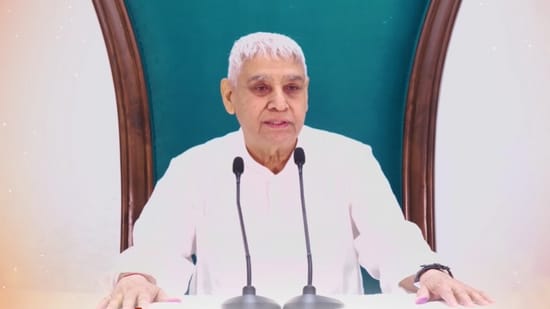
6 people died in siege when police went to arrest this Haryana 'godman'. 12 years on, Sant Rampal is out of jail| India News
# Sant Rampal Freed 12 Years After Siege
By Legal Correspondent, National News Desk | April 11, 2026
On Saturday, April 11, 2026, controversial self-styled godman Sant Rampal walked out of a Haryana prison, ending a 12-year incarceration that began following a fatal 2014 standoff with law enforcement. The Punjab and Haryana High Court granted the 74-year-old bail in a longstanding sedition case, specifically citing his advanced age, prolonged imprisonment, and the sluggish pace of the trial. This highly anticipated release closes a major chapter in a saga that deeply unsettled India a over decade ago, when thousands of followers formed a human shield at his Hisar ashram, resulting in a multi-day police siege and the tragic deaths of six individuals.
## The High Court’s Ruling: Justice Delayed and Advanced Age
The decision by the Punjab and Haryana High Court to grant bail to Sant Rampal underscores systemic issues within the Indian judicial process, particularly concerning complex cases involving political undertones and mass followers. Rampal was primarily arrested on charges of sedition, attempt to murder, and criminal conspiracy following the November 2014 clashes at the Satlok Ashram in Barwala, Hisar.
According to the recent judicial order, the bench noted that the accused had already spent 12 years behind bars—a tenure that practically equates to a life sentence under certain statutory interpretations—while the trial for sedition languished in procedural delays. The court emphasized that bail is a fundamental right when trials are unreasonably delayed, particularly for geriatric inmates suffering from age-related ailments.
[Source: Hindustan Times | Additional: Punjab and Haryana High Court Legal Precedents, 2026]
“The principle of ‘bail, not jail’ remains a cornerstone of Indian jurisprudence, even in cases that attract massive public scrutiny,” notes Rajiv Tandon, a senior advocate specializing in constitutional law. “When an undertrial prisoner, or an appellant awaiting final disposal of their case, crosses the age of 70 and has served over a decade without a finalized sedition conviction, the courts are constitutionally bound to consider their fundamental right to liberty, provided they do not pose a direct flight risk.”
## Who is Sant Rampal?
To understand the magnitude of his 2014 arrest and his 2026 release, it is essential to trace the origins of Sant Rampal. Born Rampal Dass in 1951 in a village in Haryana’s Sonipat district, he initially led a deeply conventional life. He obtained a diploma in engineering and worked as a junior engineer in the Haryana government’s irrigation department.
However, his life took a stark turn in the late 1990s. Heavily influenced by the teachings of Kabir panth (a philosophical framework based on the writings of the 15th-century mystic poet Kabir), Rampal left his government job in 1995 to become a full-time spiritual preacher. In 1999, he established the Satlok Ashram in Rohtak, positioning himself as an incarnation of Kabir.
His teachings often sharply criticized orthodox Hindu texts, rituals, and the caste system, which rapidly endeared him to marginalized communities in Haryana, Punjab, and Rajasthan. By offering a blend of spiritual egalitarianism and strict moral codes—forbidding alcohol, dowry, and untouchability—Rampal amassed millions of devoted followers. However, his derogatory remarks about established religious sects, notably the Arya Samaj, sparked intense, frequently volatile, animosity.
## The 2014 Satlok Ashram Siege: A Tragic Standoff
The catalyst for Rampal’s 12-year incarceration was the infamous Satlok Ashram siege in November 2014. The crisis erupted when Rampal repeatedly defied summons from the Punjab and Haryana High Court concerning a 2006 murder case involving a clash between his followers and Arya Samaj members. After multiple non-bailable warrants were issued, the Haryana police were dispatched to arrest him at his fortified ashram in Barwala, Hisar.
What ensued was an unprecedented challenge to state authority. Over 15,000 devoted followers descended upon the 12-acre ashram, forming a multi-layered human chain to prevent the police from reaching their spiritual leader. The followers, many of whom were women and children, functioned as human shields. Authorities alleged that the ashram’s inner management had stockpiled acid pouches, petrol bombs, and firearms.
The standoff lasted for nearly two weeks. When the police finally launched “Operation Shakedown” to breach the compound, the resulting chaos was catastrophic. While law enforcement exercised restraint to prevent a mass casualty event, the dense overcrowding, lack of medical access, and sheer panic inside the barricaded ashram led to the deaths of five women and one infant.
Following the breach, Rampal was arrested, and the state government subsequently filed an array of charges, including sedition, waging war against the state, and murder.
[Source: Hindustan Times | Additional: Haryana State Police Archives, 2014]
## Navigating the Legal Labyrinth
Rampal’s legal journey has been extraordinarily convoluted. While the recent bail order applies specifically to the 2014 sedition case, his 12-year stint in prison was compounded by multiple overlapping cases.
In October 2018, a special court in Hisar convicted Rampal and several of his core associates to life imprisonment for their roles in two separate murder cases tied to the deaths that occurred during the 2014 siege. The prosecution successfully argued that Rampal and his management were directly responsible for creating the captive, hazardous environment that resulted in the fatalities.
However, under the complex appellate structures of the Indian judicial system, life convicts frequently seek suspension of their sentences pending high court appeals, especially after serving extensive portions of their sentences without parole. With his appellate review for the 2018 convictions progressing through the higher courts, securing bail in the overarching 2014 sedition case was the final, critical legal barrier preventing his conditional release in 2026.
### Key Timeline of Events
* **1999:** Rampal establishes the Satlok Ashram in Rohtak, Haryana.
* **2006:** A violent clash occurs between Rampal’s followers and Arya Samaj members, resulting in one death. Rampal is charged with murder but is later released on bail.
* **2014 (Nov):** Rampal ignores court summons. The Punjab and Haryana High Court orders his arrest.
* **2014 (Nov 18-19):** Police besiege the Barwala ashram. Six people die in the ensuing blockade. Rampal is arrested on charges of sedition and murder.
* **2018 (Oct):** Rampal and followers are sentenced to life in prison for the deaths during the 2014 siege.
* **2026 (Apr):** Punjab and Haryana High Court grants bail in the primary sedition case, leading to his conditional release after 12 years.
## The Sociology of Godmen in India
The phenomenon of self-styled godmen amassing immense wealth, political clout, and devoted armies of followers is a recurring socio-political theme in India. Figures like Sant Rampal, Gurmeet Ram Rahim Singh, and Asaram Bapu have historically operated parallel welfare states, stepping in where local governments have failed to provide adequate healthcare, education, and social mobility.
Dr. Meenakshi Iyer, a sociologist specializing in South Asian religious movements, explains the enduring loyalty of such followings. “To view these followers merely as brainwashed masses is a grave miscalculation,” Dr. Iyer states. “For marginalized communities, particularly those oppressed by caste hierarchies, ashrams offer a deeply appealing ecosystem of equality, economic support, and dignity. When the state attempts to dismantle these structures, followers perceive it not as a law enforcement action, but as a direct assault on their sanctuary and their identity.”
This dynamic explains why, despite 12 years of incarceration and severe criminal convictions, Rampal’s support base has not entirely dissipated. His teachings have continued to circulate via satellite television, internet forums, and underground social networks maintained by his remaining disciples.
## Law Enforcement and the Political Will
The 2014 siege also exposed the immense difficulties law enforcement agencies face when tasked with executing the law against spiritually and politically influential figures. In many states, politicians actively court the leaders of these massive religious sects (Deras and Ashrams) to secure crucial vote banks during elections. This political patronage often grants godmen a sense of invulnerability, allowing them to amass private security forces and fortify their compounds.
When the judiciary finally compels the state to act, as it did in 2014, the police are forced into a no-win scenario: either delay action and face the wrath of the courts, or use force against thousands of unarmed civilians acting as human shields, risking a public relations disaster and tragic loss of life.
The procedures utilized during the Satlok Ashram siege subsequently led to a total overhaul in how North Indian police forces manage crowd control and intelligence gathering regarding religious enclaves, focusing more on preemptive containment rather than reactive sieges.
## Conclusion: What Lies Ahead for Sant Rampal?
The release of Sant Rampal on bail is accompanied by stringent conditions. He has been ordered to surrender his passport, present himself to local authorities weekly, and refrain from holding massive public congregations that could disrupt public order.
However, his return to civilian life raises urgent questions about the future of his spiritual empire. While the original Satlok Ashram in Hisar was dismantled, the decentralized nature of his following means that his influence persists. For the families of the six individuals who lost their lives in 2014, the High Court’s decision to grant bail citing “slow trial pace” serves as a bitter reminder of the glacial speed of the Indian justice system.
As Rampal steps out of the prison gates, a frail septuagenarian shadows the controversial demagogue who once brought an entire state to a standstill. Whether his release will spark a quiet retirement or an attempt to resurrect his diminished spiritual kingdom remains to be seen. Law enforcement and political observers across Haryana and Punjab will be watching his every move with high alert.
**Key Takeaways:**
* Sant Rampal, 74, has been released on bail in a 2014 sedition case after spending 12 years in prison.
* The Punjab and Haryana High Court cited his advanced age, declining health, and prolonged trial delays as primary reasons for bail.
* His 2014 arrest followed a massive, tragic standoff in Hisar where followers formed a human shield, leading to six deaths.
* The release highlights ongoing challenges within the Indian judicial system regarding the slow pace of trials involving high-profile religious figures.





