
Southern pushback grows over proposed Lok Sabha seat hike, delimitation exercise| India News
# South Resists Lok Sabha Seat Hike
By Special Correspondent, National Policy Desk, April 15, 2026
A fierce political and constitutional storm is brewing across southern India this week over the Union government’s impending delimitation exercise, which threatens to drastically redraw the nation’s electoral map. Scheduled to commence after the constitutional freeze on parliamentary constituencies expires in 2026, the reallocation of Lok Sabha seats will rely on the latest published demographic data—effectively the 2011 Census, owing to delays in subsequent enumerations [Source: Hindustan Times]. Southern political leaders and civil society groups are mobilizing a coordinated pushback, arguing that a purely population-based seat hike will severely penalize their states for successfully stabilizing their demographics and shift the balance of democratic power permanently toward India’s Hindi-speaking northern belt.
## The Demographic Divide and Political Power
At the heart of this escalating crisis is India’s stark demographic asymmetry. Since the 1970s, India’s southern states—comprising Kerala, Tamil Nadu, Karnataka, Andhra Pradesh, and Telangana—have aggressively and successfully pursued the Union government’s family planning initiatives. Through sustained investments in female literacy, public healthcare, and social welfare, these states brought their Total Fertility Rates (TFR) below the replacement level of 2.1 decades ago.
Conversely, heavily populated northern and central states, particularly Uttar Pradesh, Bihar, Madhya Pradesh, and Rajasthan, have experienced sustained population explosions over the same period. While their fertility rates have begun to decline in recent years, the sheer demographic momentum has resulted in a massive population disparity between the North and the South.
Because India’s constitutional framework mandates that the allocation of Lok Sabha seats be roughly proportionate to the population of each state, the impending delimitation exercise threatens to translate this demographic divergence into a permanent loss of political capital for the South.
## Penalized for Progress: The Southern Argument
The primary grievance echoing from state capitals like Chennai, Bengaluru, and Thiruvananthapuram is that southern states are being “penalized for their progress.” Political leaders across party lines in the South argue that stripping them of their proportional political voice is a direct betrayal of the cooperative federalism that binds the Indian republic.
“We adhered to the national call for population control, prioritized human development, and transformed our regions into the economic engines of this country,” stated a joint memorandum recently circulated by a coalition of southern parliamentarians. “To reduce our parliamentary representation because we succeeded where others failed is not just illogical; it is a fundamental assault on the federal structure of India.”
This political anxiety is compounded by existing economic grievances. Southern states contribute a disproportionately large share to the national exchequer through direct and indirect taxes. The structural formula used by the Finance Commission to devolve central funds already heavily favors population and poverty metrics, meaning southern states receive significantly less in central funding than they contribute. Losing electoral representation in the Lok Sabha, they argue, will further diminish their ability to advocate for fair fiscal distribution [Source: Additional historical economic data].
## The Expiration of the Constitutional Freeze
To understand the current impasse, one must look back to the political landscape of the 1970s. During the Emergency in 1976, the Indira Gandhi-led government passed the 42nd Constitutional Amendment, which froze the state-wise distribution of Lok Sabha seats based on the 1971 Census. The explicit rationale was to encourage population stabilization without causing states to fear a loss of political power if they succeeded in family planning.
In 2001, realizing that the demographic disparities had only widened, the Atal Bihari Vajpayee government enacted the 84th Amendment. This extended the freeze for another 25 years, stating that the next reapportionment of seats would only occur after the publication of the first census taken after the year 2026.
With 2026 now a reality, the constitutional shield has expired. However, the decennial 2021 Census was indefinitely delayed due to the COVID-19 pandemic and subsequent administrative hurdles. Consequently, the Union government has indicated that the delimitation exercise will be based on the latest available data—the 2011 Census [Source: Hindustan Times]. Even utilizing 2011 data, the shift in political gravity is expected to be monumental, triggering the current wave of protests.
## Projected Impact on the Lok Sabha
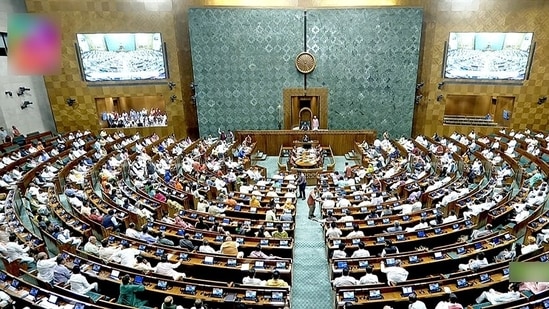
The inauguration of India’s new Parliament building in 2023, which boasts a Lok Sabha chamber capable of seating 888 members, foreshadowed a significant increase from the current 543 seats. Independent psephologists and constitutional think-tanks have modeled the potential outcomes of a delimitation exercise based on either the 2011 Census or projected 2026 populations. The projected seat distributions reveal a stark reshaping of India’s political geography.
**Estimated Proportional Shifts in a Restructured Lok Sabha:**
| Region/State | Current Seats (543 Total) | Projected Proportion in Expanded House | Net Shift in National Influence |
| :— | :— | :— | :— |
| **Uttar Pradesh** | 80 (14.7%) | ~143 (16.8%) | **Major Gain** |
| **Bihar** | 40 (7.3%) | ~79 (9.3%) | **Major Gain** |
| **Tamil Nadu** | 39 (7.1%) | ~49 (5.7%) | **Severe Loss** |
| **Kerala** | 20 (3.6%) | ~20 (2.3%) | **Severe Loss** |
| **Rajasthan** | 25 (4.6%) | ~50 (5.9%) | **Moderate Gain** |
*Note: Projections are based on independent demographic models assuming a total seat expansion to ~848 members using post-2011 demographic trends.*
While an expansion in the total number of seats means southern states might not lose absolute numbers of Members of Parliament (MPs), their *percentage share* of the Lok Sabha will plummet. In a parliamentary democracy where government formation and constitutional amendments rely on majority blocks, a reduced percentage share equates to a direct loss of veto power and policy influence.
## Legal and Federal Implications
The potential marginalization of the South raises profound constitutional questions. India is defined as a “Union of States,” and the delicate balance of power between the center and the states has been carefully managed through coalition politics and proportional representation.
If a handful of northern states secure enough seats to independently form a majority government—without needing any electoral mandates from the south—it could lead to what political scientists term the “tyranny of the demographic majority.” This scenario threatens to alienate a highly developed, economically vital region of the country, potentially fostering sub-nationalist sentiments and straining national unity.
## Voices from the Ground: Expert Perspectives
Legal experts and political scientists warn that moving forward with delimitation without a broad political consensus could trigger an unprecedented constitutional crisis.
“The framers of the Constitution envisioned an India where population was a metric for representation, but they did not anticipate a scenario where state-led developmental successes would inadvertently disenfranchise entire regions,” notes Dr. Meenakshi Sundaram, a constitutional scholar based in Chennai. “Using the 2011 Census to execute this shift in 2026 without offering institutional safeguards to the South is a recipe for deep federal instability.”
Rajiv Desai, a New Delhi-based political analyst, highlights the pragmatic challenges for the ruling government. “The Union government faces a Catch-22. Article 82 demands that constituency sizes remain roughly equal in population to ensure the ‘one person, one vote’ principle. An MP in Uttar Pradesh currently represents nearly 3 million people, while an MP in Kerala represents under 2 million. Rectifying this democratic imbalance inherently means punishing the South. Finding a middle ground will require constitutional creativity, not just political brute force.” [Source: Independent Policy Analysis, 2026].
## Seeking Middle Ground: Potential Alternatives
As the southern pushback intensifies, policymakers and constitutional experts are floating several potential compromises to prevent a federal rupture:
1. **Decoupling Delimitation from Apportionment:** Under this model, the boundaries of parliamentary constituencies would be redrawn to ensure equal population distribution *within* each state, but the total number of seats allocated to each state in the Lok Sabha would remain frozen.
2. **The ‘Federal’ Formula:** A constitutional amendment could be introduced to calculate Lok Sabha seats using a weighted formula that blends population data with demographic performance indicators, effectively rewarding states that achieved population replacement goals.
3. **Empowering the Rajya Sabha:** To offset the loss of influence in the lower house, the upper house (Rajya Sabha) could be restructured. Similar to the United States Senate, where every state gets equal representation regardless of population, reforming the Rajya Sabha could provide southern states with a permanent institutional veto over legislation that adversely affects their interests.
4. **Further Postponement:** The simplest, albeit temporary, solution would be another constitutional amendment extending the freeze on seat reallocation until 2050, by which time demographic projections suggest the northern states will have also reached replacement-level fertility.
## Conclusion: A Test of National Unity
The debate over the 2026 Lok Sabha delimitation is far more than a routine administrative exercise; it is rapidly emerging as the most significant stress test of Indian federalism in the 21st century. The reliance on 2011 Census data—a move necessitated by recent administrative delays—has only brought these long-simmering anxieties to an immediate boil [Source: Hindustan Times].
As southern states ramp up their pushback through parliamentary protests, legal petitions, and public awareness campaigns, the Union government faces a monumental task. It must reconcile the core democratic principle of equal representation with the federal necessity of protecting states that have faithfully executed national development goals.
How New Delhi navigates this intricate demographic, political, and constitutional minefield in the coming months will fundamentally shape the trajectory of India’s parliamentary democracy—and the durability of its national unity—for generations to come.





