
Chhattisgarh boiler explosion: Toll rises to 14| India News
# Chhattisgarh Blast: Death Toll Reaches 14
**By Special Correspondent, Regional News Desk | April 15, 2026**
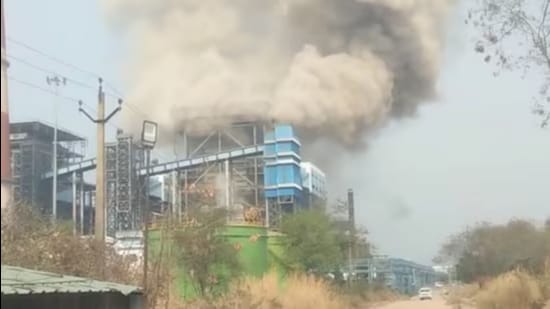
The death toll from the catastrophic boiler explosion at an industrial facility in Chhattisgarh’s Raigarh district has tragically risen to 14 as of Wednesday morning. Rescue and recovery teams have been working tirelessly through the debris following the massive blast that tore through the manufacturing plant earlier this week. According to local police officials overseeing the emergency response, five critically injured workers have been transferred to the state capital, Raipur, to receive advanced medical intervention, while the remaining injured personnel are currently admitted to various local hospitals in Raigarh. The devastating incident has triggered high-level investigations into the facility’s operational safety protocols, equipment maintenance history, and compliance with state industrial regulations. [Source: Hindustan Times].
## The Tragedy Unfolds: Immediate Aftermath in Raigarh
The industrial belt of Raigarh, known for its dense concentration of steel, power, and manufacturing plants, was rocked by a deafening explosion that sent shockwaves across the surrounding residential and commercial sectors. Preliminary reports indicate that the blast occurred during a routine operational shift, instantly compromising the structural integrity of the main processing unit and trapping dozens of workers under heavy metallic debris.
Emergency response teams, including the State Disaster Response Force (SDRF) and local fire brigades, were mobilized within minutes of the distress call. However, the intensity of the explosion and the residual heat from the ruptured industrial boiler severely hampered initial rescue operations.
“The structural damage to the immediate vicinity of the boiler unit is extensive. Our primary focus over the last 48 hours has been the safe extraction of survivors and the immediate stabilization of those suffering from severe thermal and kinetic trauma,” stated a senior official from the Raigarh district administration. [Additional: General state disaster response protocols]. The rising death toll underscores the sheer magnitude of the kinetic force unleashed by the pressurized vessel’s failure.
## Critical Care and Medical Logistics
Managing industrial trauma of this scale requires rapid, highly coordinated medical logistics. The sudden influx of patients overwhelmed the primary healthcare infrastructure in Raigarh. While local medical professionals successfully stabilized many of the injured, the severity of thermal trauma necessitated specialized care unavailable in the immediate vicinity.
Police confirmed that five of the most critically injured victims have been shifted to Raipur. The transportation of these patients involved the creation of ‘green corridors’—traffic-cleared routes orchestrated by highway patrols—to ensure that ambulances could cover the approximate 250-kilometer distance in record time.
These patients are now receiving care in specialized burn and trauma intensive care units (ICUs) equipped with advanced respiratory support systems and infection-control environments. Industrial boiler explosions often result in complex injuries, including severe third-degree thermal burns, blunt force trauma from flying shrapnel, and severe inhalation injuries caused by superheated steam and toxic particulates.
## Investigating the Mechanical Failure
As the rescue operations gradually transition into a phase of recovery and investigation, technical experts are beginning to piece together the events that led to the catastrophic failure. Industrial boilers are essentially massive, high-pressure vessels designed to convert water into steam to power turbines or facilitate chemical processes. When these systems fail, the sudden depressurization results in an instantaneous, explosive expansion of steam.
Forensic engineers and boiler inspectors from the state’s Directorate of Industrial Health and Safety (DIHS) have cordoned off the site to collect metallurgical samples and recover operational data logs.
“A failure of this magnitude rarely occurs without preceding warning signs,” explains Dr. Arvind Menon, an independent industrial safety auditor and mechanical engineering consultant. “Typically, these explosions are the result of a confluence of factors: a malfunctioning pressure relief valve, severe internal scaling due to poor water quality leading to localized overheating, or compromised structural metallurgy from prolonged metal fatigue. The investigation must determine whether the automated fail-safes were operational or if they had been manually bypassed to maintain production quotas.” [Additional: Expert analysis based on standard industrial safety principles].
## Regulatory Framework and Compliance Gaps
This tragic incident has once again cast a harsh spotlight on the regulatory oversight of heavy industries in Chhattisgarh. Under the Indian Boilers Act, 1923, and subsequent state amendments, all high-pressure vessels must undergo rigorous annual inspections by certified authorities. These inspections are supposed to evaluate structural thickness, valve functionality, and overall operational integrity.
However, industry insiders frequently point to a severe shortage of certified boiler inspectors relative to the rapidly expanding industrial footprint of the state. This disparity often leads to a reliance on self-certification or superficial audits that fail to detect deep-seated mechanical vulnerabilities.
Furthermore, labor rights organizations argue that the push for maximized output in manufacturing sectors often leads to deferred maintenance schedules. When equipment is forced to run beyond its designated maintenance intervals, the risk of catastrophic failure increases exponentially. The investigative committee appointed by the state government will be heavily scrutinizing the factory’s maintenance logs over the past five years to identify any systemic negligence.
## Socio-Economic Impact and Worker Compensation
Beyond the technical and regulatory failures lies the profound human cost of this disaster. The majority of the victims involved in such industrial accidents are semi-skilled laborers, many of whom migrate from rural areas seeking steady employment to support their families. The sudden loss of life or severe, debilitating injury plunges these vulnerable families into immediate financial crises.
In the wake of the tragedy, local authorities and state government representatives are expected to announce ex-gratia compensation for the families of the deceased and financial assistance for the medical rehabilitation of the injured. However, labor rights advocates emphasize that standard ex-gratia payments are often insufficient to cover long-term rehabilitation or compensate for the permanent loss of a family’s primary breadwinner.
“While immediate financial relief is crucial, the state must ensure that corporate liability is fully enforced,” says Meena Verma, a regional labor rights advocate based in Raipur. “The families of the 14 deceased workers deserve comprehensive compensation under the Workmen’s Compensation Act, including guarantees for long-term educational and financial support for their dependents. We cannot allow the cost of industrial negligence to be borne solely by the most vulnerable segment of our workforce.”
## Calls for Stricter Regulatory Oversight and Modernization
The Raigarh boiler explosion is likely to serve as a catalyst for urgent policy reform regarding industrial safety across the state. Policymakers and safety experts are calling for a complete modernization of how industrial oversight is conducted.
Key proposals currently being debated include:
* **Implementation of IoT Monitoring:** Mandating the use of Internet of Things (IoT) sensors on all high-pressure industrial equipment. These sensors can stream real-time data regarding pressure, temperature, and structural stress directly to a centralized state monitoring grid, instantly flagging any anomalies before a catastrophic failure occurs.
* **Third-Party Independent Audits:** Moving away from a reliance on understaffed state departments by mandating rotating, independent third-party audits for all heavy machinery, thereby reducing the risk of regulatory capture or complacency.
* **Enhanced Worker Training:** Ensuring that the laborers operating near these volatile machines are adequately trained in emergency shutdown procedures and hazard recognition.
## Conclusion: A Somber Outlook and Demand for Accountability
As the death toll from the Chhattisgarh boiler explosion stands at 14, with several others fighting for their lives in Raipur and Raigarh hospitals, the immediate focus remains on medical recovery and grieving families. [Source: Hindustan Times].
However, the days and weeks ahead will demand stringent accountability. This incident is a grim reminder of the lethal consequences of industrial oversight failures. As India continues its rapid industrialization, ensuring that worker safety keeps pace with production targets is not just a regulatory requirement, but a moral imperative. The findings of the upcoming structural and administrative investigations must lead to actionable, enforceable reforms to ensure that the industrial engines driving the economy do not become a source of tragedy for the very workforce powering them.





