
‘Impact felt on all of us’: PM Modi shares peace message amid war, flags ‘tense’ situation| India News
# Modi Flags ‘Tense’ World, Calls For Peace
**By World Desk, The Daily Standard | April 16, 2026**
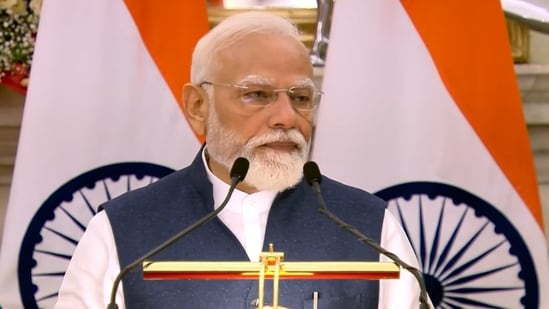
**New Delhi, India** — Prime Minister Narendra Modi issued a strong appeal for global diplomatic intervention on Thursday, warning that the “tense” international climate is carrying an “impact felt on all of us.” Speaking in New Delhi during a joint press briefing with Austrian Chancellor Christian Stocker, who is currently on a four-day official visit to India, Modi highlighted the cascading economic and humanitarian consequences of ongoing conflicts spanning from Eastern Europe to the Middle East. The bilateral meeting underscored India’s consistent diplomatic stance, advocating fiercely for dialogue, de-escalation, and the protection of the Global South against prolonged military attrition.
## A Call for Stability in a Fractured World
The meeting between Prime Minister Modi and Chancellor Stocker comes at a critical juncture in global geopolitics. With international supply chains still reeling from shifting alliances and continuous kinetic conflicts, Modi utilized the platform to reiterate India’s foundational foreign policy doctrine: that war serves no one’s long-term interests.
“We are meeting at a time when the world is going through a very tense situation,” Prime Minister Modi remarked during the televised joint address at Hyderabad House. “Whether it is the conflict in Europe or the escalations in other parts of the world, the impact is felt on all of us. The Global South, in particular, continues to bear the disproportionate brunt of these geopolitical fractures.” [Source: Hindustan Times | Additional: Ministry of External Affairs Transcripts].
Chancellor Stocker, leading a high-level delegation of Austrian policymakers and business leaders, echoed the Prime Minister’s sentiments. Austria, a member of the European Union but historically a neutral state outside of the NATO military alliance, shares a unique diplomatic synergy with India’s ethos of strategic autonomy. Stocker emphasized that Austria views India not merely as an economic partner, but as an essential mediator capable of bridging the widening chasm between the West and the Global South.
## The Cascading Economic Ripple Effect
Prime Minister Modi’s assertion that the “impact is felt on all of us” highlights a grim economic reality. Since 2022, consecutive global flashpoints have systematically disrupted the foundational pillars of the global economy: food, fuel, and fertilizers.
For developing nations, the prolonged nature of the conflicts involving major powers has resulted in sticky inflation, volatile energy markets, and debt distress. India has consistently championed the cause of the Global South, using its recent G20 presidency and subsequent diplomatic engagements to ensure that the economic suffering of developing nations is not sidelined by the security concerns of the West.
The disruption in maritime trade routes, fluctuating oil prices tied to tensions in the Middle East, and the localized fragmentation of technology supply chains have forced nations like India to heavily subsidize basic commodities. By flagging the situation with the Austrian leadership, Modi is reinforcing a clear message to European capitals: the economic sustainability of the developing world relies heavily on the swift, diplomatic resolution of these distant wars.
## Navigating Geopolitical Flashpoints
While neither leader explicitly named every belligerent nation during the preliminary press briefing, the subtext of the dialogue unmistakably pointed toward the prolonged war in Ukraine and the persistently simmering tensions involving Iran, the United States, and broader Middle Eastern proxy conflicts. [Source: Hindustan Times].
India has masterfully walked a diplomatic tightrope over the past four years. New Delhi has maintained its historic strategic relationship with Moscow, continuing to purchase discounted Russian crude oil—a move India defends as essential for energy security and global price stabilization. Simultaneously, India has significantly deepened its defense, technological, and strategic partnerships with the United States and the European Union.
Modi’s famous 2022 declaration to Russian President Vladimir Putin that “this is not an era of war” has become the cornerstone of India’s diplomatic lexicon. In his talks with Chancellor Stocker, Modi leaned on this established framework, signaling that India remains ready to facilitate peace talks if called upon by the international community, emphasizing that military solutions are inherently temporary.
## Austria’s Role and the European Reassessment
Chancellor Christian Stocker’s four-day visit represents a broader European pivot toward New Delhi. As Europe grapples with its own economic restructuring and the heavy financial toll of supporting its eastern flank, nations like Austria are aggressively pursuing economic diversification.
Austria brings specific strengths to the bilateral table. Vienna is renowned for its advanced urban infrastructure, renewable energy technologies, and precision engineering—sectors that align perfectly with India’s aggressive modernization drives, including the *Make in India* and *Smart Cities* initiatives.
During the bilateral talks, the two leaders mapped out a blueprint for enhanced cooperation in green technologies, emphasizing sustainable development as a buffer against volatile fossil fuel markets. “Austria views India as the stabilizing anchor in the Indo-Pacific and a vital partner for the future of global green transitions,” Chancellor Stocker noted, highlighting the mutual benefit of decoupling economic growth from geopolitical instability.
## Deepening Bilateral Synergies
Beyond the macro-level discussions of global peace, the Modi-Stocker meeting focused heavily on expanding the India-Austria bilateral trade volume, which has seen a steady upward trajectory.
**Key areas of mutual agreement included:**
* **Green Hydrogen and Renewable Energy:** Collaborative frameworks for technology transfer to help India meet its ambitious net-zero carbon emission targets.
* **Skill Development and Mobility:** Easing visa restrictions and creating structured pathways for Indian tech professionals and skilled laborers to contribute to the Austrian economy, which currently faces a demographic crunch and talent shortages in engineering sectors.
* **Start-Up Ecosystem Integration:** Fostering direct links between Vienna’s emerging tech hubs and India’s robust startup ecosystems in Bengaluru and Pune, particularly in AI, fintech, and advanced manufacturing.
These bilateral economic strategies are deeply intertwined with the overarching theme of global stability. By building robust, bilateral economic corridors that bypass traditional geopolitical flashpoints, both India and Austria are actively constructing economic resilience.
## Expert Perspectives on India’s Diplomatic Leverage
Foreign policy analysts view Chancellor Stocker’s visit as indicative of India’s evolving role from a passive observer to a central geopolitical node.
“When Prime Minister Modi speaks about the impact of these wars, it resonates differently than when a Western leader says it,” explains Dr. Meenakshi Rajan, a senior geopolitical analyst at the Center for Global Policy Research. “India speaks from the perspective of billions of people in the developing world who are paying the price for conflicts they have no stake in. Austria’s engagement with India right now is a recognition that any lasting peace architecture in Europe or the Middle East will require the backing of the Global South, led by New Delhi.”
Similarly, European observers note that Austria’s diplomatic traditions make it a natural interlocutor for India within the EU bloc. Johannes Weber, a researcher focusing on EU-Asia relations in Vienna, stated, “Austria has a long history of serving as a bridge between the East and West. By aligning with India’s call for diplomacy, Chancellor Stocker is signaling that there is an appetite within parts of Europe for a more pragmatic, dialogue-driven approach to the current global crises, looking beyond mere military posturing.”
## Looking Ahead: The Future of Multilateral Diplomacy
As Chancellor Stocker’s four-day visit proceeds, the itinerary includes meetings with key Indian business conglomerates and a scheduled visit to technological facilities in western India. These engagements are expected to culminate in several Memorandums of Understanding (MoUs) designed to fortify the economic bridges between New Delhi and Vienna.
However, the enduring takeaway from this high-level visit remains Prime Minister Modi’s unwavering emphasis on peace. The “tense” situation flagged by Modi is unlikely to dissipate overnight. Structural global shifts, shifting defense alliances, and entrenched territorial disputes suggest a protracted period of international volatility.
Yet, the joint posture taken by India and Austria serves as a crucial diplomatic counterweight. It reinforces the necessity of dialogue and underscores that the economic health of the global community—particularly the vulnerable Global South—must be a primary consideration in international statecraft.
In a world increasingly categorized by zero-sum military engagements, India’s consistent push for diplomacy, supported by neutral European partners like Austria, offers a vital blueprint for de-escalation. As global supply chains brace for the unpredictable impacts of the coming months, the international community will be closely watching how the peace doctrines formulated in New Delhi might eventually translate into tangible resolutions on the global stage.





