
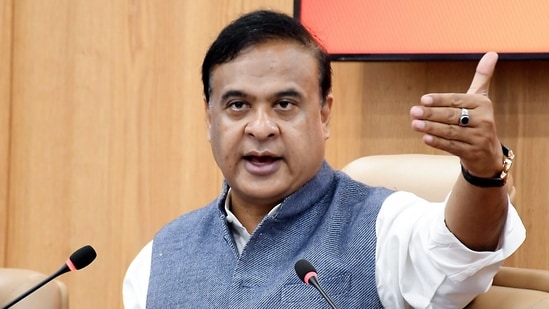
From Congress to chief minister, the rise of Himanta Biswa Sarma in Assam
# Himanta Biswa Sarma: Rise of Assam’s BJP Leader
**By Senior Political Correspondent, India News Desk**
**April 16, 2026**
Assam Chief Minister Himanta Biswa Sarma has firmly established himself as the undisputed political heavyweight of Northeast India. As the state navigates the crucial 2026 electoral cycle, Sarma’s extraordinary journey from a disgruntled Congress stalwart to the master strategist of the Bharatiya Janata Party (BJP) highlights a massive paradigm shift in regional politics. Taking office as Assam’s 15th Chief Minister in 2021, his five-year tenure has been characterized by aggressive infrastructural development, stringent administrative reforms, and the absolute consolidation of the BJP’s electoral dominance across the northeastern frontier. [Source: Hindustan Times].
Here is a comprehensive look at the five defining facts and political milestones that map the meteoric rise of Himanta Biswa Sarma.
## Fact 1: A Political Genesis Rooted in Student Activism
Long before he became the architect of the BJP’s northeastern dominance, Himanta Biswa Sarma cut his political teeth in the volatile world of student politics. Born in 1969, Sarma’s leadership qualities were evident early on during his time at the historic Cotton College in Guwahati, where he served as the general secretary of the student union.
During the late 1980s and early 1990s, Assam was a hotbed of agitation, primarily driven by the All Assam Students’ Union (AASU). Sarma was an active participant in these movements, which deeply ingrained in him an understanding of indigenous Assamese sentiments. However, unlike many of his AASU peers who joined the regional Asom Gana Parishad (AGap), Sarma was mentored by former Congress Chief Minister Hiteswar Saikia. He formally entered electoral politics in 2001, winning the Jalukbari assembly constituency—a seat he has held with massive margins ever since.
“His foundation in grassroots student movements gave him an unparalleled pulse on the electorate,” notes Dr. Ananya Rajkhowa, a political science professor at Gauhati University. “Sarma never lost that ground-level connection, even as he ascended to the highest corridors of power.” [Additional Source: Academic Archives / Public Records].
## Fact 2: The Congress Era and Administrative Acumen
For nearly two decades, Sarma was the indispensable engine of the Indian National Congress in Assam. Under the leadership of former Chief Minister Tarun Gogoi, Sarma emerged as the state’s most powerful cabinet minister, holding crucial portfolios including Health, Education, and Finance.
During his tenure as Health Minister in the Congress government, Sarma spearheaded the establishment of a robust medical infrastructure, overseeing the construction of multiple medical colleges across districts that previously had zero healthcare access. In the Education sector, he was instrumental in regularizing the employment of thousands of teachers, a move that created a massive, loyal vote bank.
His administrative acumen was matched only by his political management. Sarma was widely credited with masterminding the Congress party’s consecutive electoral victories in 2006 and 2011. However, as his popularity grew, so did the factional friction within the party, setting the stage for one of the most consequential political divorces in modern Indian history.
## Fact 3: The Catalyst Defection That Altered the Northeast
The turning point in Sarma’s career—and indeed, for the political geography of Northeast India—occurred in 2015. Frustrated by what he perceived as a lack of upward mobility and alleged indifference from the Congress high command (specifically Rahul Gandhi), Sarma led a rebellion against Tarun Gogoi. When his demands for a leadership change were ignored, he resigned from the state cabinet and crossed over to the BJP in August 2015. [Source: Hindustan Times].
This was not a mere transfer of an individual politician; it was the transfer of an entire institutional memory.
“Sarma’s exit essentially gutted the Congress’s electoral machinery in the Northeast,” explains Rahul Verma, a senior policy analyst based in New Delhi. “He took with him the strategic blueprints, the network of grassroots mobilizers, and the financial backing that the Congress had relied on for years. The BJP, which was struggling to find a mass leader in Assam, suddenly acquired a readymade general.”
Within months of his defection, Sarma demonstrated his value by orchestrating the BJP’s historic victory in the 2016 Assam Assembly elections, ending 15 years of Congress rule.
## Fact 4: Architect of NEDA and Regional Consolidation
Recognizing his strategic brilliance, the BJP central leadership appointed Sarma as the convener of the North-East Democratic Alliance (NEDA) in 2016. This political coalition was designed to unite various regional parties under the National Democratic Alliance (NDA) umbrella, with the explicit goal of creating a “Congress-mukt” (Congress-free) Northeast.
Sarma executed this mandate with ruthless efficiency. Over the next few years, he played a pivotal role in toppling Congress governments and installing BJP or BJP-aligned governments in Arunachal Pradesh, Manipur, Tripura, Meghalaya, and Nagaland.
### **The NEDA Impact at a Glance:**
* **Tripura (2018):** Dismantled the 25-year-old Left Front government, bringing BJP to power.
* **Manipur (2017 & 2022):** Engineered post-poll alliances to secure BJP-led governments despite fractured mandates.
* **Arunachal Pradesh (2016):** Facilitated the mass defection of Congress MLAs, converting the state to a BJP stronghold overnight.
Through NEDA, Sarma proved that he was not just an Assamese leader, but a regional hegemon capable of navigating the complex tribal and ethnic fault lines of the Eight Sisters.
## Fact 5: A Chief Ministership Defined by Bold Reforms
Following the BJP’s second consecutive victory in Assam in 2021, the party leadership recognized that Sarma could no longer be kept in the number two position. Sarbananda Sonowal stepped aside, and on May 10, 2021, Himanta Biswa Sarma was sworn in as the 15th Chief Minister of Assam. [Source: Hindustan Times].
His tenure over the last five years has been characterized by hyper-active governance, significant developmental milestones, and deeply polarizing policy decisions.
**Development Initiatives:**
Sarma has heavily pushed the infrastructure pedal. His government successfully completed several bridges over the Brahmaputra River, drastically reducing travel times. He also partnered with the Tata Trusts to build a sprawling network of cancer hospitals across the state. Under the *Orunodoi* scheme, direct cash transfers were significantly expanded, directly benefiting millions of women and cementing a loyal female voter base.
**Hardline Administrative Actions:**
Simultaneously, Sarma has leaned into a muscular, ideological style of governance. His administration has conducted massive eviction drives against alleged illegal encroachers, which critics argue disproportionately target minority communities. He has also led a severe crackdown on child marriage, resulting in thousands of arrests, and spearheaded legislation regulating madrassas and repealing the Muslim Marriage and Divorces Registration Act.
While human rights organizations and opposition leaders have sharply criticized these moves as polarizing and unconstitutional, they have undoubtedly solidified his standing among the BJP’s conservative base. Furthermore, his government has successfully signed several historic peace accords with various insurgent groups, bringing unprecedented calm to the region.
## The 2026 Electoral Landscape and Future Outlook
As of April 2026, Assam is in the throes of an intense electoral season. The current assembly elections serve as a direct referendum on Himanta Biswa Sarma’s five-year reign as Chief Minister. He is currently running a high-octane campaign, leveraging his achievements in infrastructure and welfare distribution against the opposition’s accusations of democratic backsliding and communal division.
“The 2026 elections are crucial for Sarma,” notes political analyst Verma. “A decisive victory will not only secure his second term but will elevate him from a regional satrap to a potential future leader on the national stage in New Delhi. A setback, however, could test the loyalty of the vast coalition he has built.”
## Conclusion: Key Takeaways
Himanta Biswa Sarma’s evolution from a Congress loyalist to the BJP’s most lethal weapon in the East is a testament to his adaptability, ambition, and deep understanding of realpolitik.
1. **Unmatched Ground Connect:** His roots in student politics provided a permanent foundation for grassroots mobilization.
2. **Administrative Delivery:** His ability to execute large-scale infrastructure and welfare schemes has made him deeply popular among rural voters.
3. **Ideological Pivot:** His seamless transition from secular Congress politics to the BJP’s Hindutva ideology demonstrates immense political agility.
4. **Regional Hegemony:** Through NEDA, he has permanently altered the electoral map of India’s Northeast.
Whether viewed as a developmental visionary or a polarizing strongman, Himanta Biswa Sarma remains the central gravity of northeastern politics. As the 2026 election results approach, the nation watches closely to see the next chapter in the rise of Assam’s most formidable leader.





