
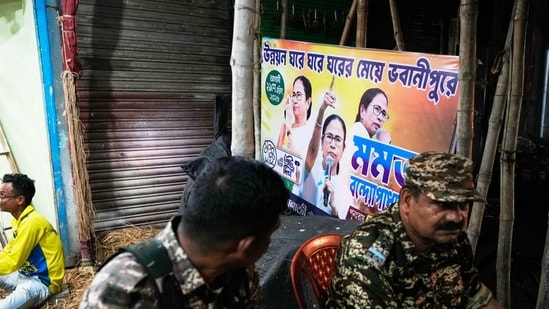
'No important files to be removed or damaged’: Top official as TMC loses Bengal
# TMC Defeat: Official Secures Bengal Govt Files
**By Senior Political Correspondent, National News Wire**
**May 5, 2026**
In the immediate aftermath of the Trinamool Congress (TMC) losing the fiercely contested 2026 West Bengal assembly elections, the state’s top bureaucratic leadership has taken urgent preemptive measures to safeguard government documents. On Monday evening, the West Bengal Chief Secretary issued a strict administrative directive to all department heads, explicitly mandating that “no important paper or any file is removed/damaged or otherwise taken out from the offices” during the transition of power. This crucial order, originating from the state secretariat in Kolkata, aims to preserve administrative transparency, secure sensitive public records, and ensure a seamless handover to the incoming government following the historic political shift.
## The Secretariat’s Preemptive Directive
The sudden political upheaval in West Bengal has placed the state’s bureaucratic machinery on high alert. As election results confirmed the end of the TMC’s extended tenure, the focus immediately shifted from political rallying to the preservation of administrative integrity. The Chief Secretary’s directive serves as a legal and procedural barricade against the potential mishandling of sensitive state documents.
According to the official circular distributed across all directorates, departments, and regional offices, the highest echelon of the state bureaucracy is now directly monitoring document retention. Bureaucrats and department heads have been explicitly warned that any unauthorized movement, destruction, or alteration of physical and digital files will be met with severe punitive action.
[Source: Hindustan Times | Additional: General Administrative Protocols of India]
The order is not merely a formality but a stringent legal necessity. In periods of political transition, particularly those ending a long-standing government’s rule, the outgoing administration’s files become critical assets. These documents contain the foundational data for ongoing projects, financial expenditures, tender allocations, and policy decisions made over the last several years. The Chief Secretary’s proactive stance highlights the bureaucracy’s commitment to maintaining constitutional neutrality and ensuring that the incoming administration inherits an intact, transparent administrative record.
## Bureaucratic Protocol During Regime Changes
Power transitions in democratic frameworks demand absolute bureaucratic impartiality. The “steel frame” of the Indian administrative system—the Indian Administrative Service (IAS)—is designed to function independently of the political executive. When a ruling party loses power, the Chief Secretary, as the administrative head of the state, assumes temporary executive supremacy regarding state security and protocol until the new Chief Minister takes the oath of office.
Historically, the period between the declaration of election results and the swearing-in of a new government is highly sensitive. **Section 4 of the Public Records Act** dictates strict guidelines regarding the preservation of government documents, and unauthorized disposal is considered a serious offense.
“Transitions in states with historically deep-rooted political administrations require vigilant bureaucratic oversight,” explains Dr. Ananya Sen, a political science professor and expert on Indian federalism. “When a party rules for over a decade, the lines between party apparatus and state machinery can sometimes blur. A directive of this magnitude from the Chief Secretary is a standard yet vital procedure to freeze the status quo. It prevents any last-minute tampering that could obscure financial irregularities or controversial executive decisions.”
## The Context of West Bengal’s 2026 Election
To understand the gravity of this directive, one must view it through the lens of West Bengal’s recent political history. The Trinamool Congress, which came to power in 2011 after dismantling the 34-year rule of the Left Front, has governed the state for 15 years. The 2026 legislative assembly election was characterized by high stakes, intense polarization, and a fiercely anti-incumbent wave that ultimately unseated the ruling government.
During its tenure, the outgoing administration faced several high-profile probes by central agencies, including investigations into alleged irregularities in the education sector, municipal recruitments, and public distribution systems. These historical controversies inherently elevate the importance of official files. The incoming government will undoubtedly launch its own audits and reviews of the previous administration’s flagship schemes, making the physical and digital preservation of these files an issue of paramount legal importance.
[Source: Hindustan Times | Additional: Historical Election Data & State Agency Reports]
## Key Departments Under Scrutiny
While the directive applies universally across the state secretariat (Nabanna) and all district magistrate offices, certain departments are under heavier scrutiny due to the sensitive nature of their portfolios.
| **Department** | **Nature of Records** | **Reason for Heightened Scrutiny** |
| :— | :— | :— |
| **Finance & Revenue** | Budget allocations, tender approvals, debt management files. | Audits of state expenditure, public debt records, and unallocated funds. |
| **Home Affairs** | Law and order reports, intelligence dossiers, police postings. | Continuity of state security, protection of sensitive domestic intelligence. |
| **Education & PWD** | Recruitment drives, infrastructure contracts, land allocations. | High probability of incoming government reviewing past recruitment and civil contracts. |
| **Urban Development** | Municipal funding, land use conversions, real estate permits. | Ensuring transparency in recent urban land allocations and city planning budgets. |
The Chief Secretary’s office has reportedly deployed internal vigilance teams to ensure that these specific departments adhere strictly to the non-removal directive. Officers in charge of record rooms have been instructed to maintain detailed logs of any personnel accessing physical archives.
## Safeguarding Digital Infrastructure
In 2026, the concept of a “government file” extends far beyond physical paper folders tied with red tape. A significant portion of West Bengal’s administrative work is conducted through the e-Office system—a digital workplace solution implemented to enhance transparency and efficiency.
The Chief Secretary’s mandate inherently covers digital infrastructure. IT administrators within the state government have been tasked with securing server access, creating unalterable backups of the state data centers, and locking administrative privileges that could allow for the mass deletion of emails, digital signatures, or electronic approvals.
“Modern bureaucratic transitions are as much about cybersecurity as they are about physical security,” notes Rajiv Mehta, a former cyber-security consultant for state governments. “An outgoing official might not carry out a box of files, but they could attempt to wipe hard drives, delete localized server data, or revoke digital access logs. The Chief Secretary’s directive legally compels the state’s IT department to freeze all data states as they were on the day the election results were announced.”
## Political and Legal Implications
The transition of power in West Bengal will set the tone for the state’s governance for the next five years. If the incoming administration discovers that crucial files are missing, damaged, or tampered with despite the Chief Secretary’s explicit orders, it could trigger immediate criminal investigations.
Under the Indian Penal Code (IPC) and the Prevention of Corruption Act, the destruction of public evidence by a public servant is a severe criminal offense. Furthermore, it would politically weaponize the incoming government, providing them with immediate grounds to establish commissions of inquiry against members of the former ruling party and complicit bureaucrats.
By issuing this directive, the top bureaucracy has effectively shielded itself from allegations of partisanship. It sends a clear message to both the outgoing political executive and the incoming leadership: the administrative machinery remains loyal to the Constitution and the state, not to any political banner.
## The Road Ahead: Restoring Public Confidence
As the dust settles on the monumental 2026 West Bengal assembly elections, the focus will rapidly shift from campaign rhetoric to the complex realities of governance. The incoming Chief Minister will require immediate access to unfiltered, accurate state data to draft their first budget, assess the state’s fiscal health, and implement their manifesto promises.
The successful and secure handover of these files will be the first major test of the newly formed government and the existing bureaucracy’s ability to work in tandem. The Chief Secretary’s decisive action to mandate that “no important paper or any file is removed/damaged” is a crucial first step in ensuring a peaceful, legally sound, and democratic transition of power.
Ultimately, this preemptive administrative strike preserves the democratic ethos of the state. It guarantees that the promises of accountability and transparency—which dominated the 2026 election cycle—are upheld from the very first day of the new administration. As West Bengal prepares for its new political chapter, the state’s bureaucratic guardians are ensuring that the history of the past fifteen years remains fully intact, archived, and ready for public and governmental scrutiny.





