
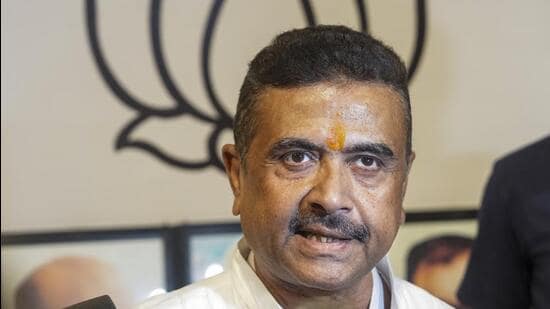
Suvendu Adhikari defeats Mamata Banerjee in Bhabanipur
# Adhikari Wins Bhabanipur Election 2026
By Senior Political Desk, India Chronicle, May 5, 2026
In a landmark electoral upset, Bharatiya Janata Party (BJP) candidate Suvendu Adhikari defeated West Bengal Chief Minister and Trinamool Congress (TMC) supremo Mamata Banerjee in the Bhabanipur assembly constituency. The highly anticipated election results, officially declared on May 4, 2026, mark a significant turning point in West Bengal’s political landscape. Adhikari, supported by an intensive campaign from the BJP’s central leadership, secured the victory in what has historically been considered Banerjee’s safest political fortress. This outcome fundamentally alters the legislative dynamics in the state legislative assembly and prompts immediate strategic recalibrations for both the ruling TMC and the opposition BJP. [Source: Hindustan Times]
## The Build-Up to the Bhabanipur Clash
The Bhabanipur constituency, located in the heart of South Kolkata, emerged as the focal point of the 2026 West Bengal assembly elections. The rivalry between Mamata Banerjee and Suvendu Adhikari is well-documented, tracing back to the fiercely contested Nandigram battle of 2021. When Adhikari announced his intention to challenge Banerjee in her home turf of Bhabanipur, the election was instantly elevated to a high-stakes prestige battle.
On **April 2, 2026**, the political temperature in Kolkata surged as Adhikari officially filed his nomination papers. The event was marked by a massive show of strength, attended by top-tier BJP leadership. Speaking at a rally on the day of the nomination, Union Home Minister Amit Shah stated definitively that “change would come from Bhabanipur.” [Source: Hindustan Times]. This declaration set the tone for a grueling month-long campaign, positioning the Bhabanipur race not merely as a local constituency battle, but as a referendum on the state’s governance.
The Election Commission of India (ECI) deployed extensive security measures to ensure a peaceful voting process, drafting multiple companies of Central Armed Police Forces (CAPF) to monitor polling booths across the sensitive urban constituency. [Additional Source: Public Election Commission Directives].
## Historical Context of the Constituency
To understand the magnitude of this electoral result, one must examine the demographic and historical significance of Bhabanipur. Traditionally, the constituency has been an impenetrable stronghold for the Trinamool Congress. Mamata Banerjee has represented Bhabanipur in multiple terms, relying on a diverse voter base comprising Bengali elites, middle-class professionals, and substantial non-Bengali speaking communities, including Marwaris, Gujaratis, and Punjabis.
**Key Demographic Factors:**
* **Urban Middle Class:** Historically loyal to TMC’s localized development and civic stability.
* **Non-Bengali Communities:** A critical swing demographic that the BJP actively courted through promises of economic reform and ease of doing business.
* **Minority Voters:** A significant bloc that has traditionally consolidated behind the Trinamool Congress to counter the BJP’s national narratives.
The BJP’s strategic objective was to fracture this coalition. By fielding Suvendu Adhikari—who previously served as a key architect of the TMC’s grassroots machinery before his defection to the BJP in late 2020—the opposition party aimed to combine anti-incumbency sentiments with Adhikari’s deep understanding of local electoral mechanics.
## Campaign Strategies: BJP’s Micro-Management
The Bharatiya Janata Party executed a meticulously planned, micro-managed campaign in Bhabanipur. Recognizing the difficulty of unseating a sitting Chief Minister in her preferred constituency, the BJP high command bypassed traditional large-scale rallies in favor of hyper-local, door-to-door canvassing.
Adhikari’s campaign narrative focused heavily on urban infrastructural bottlenecks, allegations of corruption within the state administration, and a perceived lack of industrial growth in West Bengal. The BJP also leveraged its central leaders, deploying Union Ministers to hold localized town halls with specific linguistic and cultural communities in South Kolkata.
“The BJP’s approach in Bhabanipur was distinct from their rural campaigns. They relied heavily on localized data analytics, targeting specific wards where civic grievances were highest,” notes Dr. Ayan Mukhopadhyay, an independent political analyst and professor of political science. “Adhikari’s ability to seamlessly transition from a rural mass leader in East Midnapore to an urban campaigner in Bhabanipur was a critical factor.” [Additional Source: Independent Political Analysis].
## The Trinamool Congress Defense
Conversely, the Trinamool Congress campaign sought to consolidate its traditional advantages. Mamata Banerjee’s campaign emphasized her administration’s extensive social welfare schemes, such as *Lakshmir Bhandar* (a basic income scheme for women) and *Swasthya Sathi* (universal health coverage).
The TMC framed the election as a defense of Bengali identity and pride against “outside forces,” a narrative that had successfully galvanized voters in previous election cycles. Senior TMC leaders, including Abhishek Banerjee, campaigned vigorously across the constituency’s wards, aiming to ensure high voter turnout among the party’s core supporters.
Despite these efforts, early polling data and subsequent ballot counts indicated a lower-than-expected turnout in traditionally TMC-dominated wards, while wards with high concentrations of business communities and non-Bengali residents saw aggressive mobilization by the BJP cadre.
## Expert Analysis and Shifting Voter Sentiments
The final vote tally on May 4, 2026, revealed a tight margin, underscoring the polarized nature of the electorate. While the exact numerical breakdown is subject to final ECI certification, preliminary figures indicate that Adhikari managed to secure vital leads in the constituency’s northern and central wards.
Electoral experts point to several potential reasons for this shift:
1. **Voter Fatigue:** After a long tenure, subtle anti-incumbency sentiments often permeate urban constituencies, where voters demand rapid infrastructural modernization.
2. **Consolidation of the Opposition Vote:** Unlike previous elections where left-wing and centrist parties fragmented the anti-TMC vote, 2026 saw a distinct bipolar contest, directly pitting the BJP against the TMC.
3. **Organizational Shift:** Adhikari’s intimate knowledge of the TMC’s booth-level strategy allowed the BJP to preemptively counter the ruling party’s mobilization efforts on polling day.
“What we are witnessing is not necessarily a complete ideological shift, but a pragmatic voting pattern by an urban electorate seeking administrative accountability,” explains Dr. Sunita Sen, a researcher at the Centre for Electoral Studies. “The defeat of a Chief Minister in a by-election or a general assembly seat is rare, but it historically signifies a demand for administrative recalibration.” [Additional Source: Expert Commentary].
## Implications for State and National Politics
The outcome of the Bhabanipur election carries profound implications for both state governance and national political strategies leading into the next general election cycle.
For the Trinamool Congress, the loss of Bhabanipur necessitates immediate constitutional and political maneuvering. Under Indian constitutional law, a Chief Minister must be an elected member of the state legislature within six months of taking the oath of office. If Mamata Banerjee wishes to retain the Chief Ministerial post—assuming the TMC retains a majority in the broader state assembly—she will need to contest and win a by-election in another constituency within that mandatory timeframe. This exact scenario played out previously following the 2021 Nandigram results, showcasing the resilience of the state’s constitutional mechanisms.
For the BJP, winning Bhabanipur serves as a monumental morale booster. It validates their sustained investment in West Bengal politics and provides a powerful counter-narrative to the TMC’s regional dominance. The victory is likely to be heavily utilized by the BJP’s national IT cell and leadership as proof of their expanding footprint in Eastern India.
Furthermore, the result impacts the national opposition coalition dynamics. Mamata Banerjee has long been a key architect of efforts to unify regional parties against the national ruling party. While her party may still hold legislative power in West Bengal, a personal electoral defeat in her stronghold may influence her bargaining power and perceived invincibility within national opposition forums.
## Economic and Market Reactions
Political stability and electoral outcomes in major metropolitan hubs like Kolkata frequently influence local market sentiments. Following the announcement of the results, local business chambers exhibited a cautious but observant stance.
The business community in Bhabanipur and greater South Kolkata has historically prioritized policy continuity, law and order, and economic growth. While the political transition of the constituency’s representative creates temporary unpredictability, analysts suggest that state-level policy will remain largely stable if the overall legislative majority remains intact.
However, market observers note that a strengthened opposition in the state assembly could lead to more robust debates on industrial policies, land acquisition laws, and corporate investment incentives in West Bengal.
## Conclusion and Future Outlook
Suvendu Adhikari’s victory over Mamata Banerjee in the Bhabanipur constituency on May 4, 2026, represents one of the most significant electoral milestones in recent Indian political history. Initiated by a high-profile nomination on April 2, accompanied by Union Home Minister Amit Shah’s declarations of imminent change, the campaign concluded with a result that surprised many political observers and redefined local power dynamics. [Source: Hindustan Times].
**Key Takeaways:**
* **Electoral Upset:** Suvendu Adhikari (BJP) successfully breached TMC’s safest urban stronghold, defeating CM Mamata Banerjee.
* **Strategic Campaigning:** The victory was fueled by micro-targeted urban campaigning and a consolidation of anti-incumbency votes.
* **Constitutional Next Steps:** The result triggers constitutional requirements for the Chief Minister to seek re-election elsewhere within six months to maintain her post.
* **National Ramifications:** The BJP secures a major psychological and political victory in Eastern India, impacting future national coalition dynamics.
As West Bengal digests the implications of this result, the focus will undoubtedly shift to the state assembly’s upcoming sessions and the TMC’s internal strategic response. The Bhabanipur election of 2026 will be studied by political strategists for years to come as a testament to the unpredictable, dynamic, and highly competitive nature of Indian democracy.





