
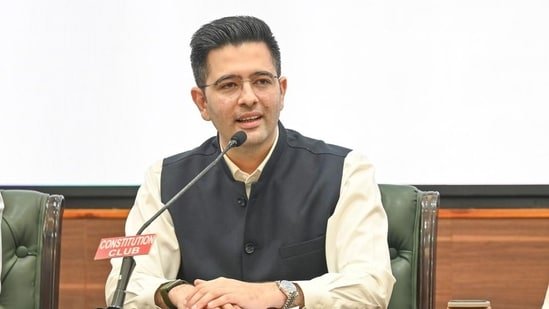
Raghav Chadha congratulates BJP on 'historic' West Bengal sweep, says verdict reflects decisive leadership
# Raghav Chadha Praises BJP Bengal Sweep
By Senior Political Correspondent, The National Political Desk
May 5, 2026
In a surprising and highly significant political development, Aam Aadmi Party (AAP) senior leader and Member of Parliament Raghav Chadha publicly congratulated the Bharatiya Janata Party (BJP) on Monday, May 4, 2026, for its landslide victory in the West Bengal Assembly Elections. Calling the definitive win a “historic sweep,” Chadha stated that the verdict from the eastern state clearly reflects an overwhelming public mandate for “decisive leadership.” This unexpected praise from one of the opposition’s most vocal figures has sent shockwaves across the national political spectrum. It not only highlights the magnitude of the BJP’s triumph over the incumbent Trinamool Congress (TMC) but also exposes shifting alliances and deep strategic recalibrations within the broader national opposition. [Source: Hindustan Times].
## A Seismic Shift in West Bengal Politics
The 2026 West Bengal Assembly Elections will undoubtedly be recorded as a watershed moment in contemporary Indian electoral history. For the first time, the BJP has secured a commanding absolute majority in the state legislature, effectively ending the 15-year uniterrupted rule of Mamata Banerjee and the Trinamool Congress. After falling short in the highly polarized 2021 elections, the saffron party systematically overhauled its state machinery, focusing heavily on grassroots mobilization, anti-corruption campaigns, and capitalizing on severe anti-incumbency sentiments.
The mandate represents a colossal geographical and ideological expansion for the BJP, breaching a citadel that has traditionally been dominated by the Left Front and regional powers. By dismantling the TMC’s formidable election machinery, the BJP has achieved what political pundits previously considered an impossible feat in the culturally distinct political landscape of Bengal. It is within the context of this monumental political earthquake that Raghav Chadha’s comments must be analyzed.
## Unpacking Raghav Chadha’s Unexpected Endorsement
AAP and BJP have historically been bitter adversaries, locked in fierce electoral and administrative battles across Delhi, Punjab, and the national stage. AAP leaders have frequently accused the BJP-led central government of weaponizing federal investigative agencies against them. Therefore, Chadha’s public congratulatory message is a striking departure from the standard adversarial script.
Taking to social media and speaking to reporters in New Delhi, Chadha remarked on the sheer scale of the BJP’s victory. He noted that the electorate of West Bengal had spoken unequivocally, sweeping aside the incumbent government. By characterizing the mandate as a vote for “decisive leadership,” Chadha appeared to acknowledge the resonance of the BJP’s governance model and electoral strategy with the masses. [Source: Hindustan Times].
This statement can be interpreted as a calculated maneuver. By recognizing the legitimacy and scale of the BJP’s mandate, AAP attempts to project itself as a mature, objective political entity that respects the democratic will of the people, rather than a party entrenched in blind, unyielding opposition.
## Distancing from the Trinamool Congress
To understand Chadha’s commentary, one must look at the deteriorating cohesion of the anti-BJP opposition bloc. Over the past two years, the coalition of regional parties and the Congress—originally formed to present a unified front—has suffered from immense internal friction, ideological disparities, and ego clashes.
The TMC government in West Bengal had been severely battered by successive corruption scandals, including the highly publicized teachers’ recruitment scam, allegations of widespread extortion, and localized controversies over land grabs and women’s safety in areas like Sandeshkhali. By publicly praising the BJP’s victory over the TMC, AAP is effectively distancing itself from a defeated, scandal-plagued regional ally.
AAP’s national ambitions require it to occupy the moral high ground on the issue of corruption—a platform upon which the party was originally founded. Associating with a severely defeated TMC would be counterproductive to AAP’s expansion plans in other states. Chadha’s remarks, therefore, serve a dual purpose: acknowledging political reality while subtly condemning the governance failures of the outgoing Bengal administration.
## Key Factors Behind the Historic Verdict
The BJP’s historic sweep was not an overnight phenomenon but the result of a meticulously executed long-term strategy. Several converging factors led to the electoral routing of the TMC:
* **Pervasive Anti-Incumbency:** Fifteen years in power generated inevitable voter fatigue. The TMC’s welfare schemes, which successfully secured their 2021 victory, failed to offset mounting public anger over inflation, unemployment, and localized corruption in 2026.
* **The Anti-Corruption Narrative:** The BJP successfully weaponized the string of federal investigations into the Bengal government. The seizure of massive uncounted cash stockpiles and the arrest of high-profile state ministers cemented a narrative of systemic institutional rot.
* **Consolidation of the Youth and Women Vote:** Historically TMC strongholds, demographic data from the 2026 polls indicate a significant shift. Young voters, frustrated by the lack of industrial growth and public sector job scams, flocked to the BJP’s promise of economic revitalization.
* **Micro-Booth Management:** Learning from their organizational deficits in 2021, the BJP established robust grassroots committees (Panna Pramukhs) across rural Bengal, effectively neutralizing the TMC’s local dominance and ensuring high voter turnout for the saffron party.
## Expert Perspectives on the AAP-BJP Dynamic
Political analysts are closely monitoring the fallout from Chadha’s statements, viewing it as a potential turning point in how opposition parties navigate the dominant BJP hegemony.
“Raghav Chadha’s congratulatory message is a fascinating piece of political signaling,” says Dr. Samir Sanyal, a senior fellow and electoral analyst at the New Delhi-based Institute of Democratic Studies. “AAP realizes that the era of mere ‘anti-Modi’ or ‘anti-BJP’ rhetoric is yielding diminishing returns. By praising the ‘decisive leadership’ that won Bengal, AAP is attempting to pivot. They want to be seen as a post-ideological, governance-focused party. If a rival does well, they acknowledge it—hoping the electorate will reward their perceived maturity.”
Ruchika Sharma, an independent political commentator, adds, “There is also a survival mechanism at play here. The TMC has been decimated. The Congress remains stagnant in the east. AAP sees a vacuum. By not mourning the TMC’s loss and instead objectively analyzing the BJP’s win, AAP is positioning itself to eventually become the principal challenger to the BJP on a national level, unburdened by the baggage of older regional dynasties.”
## The Fragmentation of the National Opposition
The Bengal results and subsequent reactions underscore a profound crisis for the national opposition. The inability of regional heavyweights to defend their turf against the BJP’s relentless electoral machine raises existential questions for parties relying on localized linguistic and cultural identities.
With the TMC ousted in West Bengal, the opposition has lost one of its most resource-rich and politically aggressive anchors. The traditional model of forming an anti-BJP front relies heavily on strong regional satraps holding their ground. As these regional fortresses fall, parties like AAP are forced to rethink their survival strategies. Chadha’s praise for “decisive leadership” may quietly reflect a growing consensus within opposition ranks: to defeat the BJP, they cannot rely on fractured coalitions but must present a singular, decisive leadership alternative of their own—a space AAP firmly believes it can eventually fill.
## Broader Implications for the Electoral Landscape
The ramifications of the 2026 West Bengal election extend far beyond the state’s borders. The BJP now possesses an enhanced footprint in eastern India, fundamentally altering the calculus for the Rajya Sabha (Upper House of Parliament) and future national legislative agendas.
For the AAP, the immediate challenge is managing the optics of Chadha’s statement among its core voter base in Delhi and Punjab, where the party continues to battle the BJP fiercely on a daily basis. While political pragmatists view Chadha’s comments as astute statesmanship, political purists within the opposition have already begun grumbling about AAP “softening” its stance.
However, AAP’s leadership appears willing to take that risk. By framing the BJP’s Bengal win as a triumph of leadership over dynastic politics and corruption, AAP indirectly reinforces its own founding narrative. It subtly tells the Indian voter: *We recognize what you want, and we are the clean, decisive alternative you are looking for.*
## Conclusion: A New Era of Pragmatic Politics?
Raghav Chadha’s public congratulation of the BJP’s historic sweep in West Bengal is far more than a customary political courtesy. As reported by the Hindustan Times, his emphasis on “decisive leadership” serves as a striking indictment of the failed strategies of traditional regional opposition parties.
As the dust settles on the monumental 2026 West Bengal Assembly Elections, two things are abundantly clear. First, the BJP has successfully redrawn the political map of eastern India, proving that no regional bastion is immune to its electoral machinery. Second, the traditional united opposition is dead. In its place, a new era of ruthless political pragmatism is emerging, where parties like AAP are willing to break ranks, discard failing allies, and acknowledge the prevailing political winds in a bid to secure their own future in a rapidly changing Indian republic.





