
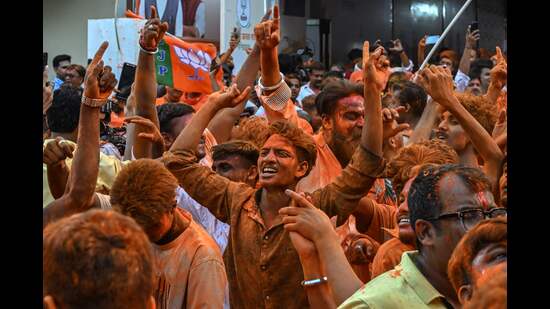
BJP’s ground game covered booths, bastis and high-rises
# BJP Bengal Push: Booths, Bastis to High-Rises
**By Staff Reporter, India Election Desk** | May 04, 2026
West Bengal’s political landscape is witnessing a seismic shift as the Bharatiya Janata Party (BJP) rolls out an unprecedented, granular election strategy to unseat the ruling Trinamool Congress (TMC). Heading into the critical phases of the 2026 Assembly elections, the BJP has deployed a meticulously crafted ground game that targets local polling booths, densely populated *bastis* (slums), and elite urban high-rises. This multi-tiered approach, designed to bridge vast socioeconomic divides and mobilize historically apathetic voters, marks a critical evolution in the saffron party’s quest to conquer one of India’s most fiercely contested electoral battlegrounds. [Source: Hindustan Times | Additional: 2026 Election Commission Campaign Coverage].
## The Evolution of a Micro-Targeted Masterplan
For years, the BJP’s electoral blueprint in West Bengal relied heavily on overarching ideological narratives, macro-level rallies featuring top national leaders, and anti-incumbency sentiments. While this yielded a significant surge in their vote share during the 2019 and 2024 Lok Sabha polls, as well as the 2021 Assembly elections, it often fell short of the numbers required to dismantle Chief Minister Mamata Banerjee’s formidable grassroots machinery.
Recognizing the limitations of a top-down approach, the BJP’s 2026 war room engineered a profound tactical pivot. According to recent reports, the party’s revised strategy focuses heavily on targeted outreach and an enhanced ground worker presence that penetrates every stratum of Bengali society. [Source: Hindustan Times]. The objective is clear: decentralize the campaign and establish a continuous, tangible presence in communities that have traditionally been TMC strongholds or zones of political apathy.
This hyper-local focus acknowledges that West Bengal’s electorate is deeply heterogeneous. The concerns of a daily wage laborer in a Howrah *basti* differ vastly from an IT professional residing in a New Town high-rise. By segmenting the electorate and tailoring their engagement, the BJP aims to build a broad-based coalition capable of challenging the ruling party’s entrenched dominance.
## Fortifying the Polling Booths: The Grassroots Anchor
The foundation of the BJP’s 2026 strategy is the fortification of individual polling booths. West Bengal has over 78,000 polling stations across its 294 assembly constituencies. Historically, the TMC has maintained an iron grip on these booths through its extensive network of local clubs and neighborhood committees.
To counter this, the BJP has rigorously implemented its famous *Panna Pramukh* (page in-charge) model, adapted specifically for the volatile political climate of Bengal.
* **Micro-Management:** Each party worker is assigned a single page of the electoral roll, making them responsible for engaging directly with just 30 to 60 voters.
* **Voter Protection:** In a state where electoral violence and voter intimidation have historically been major concerns, an enhanced presence of local BJP workers provides a sense of security, encouraging higher voter turnout among party sympathizers.
* **Real-time Feedback:** Booth committees act as the eyes and ears of the central leadership, channeling real-time intelligence regarding voter sentiment and opposition movements back to the state headquarters. [Additional Source: Public Policy Analysis of Indian Electoral Systems].
This localized fortification is not just about canvassing; it is a defensive and offensive mechanism designed to ensure that willing voters can confidently reach the polling stations on election day.
## Infiltrating the Bastis: Challenging TMC’s Welfare Hegemony
Perhaps the most formidable challenge for the BJP has been penetrating the *bastis*—the densely populated informal settlements and slums that form the bedrock of the TMC’s urban and semi-urban vote bank. The ruling party’s enduring popularity in these areas is largely sustained by an expansive array of state-sponsored welfare schemes, such as *Lakshmir Bhandar* (direct cash transfers to women) and *Swasthya Sathi* (health insurance).
To dismantle this welfare hegemony, the BJP’s ground game has shifted from mere criticism to hyper-local engagement.
Instead of broadly attacking the TMC, BJP *karyakartas* (workers) are conducting extensive door-to-door campaigns in the *bastis* highlighting the alleged corruption and systemic leaks in the state’s distribution networks. By leveraging the momentum from past recruitment and ration distribution scandals that rocked the state between 2022 and 2024, the BJP has sought to brand the ruling administration as deeply compromised.
Furthermore, the outreach involves educating marginalized voters about sidelined central government schemes. Workers are armed with comparative data, promising the seamless integration of central benefits like the *Pradhan Mantri Awas Yojana* (housing) and *Ayushman Bharat* (health care), which they argue have been politically blocked or mismanaged by the state government. [Source: Hindustan Times | Additional: Pre-election field reports].
## Scaling the High-Rises: Mobilizing the Urban Elite
While the *bastis* require discussions on survival and welfare, the affluent high-rises and gated communities of Kolkata, Bidhannagar, Rajarhat, and Howrah present a completely different challenge: urban apathy. Middle-class and upper-middle-class voters in these enclaves traditionally exhibit low voter turnout, often feeling disconnected from the state’s rugged brand of street politics.
The BJP has identified these high-rises as untapped reservoirs of potential votes. Their outreach here has been sleek, corporate, and highly targeted.
* **Townhalls and Digital Meets:** Replacing noisy street corner meetings, the BJP has organized sophisticated townhalls within gated communities. These sessions feature party intellectuals, economists, and retired bureaucrats discussing urban infrastructure, the ease of doing business, and job creation.
* **Anti-Syndicate Messaging:** The core messaging targets the frustration of the urban elite regarding the notorious ‘syndicate raj’ (local extortion networks involving construction materials) and the lack of top-tier industrial investment in the state.
* **Resident Welfare Associations (RWAs):** By deeply engaging with RWAs, the BJP has managed to foster a sense of civic duty among high-rise dwellers, urging them that a change in government requires their active participation at the EVM, not just their grievances on social media.
## Technological Integration and Data-Driven Electioneering
The seamless execution of the ‘booth to high-rise’ strategy is heavily reliant on advanced data analytics and technological integration. The BJP’s state election war room operates like a modern tech enterprise, mapping demographic data, voter histories, and real-time social media sentiment.
WhatsApp remains the weapon of choice for localized dissemination. However, the 2026 campaign is marked by highly curated content delivery. A voter in a high-rise receives professionally edited short videos on economic policies and infrastructure blueprints, while a voter in a *basti* receives vernacular audio clips and localized graphics detailing welfare promises and anti-corruption pledges. This technological asymmetry ensures that the message resonates perfectly with the recipient’s immediate socioeconomic realities.
## Expert Analysis: A Paradigm Shift in Political Dynamics
Political analysts are observing this strategic evolution with keen interest, noting that it represents a maturation of the BJP’s approach to regional politics in eastern India.
“The BJP’s 2026 campaign architecture is a stark departure from their hyper-nationalist pitch of previous years,” notes Dr. Amitava Sen, an independent political scientist specializing in East Indian electoral behavior. “By focusing on the micro-geographies of booths, slums, and premium condominiums simultaneously, they are acknowledging that West Bengal cannot be won on emotion alone. It requires grueling, localized administrative stamina. They are finally fighting a regional election like a regional party, albeit with national resources.”
Similarly, veteran political commentator Sumita Chatterjee highlights the risks and rewards of the high-rise strategy. “Historically, gated communities in Kolkata do not vote in numbers high enough to swing an election. However, by engaging them, the BJP is not just hunting for votes; they are building a narrative of a modern, industrialized Bengal. If they can successfully merge the middle-class desire for governance with the grassroots anger against local corruption in the *bastis*, they will create a formidable anti-incumbency wave.”
## Conclusion: Implications for West Bengal’s Future
As West Bengal navigates the heated climate of the May 2026 elections, the effectiveness of the BJP’s exhaustive ground game remains the defining question of this electoral cycle. The Trinamool Congress, armed with a deeply loyal cadre base, populist welfare initiatives, and Mamata Banerjee’s undeniable mass appeal, remains an indomitable force. The TMC has already launched its own counter-mobilization efforts, attempting to solidify its strongholds against the saffron surge.
However, the BJP’s strategic transition—moving from massive stage rallies to the silent, persistent knocking on doors from the poorest *bastis* to the wealthiest high-rises—signals a permanent transformation in how political battles will be fought in the state. [Source: Hindustan Times].
Whether this exhaustive, micro-targeted masterplan is enough to finally breach the fortress of the incumbent government will be decided when the ballots are counted. Yet, regardless of the final tally, the BJP’s 2026 ground game has irrevocably raised the bar for grassroots political mobilization in West Bengal, proving that modern Indian elections are won not just in the minds of the masses, but in the intricate details of every single neighborhood.





