
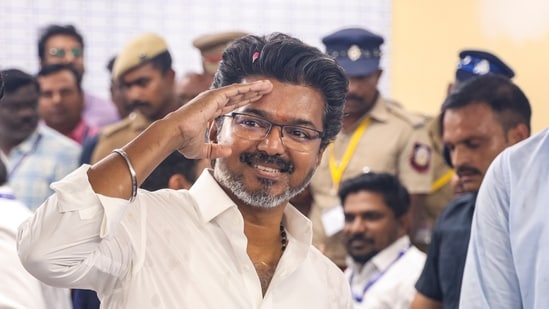
Horse-trading row, VCK suspense: Twists and turns in Vijay-starrer Tamil Nadu election thriller
# TN Election 2026: Vijay CM Bid Amid VCK Suspense
By Karthik Krishnan, Political Desk | May 9, 2026
**Chennai, May 9, 2026:** Actor-turned-politician Joseph Vijay’s ambitious bid to become Tamil Nadu’s Chief Minister is facing unprecedented hurdles amid severe allegations of horse-trading and shifting political allegiances. Following the high-stakes April 2026 Legislative Assembly elections, the southern state is witnessing a gripping political thriller. The suspense surrounding the Viduthalai Chiruthaigal Katchi (VCK) and their potential pivot has left both the ruling Dravida Munnetra Kazhagam (DMK) and Vijay’s Tamilaga Vettri Kazhagam (TVK) on edge. As the state waits for the final mandate, backroom negotiations, fears of MLA poaching, and intense coalition bargaining are dominating the discourse, deeply testing the resilience of Tamil Nadu’s democratic framework. [Source: Hindustan Times | Additional: Regional Political Analysis].
## The Rise of Tamilaga Vettri Kazhagam (TVK)
When Vijay officially launched his political party, Tamilaga Vettri Kazhagam (TVK), in early 2024, the objective was crystal clear: capturing power in the 2026 Assembly elections. Bypassing the 2024 Lok Sabha polls to build grassroots momentum, Vijay positioned himself as a viable alternative to the entrenched bi-polar hegemony of the DMK and the All India Anna Dravida Munnetra Kazhagam (AIADMK).
Throughout the campaign trail over the last two years, Vijay drew massive crowds, echoing the historical cinematic-to-political transitions of MG Ramachandran (MGR) and NT Rama Rao (NTR). His rallies, characterized by promises of anti-corruption drives, educational reform, and a caste-free administrative approach, galvanized millions of first-time voters. However, transitioning from a beloved screen idol (“Thalapathy”) to the Chief Minister’s chair requires more than just crowd mobilization; it requires astute political maneuvering, a reality Vijay is currently confronting head-on.
“Vijay’s entry disrupted the traditional Dravidian arithmetic,” notes Dr. S. Narayan, a Chennai-based political sociologist. “But the post-poll scenario is where the actual battle begins. The sheer scale of the TVK’s challenge is now becoming apparent as the establishment parties utilize their institutional muscle.” [Source: Independent Political Commentary].
## The Shadow of Horse-Trading in a Tight Race
As exit polls and internal party surveys hint at the possibility of a hung assembly or a tightly contested mandate, the specter of “horse-trading”—the illicit buying and selling of legislative support—has cast a dark shadow over the election’s aftermath. According to the original reports, Vijay’s path to the Chief Ministership is being obstructed by widespread allegations that rival political factions are aggressively courting TVK’s potential winning candidates. [Source: Hindustan Times].
In Indian politics, a hung assembly often triggers “resort politics,” where parties sequester their Members of the Legislative Assembly (MLAs) in luxury hotels to prevent poaching. Rumors are already swirling in Chennai that TVK leadership has pre-emptively identified secure locations in neighboring Kerala and Karnataka to protect their flock.
The DMK and AIADMK have both vehemently denied these allegations, calling them baseless defensive tactics by a politically inexperienced TVK. However, the sheer financial power of the established parties places immense pressure on TVK’s newly minted, often resource-strapped candidates.
“The allegations of horse-trading reflect the anxiety of a fractured mandate,” explains political analyst Meera Chandran. “When an untested third front performs surprisingly well, the established majors will inevitably try to engineer defections to secure a simple majority. For Vijay, keeping his house intact is his first real test as a party president.”
## The VCK Suspense: A Kingmaker in the Wings
Adding a dramatic twist to this electoral thriller is the strategic silence of the Viduthalai Chiruthaigal Katchi (VCK), led by the influential Dalit leader Thol. Thirumavalavan. The VCK has historically been a crucial ally of the DMK-led Secular Progressive Alliance, providing vital vote shares in northern and central Tamil Nadu. However, tensions regarding power-sharing and the demand for a Deputy Chief Minister post have reportedly strained this alliance.
The “VCK suspense” mentioned in recent dispatches centers on whether Thirumavalavan might abandon the DMK camp to support Vijay’s TVK. Vijay has actively wooed marginalized communities, attempting to build a broad social coalition. If the VCK aligns with TVK in a post-poll scenario, it could fundamentally alter the state’s political calculus, providing Vijay with the necessary numbers to stake a claim for the government. [Source: Hindustan Times | Additional: Historical Alliance Data].
“Thirumavalavan is playing his cards close to his chest,” a senior political correspondent observed on election eve. “The VCK recognizes that this election is a transitional moment. By delaying their absolute commitment, they are maximizing their bargaining power. If TVK emerges as the single largest party but falls short of a majority, VCK could literally play kingmaker.”
## Dravidian Majors on High Alert
The potential emergence of a Vijay-led government is a nightmare scenario for both the DMK and the AIADMK. For decades, Tamil Nadu has comfortably alternated between these two Dravidian giants. The last successful third-front disruption occurred decades ago, and subsequent attempts by actors like Vijayakanth (DMDK) and Kamal Haasan (MNM) eventually faded into alliance dependencies or irrelevance.
Chief Minister M.K. Stalin’s DMK is banking heavily on its welfare schemes, such as the Magalir Urimai Thogai (women’s basic income), and its strong organizational machinery. Conversely, the AIADMK, under Edappadi K. Palaniswami, is hoping to capitalize on anti-incumbency and administrative fatigue.
Yet, the anxiety within both camps is palpable. Internal circulars leaked to the regional press suggest that both Dravidian majors have instructed their district secretaries to establish “back-channel communications” with independent candidates and smaller regional outfits. This aggressive posturing is what has fueled the current horse-trading controversies. [Source: Regional News Syndicates].
## Demographic Shifts and the Youth Vote
To understand the current political deadlock and Vijay’s meteoric rise, one must look at the shifting demographic sands of Tamil Nadu. Over 20% of the electorate in the 2026 polls comprises voters under the age of 30. This demographic is largely disconnected from the historical anti-Hindi agitation and the early Dravidian movement ideologies that anchor the DMK and AIADMK.
Vijay’s TVK has ruthlessly targeted this demographic. By leveraging his massive fan clubs (Rasigar Mandrams), which have spent decades engaging in localized philanthropy, Vijay transformed a fandom into a grassroots political machine. His campaign rhetoric deliberately stepped away from polarizing ideological debates, focusing instead on employment, digital infrastructure, and systemic transparency.
However, translating youth enthusiasm into actual votes—and protecting those votes from being marginalized by post-poll horse-trading—remains a formidable challenge. The traditional parties possess deep-rooted booth-level management skills, allowing them to manipulate tight races where margins of victory can be less than a thousand votes.
## Conclusion: A Watershed Moment for Tamil Nadu
The twists and turns of the Tamil Nadu 2026 election thriller are far from over. As the state waits with bated breath, Vijay’s bid for the Chief Minister’s office remains suspended between his undeniable popular appeal and the harsh, transactional realities of Indian realpolitik.
**Key Takeaways:**
* **Political Disruption:** Vijay’s TVK has successfully challenged the DMK-AIADMK binary, proving that a well-organized third alternative can capture the public’s imagination.
* **Vulnerability of New Parties:** The ongoing horse-trading allegations highlight the structural vulnerabilities new parties face against wealthy, established political machineries.
* **The Power of Allies:** The suspense surrounding the VCK underscores that in a fragmented mandate, ideological purity often takes a back seat to tactical power-sharing.
Whether Vijay successfully navigates this treacherous post-poll landscape or falls victim to the seasoned maneuvering of the Dravidian majors, the 2026 elections will be remembered as a watershed moment. It has permanently altered the political discourse of Tamil Nadu, proving that the era of uncontested bi-polar politics in the state may finally be coming to an end. All eyes remain on the final tally, and the backroom deals that will undoubtedly follow.





