
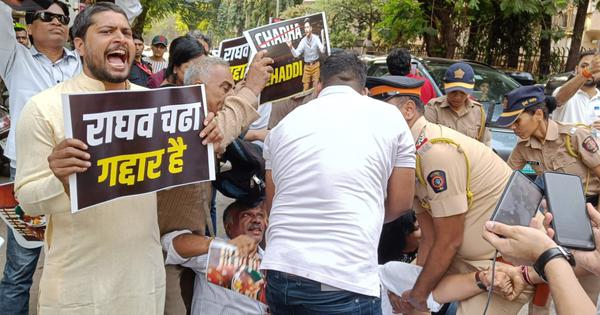
Mumbai: AAP members detained during protest against Raghav Chadha, six MPs’ merger with BJP
The Saffron Shadow: AAP Cries Foul, Protesters Held
Another day, another headline about political upheaval. It’s a familiar story, isn’t it? The air in Mumbai thickened yesterday, not just with humidity, but with palpable anger and a sense of betrayal. When you see citizens taking to the streets, braving potential legal trouble, you know something fundamental is at stake. This isn’t just about party politics; it’s about the very fabric of trust between leaders and the people they represent. Many are left wondering if loyalty in public service has become little more than a fleeting whisper.
Members of the Aam Aadmi Party (AAP) didn’t stand idly by. They converged, loud and clear, protesting what they see as a deeply troubling development: the alleged defection of Rajya Sabha MP Raghav Chadha and six other MPs to the Bharatiya Janata Party (BJP). Chants filled the air, signs waved with indignation. But as is often the case when dissent gets too vocal, authorities stepped in. Several protesters were detained by Mumbai police, effectively silencing their immediate outburst but perhaps amplifying the underlying message. It’s a harsh reminder that even in a democracy, voicing strong opposition can carry a hefty personal cost. The accusation itself speaks volumes about the political climate we’re navigating right now.
What’s Really Fuelling These Political Earthquakes?
This isn’t an isolated incident; it’s a stark symptom of a recurring fever plaguing Indian politics. The speed at which loyalties appear to shift, the constant hum of whispers about defections, the public outcry they inevitably ignite—it all points to a deeper malaise. Is it sheer ambition driving these moves? A genuine ideological realignment? Or something far more cynical at play, reducing political allegiance to a transactional commodity? When elected representatives, who secured their seats on one party’s platform, are seen to jump ship, it doesn’t just confuse voters; it actively erodes their hard-won faith in the entire democratic process. These protests, regardless of their scale, aren’t just background noise. They are a potent reminder that a significant segment of the populace feels unheard, betrayed, and is willing to fight for what they believe are fundamental principles of political integrity. They demand answers. They demand accountability. And frankly, who can blame them?
The “Atomic Answer”: AAP members were detained in Mumbai while protesting the alleged defection of Rajya Sabha MP Raghav Chadha and six other unnamed MPs to the BJP. The protest highlights deep concerns within the Aam Aadmi Party about political integrity and perceived betrayals, reflecting broader anxieties about party loyalties and democratic principles.
The implications of such political manoeuvres stretch far beyond party headquarters. They seep into every voter’s mind, shaping perceptions of trustworthiness and the efficacy of their vote. When the lines between opposition and ruling party blur through individual crossovers, it complicates the very act of holding power accountable. Voters cast ballots for specific manifestos, for particular visions. If those visions can be so easily discarded by their chosen representatives, what message does that send about the weight of their democratic choice? The ongoing narrative of defection and dissent isn’t just news; it’s a continuous, unfolding drama challenging the core tenets of India’s vibrant, sometimes volatile, political identity. It keeps everyone, from seasoned political analysts to the average citizen, on edge, wondering what political surprise the next day will bring. And it forces us all to ask: at what cost does this political game truly play out?





