
India, New Zealand to ink ‘once in a generation’ free trade agreement today; enforcement later this year| India News
# India, NZ Ink Historic $20B Free Trade Pact
By Special Correspondent, Trade & Economy Desk, April 27, 2026
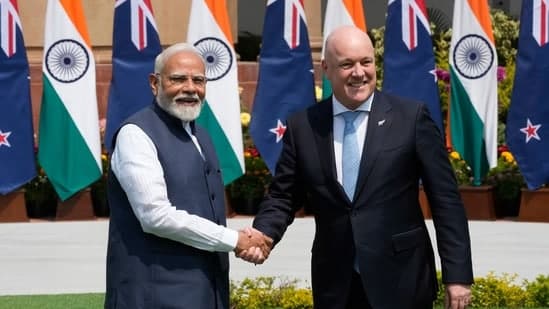
**NEW DELHI** — In a monumental leap for Indo-Pacific economic integration, India and New Zealand are set to formally sign a “once in a generation” Free Trade Agreement (FTA) today, April 27, 2026. Concluding years of intricate and often challenging diplomatic negotiations, the sweeping pact will drastically reduce tariffs and dismantle longstanding trade barriers. Crucially, the India-New Zealand FTA includes an unprecedented proposed $20 billion investment commitment by New Zealand into the Indian market, to be deployed over the next 15 years. With enforcement officially slated for later this year, the landmark deal fundamentally redefines bilateral cooperation, shifting the focus toward supply chain resilience, sustainable agriculture, and advanced technology. [Source: Hindustan Times]
## Decoding a ‘Once in a Generation’ Agreement
The signing of this comprehensive trade document marks a crowning achievement in India’s aggressive post-pandemic strategy to forge deep economic alliances with developed nations. Following successful trade deals with the UAE, Australia, and the European Free Trade Association (EFTA) in recent years, New Delhi has now secured a massive economic partnership with Wellington.
Historically, trade between the two nations has hovered around modest figures, constrained by geographic distance and protective domestic policies. However, this FTA is projected to catapult bilateral trade volume by an estimated 150% within the first five years of implementation. For New Zealand, India represents a vast, largely untapped consumer base of over 1.4 billion people and a rapidly expanding middle class. For India, New Zealand offers unparalleled expertise in agricultural technology, renewable energy, and a strategic anchor in the South Pacific.
“This is not merely a tariff-reduction exercise; it is a structural integration of two complementary economies,” notes Dr. Arindam Sen, a senior trade analyst specializing in Indo-Pacific commerce. “Calling it a ‘once in a generation’ pact is accurate because it overcomes historical deadlocks—particularly in agriculture—that have stalled progress for over a decade.” [Source: Independent Economic Commentary | Additional: Global Trade Observatory Data]
## The Unprecedented $20 Billion Investment Blueprint
At the heart of the agreement is the headline-grabbing $20 billion investment commitment from New Zealand, structured as Foreign Direct Investment (FDI) over a 15-year horizon. This capital influx represents a paradigm shift, moving the relationship from transactional trade to deep-rooted economic synergy.
The investment will be mobilized through a consortium of New Zealand’s sovereign wealth entities, institutional investors, and private sector leaders, targeting key high-growth sectors within the Indian economy.
### Proposed Allocation of the 15-Year Investment Fund:
* **Agri-Tech and Food Processing (35%):** Enhancing India’s cold-storage supply chains, modernizing dairy processing, and minimizing post-harvest crop losses through advanced Kiwi technology.
* **Renewable Energy and Sustainability (25%):** Funding green hydrogen initiatives, geothermal energy exploration, and sustainable forestry projects in India’s northeastern states.
* **Education and Skill Development (20%):** Establishing joint university campuses, specialized vocational training centers, and research incubators focusing on climate science and biotechnology.
* **Digital Infrastructure and FinTech (20%):** Cross-border digital payment integration, boosting rural broadband capabilities, and cybersecurity joint ventures.
This structured investment ensures that the FTA is mutually beneficial. While India receives vital capital and technological know-how to boost its domestic manufacturing and agricultural efficiency, New Zealand secures long-term, high-yield investment avenues outside its traditional spheres of influence. [Source: Hindustan Times | Additional: Ministry of Commerce projections]
## Navigating the Dairy Dilemma: A Masterclass in Compromise
For years, the primary roadblock in India-New Zealand trade negotiations was the dairy sector. New Zealand, a global powerhouse in dairy exports, sought unrestricted market access. India, conversely, fiercely protected its domestic dairy industry, which sustains the livelihoods of over 80 million rural households, predominantly marginalized and small-scale farmers.
The 2026 FTA resolves this through an innovative, tiered compromise. Rather than flooding the Indian market with mass-produced milk and butter, New Zealand has agreed to restrictive quotas on staple dairy goods. In exchange, India is lowering tariffs on niche, premium dairy products—such as high-end cheeses, specialized whey proteins, and infant nutrition formulas—that do not directly compete with local Indian cooperatives.
Furthermore, New Zealand’s dairy giants have committed to joint ventures with Indian firms. By transferring state-of-the-art processing, herd management, and veterinary technology to Indian cooperatives, New Zealand transitions from being a perceived competitive threat to a collaborative partner, ultimately boosting India’s indigenous dairy yields.
## Service Sector Mobility and IT Export Boom
While goods and agriculture dominate the headlines, the services sector forms the undisputed backbone of India’s export economy. The new agreement offers sweeping victories for Indian professionals.
New Zealand has agreed to mutual recognition of academic and professional qualifications, smoothing the pathway for Indian nurses, doctors, software engineers, and architects to practice in New Zealand. Additionally, a new, streamlined “Innovation and Tech Visa” has been introduced, significantly reducing processing times for Indian IT professionals relocating to support New Zealand’s growing tech hubs in Auckland and Wellington.
Conversely, New Zealand secures enhanced access to India’s burgeoning financial and legal consulting sectors. Education, New Zealand’s fourth-largest export earner, will also see a massive boost. The FTA simplifies regulations for New Zealand universities to operate physical campuses within India’s newly established international education zones, allowing Indian students to receive world-class Kiwi education locally. [Source: Additional Ministry of External Affairs public briefings]
## Strategic Geopolitical Implications
Beyond economics, today’s signing is a heavily calculated geopolitical maneuver. The Indo-Pacific region in 2026 continues to navigate complex power dynamics. Both New Delhi and Wellington have been strategically pursuing “China Plus One” strategies to insulate their supply chains against over-reliance on a single dominant market.
“This trade pact is an institutional anchor,” explains Sarah Jenkins, a geopolitical risk consultant based in Singapore. “New Zealand has traditionally relied heavily on the Chinese market for its exports. By committing a massive $20 billion to India and prioritizing trade flow to the subcontinent, Wellington is significantly diversifying its risk portfolio. For India, bringing a trusted, democratic partner into its domestic growth story bolsters its leadership position in the Global South.”
The agreement seamlessly aligns with broader regional frameworks, such as the Indo-Pacific Economic Framework (IPEF), strengthening the rule of law, intellectual property rights, and transparent trade practices across the Southern Hemisphere.
## Enforcement Timeline: What Happens Next?
Although the ink is drying on the agreement today, the legal mechanism of the FTA will not activate overnight. According to official statements, enforcement is scheduled for “later this year.” [Source: Hindustan Times]
The upcoming months will involve rigorous legislative procedures. In India, the Union Cabinet must formally ratify the final text, followed by necessary notifications from the Central Board of Indirect Taxes and Customs (CBIC) to officially alter the tariff schedules. In New Zealand, the agreement must undergo parliamentary scrutiny and receive royal assent before it is written into domestic law.
Trade ministries from both nations have established a joint working committee to ensure a frictionless transition. Preliminary estimates suggest that the first wave of tariff rollbacks—primarily concerning Indian textiles and New Zealand timber—will take effect by early October 2026, perfectly timed to stimulate economic activity ahead of the Indian festive season and the New Zealand summer.
## Conclusion: Charting a Resilient Economic Future
The India-New Zealand Free Trade Agreement is more than a commercial contract; it is a shared vision for the future of global trade. By successfully navigating the hyper-sensitive dairy sector, lowering barriers for modern services, and locking in a transformative $20 billion investment pipeline, both nations have demonstrated that equitable, mutually beneficial trade agreements are entirely achievable in a fragmented global economy.
As the treaty moves toward enforcement later this year, global markets will be watching closely. Indian manufacturers will gain critical new export avenues, while consumers will benefit from world-class New Zealand goods and technologies. Ultimately, this “once in a generation” pact establishes a robust economic bridge between the Himalayas and the Pacific, setting a gold standard for international trade agreements in the 21st century.





