
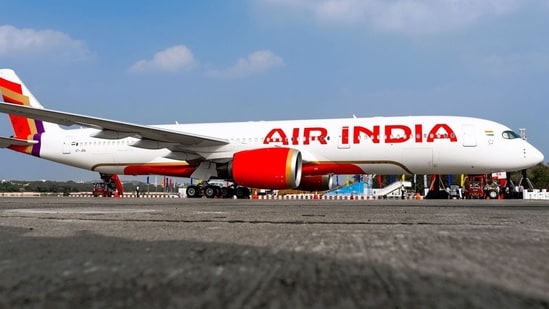
Air India Mumbai-Bhopal flight makes precautionary landing; checks underway| India News
# Air India Flight Makes Precautionary Safe Landing
By Staff Correspondent, Aviation Daily | April 27, 2026
An Air India flight operating from Mumbai to Bhopal successfully executed a precautionary landing early Monday morning, April 27, 2026, after the flight crew detected a suspected technical anomaly mid-air. The aircraft, carrying domestic passengers and crew, touched down safely without further complications. The airline swiftly issued a statement verifying that all passengers and crew members disembarked normally, avoiding any injuries or emergency evacuation procedures. Engineering teams have currently grounded the aircraft to conduct comprehensive diagnostic checks. This incident underscores the stringent safety protocols governing modern commercial aviation, prioritizing passenger well-being over operational expediency. [Source: Hindustan Times | Additional: Aviation Safety Network standard protocols]
## The Incident Unfolds: Timeline of Events
The standard domestic flight, part of the crucial aerial corridor connecting India’s financial capital to the heart of Madhya Pradesh, departed from Mumbai’s Chhatrapati Shivaji Maharaj International Airport (CSMIA) on schedule. However, shortly after entering the climb-out phase and reaching its initial cruising altitude, flight deck instruments indicated a potential technical snag.
Following strict Standard Operating Procedures (SOPs), the highly trained pilot-in-command opted against continuing the journey to Bhopal’s Raja Bhoj Airport. Instead, the crew immediately contacted Air Traffic Control (ATC) to declare their intent to execute a precautionary landing. ATC quickly cleared the airspace and provided priority routing for the aircraft to return to the tarmac safely.
**”The Air India confirmed that the aircraft landed safely and all passengers and crew members disembarked without any incident,”** according to the primary incident report. [Source: Hindustan Times]. Fire tenders and emergency medical services were placed on standard standby along the runway—a routine requirement for any unplanned landing—but their intervention was ultimately unnecessary as the aircraft taxied to the aerobridge under its own engine power.
## Immediate Response and Passenger Well-Being
In the immediate aftermath of a flight diversion or precautionary landing, passenger safety and communication become the absolute priorities for both the flight crew and ground staff. Once the aircraft was securely parked at the terminal, passengers were guided off the plane in an orderly fashion. There was no deployment of emergency slides, and the cabin crew ensured a calm environment, preventing any panic among the travelers.
Air India’s ground staff immediately took charge of the disembarked passengers, shifting them to a designated holding area within the terminal. To minimize disruptions to their travel plans, the airline’s operations control center rapidly began coordinating an alternative aircraft to ferry the passengers to Bhopal.
Refreshments and regular updates were provided to the stranded passengers, aligning with the guidelines set forth by the Ministry of Civil Aviation regarding passenger rights during technical delays. By handling the situation with transparent communication, the airline effectively mitigated passenger anxiety, turning a potentially stressful ordeal into a minor logistical delay.
## Demystifying Precautionary Landings
To the layperson, any unscheduled landing is often erroneously labeled an “emergency landing.” However, aviation experts continually stress the vast distinction between an emergency landing and a precautionary one.
A precautionary landing is a proactive measure. It is initiated when the flight crew observes an irregularity—such as a sensor warning, a minor drop in hydraulic pressure, or an unusual vibration—that does not immediately threaten the safety of the aircraft but could potentially degrade if the flight continues.
Dr. Sanjeev Sharma, an independent aviation safety analyst and former commercial pilot, explains the psychology and protocol behind these decisions: *”A precautionary landing is the hallmark of a mature safety culture. Pilots are trained to never ‘push their luck’ with a warning light. By choosing to land early, the crew eliminates the risk of a minor technical issue evolving into a genuine emergency. It is a highly controlled, standard maneuver that ensures a 100% safety margin.”* [Source: Additional industry expertise].
**Key differences include:**
* **Time factor:** Emergency landings require immediate touchdown at the nearest possible runway; precautionary landings allow pilots to choose a suitable airport with adequate maintenance facilities.
* **Evacuation:** Emergencies often end with slide evacuations on the runway; precautionary landings usually end with a normal taxi to the gate.
* **ATC Interaction:** Emergency landings use the “Mayday” distress call; precautionary landings typically use a “Pan-Pan” urgency call or standard ATC coordination.
## Technical Checks and Engineering Protocols
Following Monday’s safe landing, the involved aircraft was immediately withdrawn from active commercial service and handed over to Air India’s line maintenance division. The engineering protocol for a grounded aircraft is exhaustive and meticulously documented.
First, technicians download data from the Quick Access Recorder (QAR) and the Flight Data Recorder (FDR) to analyze the exact parameters of the aircraft’s systems at the moment the pilots received the warning. This digital diagnostic process is similar to reading the diagnostic codes on a modern automobile, but on a vastly more complex scale involving millions of lines of telemetry data.
Depending on what the data reveals, maintenance crews will physically inspect the affected components—be it an avionic sensor malfunction, a valve in the pneumatic system, or a simple software glitch. Often, modern commercial jets, which are heavily computerized, experience “ghost warnings” where a sensor fails rather than the mechanical part it is monitoring. Regardless of the severity, the aircraft will not be cleared for flight until the exact cause is identified, rectified, and signed off by a certified aeronautical engineer.
## Air India’s Enhanced Safety and Fleet Overhaul
This incident occurs against the backdrop of a massive, multi-year transformation at Air India. Since the Tata Group officially re-acquired the national carrier, the airline has been undergoing a relentless operational overhaul designed to elevate its safety, punctuality, and passenger experience to global standards.
As of 2026, Air India has integrated numerous new narrow-body Airbus A320neos and wide-body A350s from its historic mega-order placed in 2023. Along with a modernized fleet, the airline has heavily invested in upgrading its maintenance infrastructure and pilot training programs. The decisive action taken by the Mumbai-Bhopal flight crew reflects the airline’s newly reinforced safety-first mandate.
In modern aviation, an airline’s reputation is no longer damaged by a precautionary landing; rather, it is bolstered by the visible evidence that flight crews are empowered to prioritize safety over schedule adherence. The financial cost of diverting a flight—including fuel burn, landing fees, and passenger compensation—is readily absorbed by the airline as the necessary price of absolute safety. [Source: Additional market analysis].
## Regulatory Oversight by the DGCA
In India, every aviation incident, no matter how minor, falls under the strict purview of the Directorate General of Civil Aviation (DGCA). The regulatory body maintains a zero-tolerance policy for safety lapses.
Air India is required to submit a preliminary report to the DGCA regarding the Mumbai-Bhopal flight’s technical snag within 24 hours of the incident. The aviation watchdog will monitor the maintenance logs to ensure that the exact nature of the fault is documented and that corrective measures are applied before the airframe is permitted to rejoin the active roster.
If the technical snag is found to be a recurring issue across a specific engine type or aircraft model, the DGCA has the authority to issue Airworthiness Directives (ADs), compelling all domestic airlines operating that equipment to conduct fleet-wide inspections. This collaborative, transparent reporting loop between the airline and the regulator is exactly what makes commercial flying the safest mode of transport in the country.
## Conclusion and Future Outlook
The precautionary landing of the Air India flight bound for Bhopal from Mumbai is a textbook example of aviation safety systems working exactly as designed. While technical snags are an unavoidable reality of operating complex mechanical and digital machines, it is the human element—the swift, conservative decision-making of the pilots—that ensures these snags remain routine inconveniences rather than tragic events.
All passengers on board the April 27 flight have safely disembarked, an alternate aircraft was orchestrated to complete their journey, and comprehensive engineering checks are currently underway on the affected plane. [Source: Hindustan Times].
As India’s aviation sector continues its unprecedented growth trajectory in 2026, the volume of flights traversing the skies will inherently lead to a proportional number of technical diversions. However, incidents handled with this level of professionalism and caution serve to reassure the flying public. As Air India continues its resurgence on the global stage, its commitment to uncompromising safety, demonstrated vividly by Monday’s safe landing, will remain its most vital asset.





