BJP vs Congress over Kharge's ‘terrorist’ remark at PM; Shah says ‘Modi Ji totally curbed terrorism ’| India News
# BJP-Cong Clash Over Kharge ‘Terrorist’ Jibe at PM
By Senior Political Correspondent, The National Wire, April 22, 2026
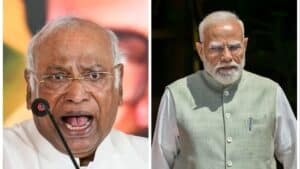
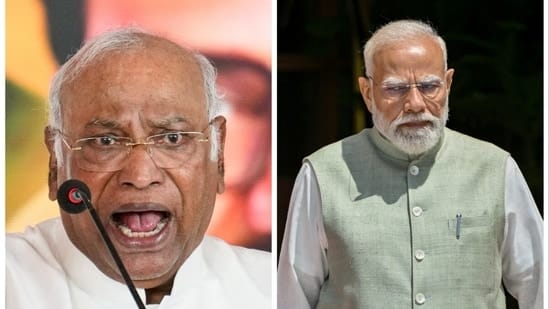
On April 22, 2026, a fierce political firestorm erupted in New Delhi between the ruling Bharatiya Janata Party (BJP) and the opposition Indian National Congress following Congress President Mallikarjun Kharge’s highly controversial remarks. During a public address, Kharge accused Prime Minister Narendra Modi of “terrorising” political parties and the general public by systematically misusing government machinery and central investigative agencies to stifle democratic opposition. The explosive choice of words triggered an immediate and aggressive counter-offensive from the BJP. Union Home Minister Amit Shah strongly condemned the statement, pivoting the narrative to national security by asserting that Prime Minister Modi’s tenure has been defined by the absolute eradication and curbing of actual terrorism across the nation.
## The Anatomy of the Controversy
The current political tempest finds its roots in a fiery speech delivered by Congress President Mallikarjun Kharge, aimed at rallying the opposition ranks against what the Congress party describes as an undeclared political emergency. Kharge’s primary contention was directed at the Enforcement Directorate (ED), the Central Bureau of Investigation (CBI), and the Income Tax (IT) department—agencies the opposition claims operate as extensions of the ruling BJP’s political apparatus.
Kharge’s use of the word “terrorising” was deployed metaphorically to describe the psychological and legal pressure exerted on opposition leaders. According to the Congress chief, the threat of sudden raids, prolonged incarcerations without bail under stringent laws like the Prevention of Money Laundering Act (PMLA), and character assassination amounts to a campaign of political terror.
“The Prime Minister is not fighting a fair democratic battle,” Kharge reportedly stated, implying that the ruling dispensation is reliant on fear-mongering rather than electoral merit to maintain its grip on power. The assertion underscores a long-standing grievance of the INDIA bloc: that the playing field in Indian politics has been fundamentally skewed by the weaponization of state power.
## Amit Shah’s Rebuttal and BJP’s Counter-Offensive
The BJP, highly sensitive to any rhetoric that challenges Prime Minister Modi’s global image, wasted no time in launching a formidable counter-attack. Leading the charge was Union Home Minister Amit Shah, who effectively flipped Kharge’s metaphor into a debate on literal national security.
Shah argued that using the term “terrorist” or “terrorising” in association with Prime Minister Modi is not only a gross insult to the mandate of the Indian electorate but also a mockery of the actual victims of terrorism. “Modi Ji totally curbed terrorism,” Shah retorted, highlighting the NDA government’s track record in neutralizing security threats since they first assumed power in 2014.
The Home Minister pointed to the abrogation of Article 370 in Jammu and Kashmir, the dramatic reduction in Left-Wing Extremism (Naxalism), and the surgical strikes across the border as testaments to the Prime Minister’s zero-tolerance policy on terror. By framing Kharge’s remarks as an insult to India’s security forces and national integrity, the BJP strategically deflected the conversation away from the misuse of central agencies and toward their strongest electoral plank: national security and strongman leadership.
## Central Agencies: The Crux of the Opposition’s Grievance
To understand the sheer frustration that likely prompted Kharge’s extreme choice of words, one must examine the political landscape of India leading up to April 2026. For years, the opposition has compiled data suggesting an overwhelming bias in the actions of central investigative agencies.
According to various independent reports and petitions previously filed in the Supreme Court by opposition parties, over 90% of political figures investigated, raided, or arrested by the ED and CBI over the last decade belong to the opposition. High-profile arrests of sitting Chief Ministers, cabinet ministers, and senior party functionaries from rival parties have become a regular feature of the Indian news cycle.
The Congress and its allies argue that these agencies are utilized to achieve three main objectives:
1. **Dismantling Financial Networks:** Freezing bank accounts and seizing assets to financially cripple opposition parties ahead of crucial elections.
2. **Forced Defections:** Using the threat of prosecution to coerce opposition lawmakers into joining the BJP, thereby toppling democratically elected state governments.
3. **Character Assassination:** Creating a continuous media narrative of corruption around opposition leaders to erode their public credibility.
The BJP, however, maintains a consistent defense: agencies operate independently, and the actions taken are strictly based on evidence of deep-rooted corruption stemming from decades of dynastic misrule.
## Expert Analysis: The Weaponization of Political Rhetoric
Political analysts suggest that the escalating linguistic hostility reflects the high stakes of India’s current political climate. Dr. Meenakshi Roy, a senior fellow of Political Science at the Centre for Democratic Studies in New Delhi, views this exchange as symptomatic of a deeply polarized democracy.
“When institutional trust breaks down, political rhetoric naturally becomes more extreme,” Dr. Roy explains. “Kharge’s use of ‘terrorising’ is a calculated risk. On one hand, it accurately captures the visceral fear running through the opposition ranks regarding sudden arrests. On the other hand, it hands the BJP a golden opportunity to invoke their robust national security record. In Indian politics, whenever the debate shifts to terrorism, the BJP traditionally holds the home-ground advantage.”
Experts also note that this is not the first time provocative nomenclature has been deployed against PM Modi. Past campaigns utilizing terms like “Chowkidar Chor Hai” (The watchman is a thief) or “Panauti” (bad omen) have often backfired on the opposition, as the BJP’s formidable communication machinery efficiently spins these insults into victimhood narratives, galvanizing their voter base in defense of the Prime Minister.
## The Semantic Weight of “Terrorism” in Indian Discourse
The linguistic battle over the word “terrorist” holds profound cultural and historical weight in India. As a nation that has endured decades of cross-border terrorism, insurgency in the Northeast, and internal security threats from Maoist factions, the term is highly emotive.
By associating the Prime Minister’s actions with “terrorising,” the Congress attempted to equate the trauma of state overreach with criminal violence. However, this semantic leap is precisely what Amit Shah and the BJP leadership have identified as an overreach. The BJP’s swift condemnation relies on the premise that equating legal anti-corruption probes—no matter how politically convenient they may seem—with actual terrorism is a disservice to the nation’s martyrs.
Shah’s rebuttal deliberately highlighted the physical safety that Indian citizens now enjoy in major metropolitan cities, contrasting it with the era of frequent bomb blasts that occurred before 2014 under the Congress-led UPA administration. This juxtaposition is designed to remind the electorate of the BJP’s core brand: uncompromising national security.
## Electoral Implications for 2026 and Beyond
As India navigates the politically charged waters of 2026, with several crucial legislative assembly elections looming on the horizon, this controversy is unlikely to fade quickly. Both parties are expected to heavily weaponize this exchange in their upcoming political campaigns.
For the Congress and the broader INDIA bloc, Kharge’s statement will be used to reinforce the narrative of a democratic backslide. They will continue to pitch the upcoming electoral battles as a fight for the survival of the Constitution and protection against an increasingly authoritarian regime. The focus will remain on the necessity of a unified opposition to save democratic institutions from systematic dismantling.
Conversely, the BJP is poised to utilize Kharge’s “terrorist” remark in its election rallies to portray the Congress as a party desperate, frustrated, and deeply disrespectful of the Prime Minister’s global stature. The ruling party will likely frame the opposition’s complaints about central agencies as nothing more than the panic of corrupt elites facing unprecedented accountability.
## Conclusion: A Deepening Democratic Fault Line
The verbal clash between Mallikarjun Kharge and Amit Shah over the term “terrorising” is more than a fleeting moment of political theater; it is indicative of the deepening fault lines in India’s democratic framework. The opposition genuinely feels cornered by the relentless pursuit of central investigative agencies, viewing them as tools of political extermination. Meanwhile, the BJP remains steadfast in its narrative that no individual, regardless of their political lineage, is above the law in the pursuit of a corruption-free India.
As the political discourse continues to coarsen, the ultimate arbiters will be the Indian electorate. Whether the voters perceive the actions of the central agencies as a justified cleansing of political corruption or as a terrifying abuse of executive power will heavily dictate the electoral outcomes in the months and years to come. For now, the rhetorical battle lines have been redrawn, leaving little room for bipartisan consensus in the world’s largest democracy.
***
**Citations:**
* [Source: Original RSS via Hindustan Times – April 22, 2026]
* [Additional: Historical data on ED/CBI conviction rates and PMLA provisions drawn from public legal records and Supreme Court petitions filed by the opposition.]