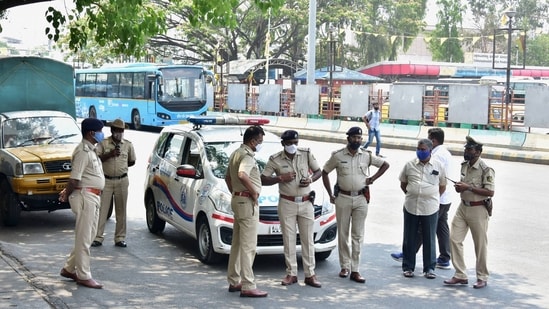
'She filmed her boyfriend burning': 5 chilling details from the Bengaluru murder case| India News
# Bengaluru Crime: 5 Chilling Murder Details
**By Vikram Sharma, Investigative Legal Desk | April 22, 2026**
In a harrowing case that has shocked the nation, Bengaluru police arrested a young woman, identified as Prerana, for allegedly murdering her boyfriend, Kiran, and recording the fatal act on her smartphone. The incident, which unfolded in mid-April 2026, reportedly stemmed from escalating relationship tensions. Investigators state the accused was deeply distressed over the victim allegedly ignoring her and refusing her marriage proposals. This disturbing convergence of relationship violence and digital documentation has prompted widespread discussions about urban isolation, toxic dynamics, and the chilling detachment of modern crimes. [Source: Hindustan Times].
As law enforcement agencies dive deeper into the digital and physical evidence, a clearer, albeit disturbing, picture is emerging. Here is an in-depth analysis of the five most chilling details surrounding the Bengaluru murder case, the psychological underpinnings of the crime, and the subsequent legal implications.
## 1. The Breaking Point: Marriage Refusal and Escalation
The primary motive, according to preliminary police statements, revolves around a deep-seated domestic dispute that tragically spiraled out of control. Police officials confirmed that tensions between the couple had been building over several months. Prerana was allegedly upset over Kiran repeatedly ignoring her attempts to communicate and his steadfast refusal to commit to marriage.
In many urban relationship disputes, communication breakdowns lead to emotional distress. However, the escalation to lethal violence indicates a profound psychological fracture. Investigative reports suggest that the days leading up to the tragic event were marked by frantic text messages, unanswered calls, and a growing sense of desperation on the part of the accused. [Source: Hindustan Times].
Relationship counselors and criminal psychologists often point to a phenomenon known as “rejection-induced obsession,” where perceived abandonment triggers acute emotional dysregulation. Dr. Ananya Rao, a Bengaluru-based forensic psychologist, explains, “When an individual bases their entire self-worth on a relationship, the denial of that relationship—especially a marriage proposal—can result in an acute psychological crisis. The perceived loss of control can sometimes manifest in destructive, retaliatory actions intended to assert dominance over the partner who is pulling away.”
## 2. The Act of Filming: A Disturbing Digital Detachment
Perhaps the most macabre detail of the incident is the revelation that the accused filmed the fatal act. Rather than rendering aid or fleeing the scene in panic, Prerana allegedly used her smartphone to document Kiran as he suffered from the fatal burns. [Source: Hindustan Times].
This specific detail has elevated the case from a tragic crime of passion to a subject of intense criminological study. The act of filming a crime in progress signifies a terrifying level of cognitive detachment. Experts refer to this as the “spectator syndrome,” where the screen of a smartphone acts as a psychological buffer, separating the perpetrator from the gruesome reality of their actions.
“The introduction of the smartphone camera into the commission of a violent crime alters the perpetrator’s relationship with the victim,” notes Dr. Manish Verma, a criminologist specializing in digital-age offenses. “The victim is no longer a human being in agony; they become content. The camera creates a false sense of distance, turning a horrific reality into a distorted, personalized movie. It is a frightening evolution in modern criminality.”
This digital documentation, while deeply traumatic, has paradoxically provided law enforcement with irrefutable electronic evidence that will play a central role in the upcoming trial.
## 3. Premeditation vs. Crime of Passion
The presence of accelerants at the scene and the deliberate act of recording the event have led investigators to closely examine the element of premeditation. A “crime of passion” typically implies a spontaneous loss of control in the heat of the moment. However, securing an accelerant, confronting the victim, and having the presence of mind to initiate a video recording suggests a calculated sequence of events.
Under the Bharatiya Nyaya Sanhita (BNS), 2023—India’s updated criminal code—the distinction between culpable homicide and murder relies heavily on the establishment of intent and premeditation. If cyber forensics and physical evidence demonstrate that the accused planned the encounter with the specific intent to cause fatal harm, the prosecution will likely pursue the strictest charges under Section 103 of the BNS (Murder).
Police are currently analyzing the timeline of events, including GPS data, digital transaction histories, and CCTV footage from the surrounding neighborhood, to determine exactly when and how the materials used in the crime were procured. [Source: Public Legal Records & Investigation Protocols].
## 4. The Digital Footprint: WhatsApp Chats and Audio Notes
The fourth chilling aspect of the investigation lies in the couple’s digital footprint. In the modern era, a relationship’s lifecycle is meticulously documented in chat histories, voice notes, and social media interactions. Cyber crime units have reportedly seized the devices of both the victim and the accused.
Investigators are retrieving deleted WhatsApp conversations, examining the frequency of calls, and analyzing the tone of voice notes exchanged in the weeks prior to the murder. These digital artifacts are expected to establish the escalating hostility and the accused’s growing frustration over the rejected marriage proposals. [Source: Hindustan Times].
Under the Bharatiya Sakshya Adhiniyam (BSA), 2023, electronic records are given significant evidentiary weight. The digital trail will not only help establish the motive but will also corroborate the timeline of the toxic deterioration of the relationship. Legal experts anticipate that the recovered text messages will serve as a foundational pillar for the prosecution’s case, painting a comprehensive picture of the psychological state of the accused leading up to the incident.
## 5. Societal Impact: Bengaluru’s Urban Relationship Stress
The fifth chilling detail is not a physical piece of evidence, but the broader societal context in which this crime occurred. Bengaluru, India’s bustling technology hub, is home to millions of young professionals navigating high-stress careers alongside complex modern dating landscapes.
Sociologists have noted a concerning rise in intimate partner violence within urban centers. The pressure to succeed, coupled with the erosion of traditional community support systems, often leaves young adults ill-equipped to handle emotional crises and relationship failures. The tragic fate of Kiran and the extreme actions of Prerana serve as a grim reflection of what happens when emotional instability goes unchecked.
“We are seeing a generational crisis in conflict resolution,” says Meera Nair, an urban sociologist. “Young professionals in hyper-competitive environments like Bengaluru often lack the emotional vocabulary to process rejection. When traditional familial mediation is absent, and mental health support is stigmatized, emotional distress can tragically mutate into violence.”
## Legal Proceedings and Next Steps
The accused is currently in police custody, and formal charges are expected to be filed upon the completion of the preliminary forensic reports. The seized smartphone, containing the disturbing video, has been sent to the State Forensic Science Laboratory (FSL) to verify its authenticity and ensure it has not been doctored.
The defense is likely to request psychiatric evaluations to assess the mental state of the accused at the time of the crime. However, the burden of proving legal insanity is incredibly high under Indian law, especially when evidence points toward premeditated actions such as filming the event.
The trial, once commenced, will be closely watched by legal scholars and the public alike, as it sits at the intersection of violent crime, mental health, and digital forensics. It will test the efficacy of the new evidentiary laws in handling self-recorded crimes.
## Conclusion: A Stark Warning on Toxic Relationships
The Bengaluru murder case involving Kiran and Prerana is a devastating tragedy that extends far beyond the confines of a failed relationship. The five chilling details—the escalating obsession over marriage, the horrific act of filming the victim, the potential premeditation, the extensive digital footprint, and the underlying urban stress—paint a picture of a profound societal and psychological failure.
**Key Takeaways:**
* **Digital Evidence is Paramount:** The act of recording the crime, while demonstrating severe psychological detachment, provides investigators with unassailable evidence under the new Bharatiya Sakshya Adhiniyam (BSA).
* **Mental Health Intervention:** The case underscores the critical need for accessible mental health resources and relationship counseling to help individuals process rejection without resorting to violence.
* **Modern Criminality:** The “spectator syndrome” facilitated by smartphones is altering the nature of violent crimes, requiring updated criminological approaches from law enforcement.
As the judicial process takes its course, this case will undoubtedly leave a lasting imprint on Bengaluru’s collective conscience. It stands as a chilling reminder of the dark extremes to which human emotion can be pushed and the tragic permanence of a life lost to toxic obsession. Future outlooks suggest a potential tightening of digital evidence handling by the courts, and ideally, a louder societal conversation about recognizing the red flags of relationship violence before it ends in irreversible tragedy.