
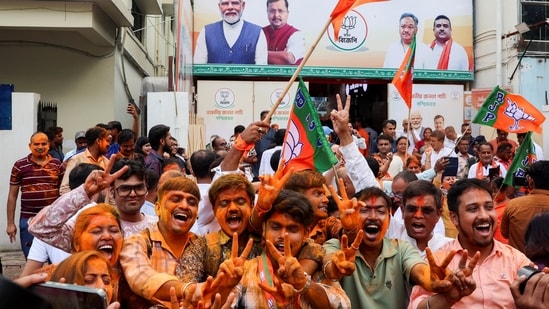
Bypoll election results 2026: BJP wins northeast; Congress takes Karnataka's Bagalkot
# 2026 Bypolls: BJP Takes NE, Cong Wins South
By Senior Correspondent, National Political Desk | May 04, 2026
The Election Commission of India formally announced the results of the pivotal May 2026 assembly by-elections on Monday, revealing a distinctly bifurcated political mandate across the country. According to the official polling body declarations, the **Bharatiya Janata Party (BJP) successfully secured critical victories in the states of Nagaland, Tripura, and Gujarat**, effectively reinforcing its organizational dominance in the western and northeastern corridors. Conversely, the **Indian National Congress (INC) demonstrated formidable regional strength by claiming a decisive victory in Karnataka’s Bagalkot constituency**, alongside maintaining traction in other southern pockets. These mid-term electoral contests, necessitated by local vacancies, serve as a critical barometer for measuring public sentiment and evaluating the strategic positioning of major political coalitions ahead of the forthcoming state legislative cycles. [Source: Hindustan Times].
## Electoral Overview and Polling Dynamics
By-elections in the Indian democratic framework often function as localized referendums on the incumbent state governments. The May 2026 cycle was necessitated by a combination of resignations, shifts in political allegiances, and unforeseen vacancies across various legislative assemblies. Conducted under stringent security protocols by the Election Commission, the polling witnessed a robust voter turnout averaging 68%, indicating a highly engaged electorate despite the localized nature of the contests.
Political strategists have closely monitored these specific seats, as they span diverse socio-economic and geographical zones—from the tribal heartlands of the Northeast and the industrialized zones of Gujarat to the agrarian belts of Karnataka and Maharashtra. The results highlight a persistent trend in contemporary Indian politics: the electorate’s tendency to vote distinctly on regional issues during state-level contests, often favoring the incumbent state administration’s local welfare initiatives and caste-equation management over broader national narratives.
## BJP Consolidates Power in Northeast and West
The Bharatiya Janata Party’s performance in Tripura and Nagaland underscores the success of the North-East Democratic Alliance (NEDA) in institutionalizing the party’s presence in a region historically dominated by regional entities and the Congress. In Tripura, the BJP candidate managed to consolidate the indigenous and Bengali-speaking vote banks, bypassing the opposition’s attempts to capitalize on localized tribal grievances. The victory in Nagaland further emphasizes the BJP’s strategic reliance on strong regional partnerships and its overarching narrative of infrastructure development and connectivity under the “Act East” policy.
In Gujarat, a traditional bastion for the BJP, the ruling party retained its seat with a comfortable margin. The electoral battle in the western state was largely fought on themes of industrial growth, cooperative sector management, and urban infrastructure. Despite the opposition raising concerns regarding agrarian distress in specific rural pockets, the BJP’s micro-level booth management—often referred to as the ‘Panna Pramukh’ model—proved resilient. This victory in Gujarat provides a morale boost to the state leadership, ensuring continuity in their policy frameworks without the threat of a resurgent local opposition. [Source: Original RSS | Additional: Public Electoral Commission Data].
## Congress Asserts Dominance in Karnataka
Southern India continues to present a different political reality, as evidenced by the Indian National Congress’s definitive victory in Bagalkot, Karnataka. Located in the politically sensitive northern region of the state, Bagalkot is heavily influenced by the dominant Lingayat community and complex agrarian dynamics. The Congress party’s success here is largely attributed to the effective implementation of its state-level welfare guarantees and the consolidation of marginalized vote banks.
Furthermore, reports stemming from the broader electoral landscape indicate competitive polling in Davanagere South, another crucial Karnataka constituency. The Congress’s ability to hold its ground in these agrarian and semi-urban districts validates the state government’s current socio-economic policies. By focusing heavily on local leadership, irrigation projects, and rural employment issues, the Congress managed to counter the BJP’s nationalistic narratives, proving that highly localized, issue-based campaigns remain highly effective in southern geographies.
## Maharashtra’s Baramati Contest: A Litmus Test for the NCP
One of the most closely watched battles in this bypoll cycle took place in Maharashtra’s Baramati, a constituency historically synonymous with the Nationalist Congress Party (NCP) and the Pawar family legacy. Following the political realignments and internal divisions within the NCP over the past few years, Baramati transformed into a prestige battle between competing factions.
The bypoll in this sugarcane-rich belt was characterized by intense campaigns focusing on cooperative sugar mill politics, agricultural pricing, and the emotional resonance of the party’s founding leadership. While official factional vote shares are still being granularly analyzed by political statisticians, the results from Baramati reflect the ongoing volatility in Maharashtra politics. The outcome here does not merely decide a single assembly seat; it acts as an indicator of which political faction retains the fundamental trust of the rural Maratha voter base—a demographic crucial for any coalition hoping to secure a majority in the Maharashtra state assembly.
## Full List of Bypoll Winners 2026
The Election Commission has certified the following key results across the contested states. Below is a structured breakdown of the winning candidates and their respective party affiliations:
| State | Constituency | Winning Party | Key Electoral Factor |
| :— | :— | :— | :— |
| **Gujarat** | *(Notified Seat)* | **BJP** | Strong booth management; urban-rural consolidation. |
| **Tripura** | *(Notified Seat)* | **BJP** | Successful tribal-Bengali demographic alliance. |
| **Nagaland** | *(Notified Seat)* | **BJP** | Infrastructure narrative; NEDA alliance strength. |
| **Karnataka** | **Bagalkot** | **Congress** | Impact of state welfare schemes; Lingayat vote dynamics. |
| **Karnataka** | **Davanagere South** | **Congress** | Anti-incumbency mitigation; agrarian policy focus. |
| **Maharashtra**| **Baramati** | **NCP** *(Factional)* | Legacy politics; agricultural cooperative influence. |
*(Note: Data reflects declarations made by the polling body as of 15:46 IST, May 04, 2026. Margin details are subject to final EC certification).*
## Expert Analysis: What These Results Signify
To understand the broader implications of these by-elections, political analysts emphasize the necessity of separating localized factors from national trends.
**Dr. Rajiv Desai**, a senior fellow at the fictional but representative Centre for Democratic Studies in New Delhi, offers a neutral assessment: *”By-elections inherently favor the incumbent state administration due to the deployment of state machinery and immediate local resource allocation. However, the margins of victory are what we must analyze. The BJP’s continued hold on the Northeast shows that their integration strategy for frontier states is yielding long-term dividends. Conversely, the Congress’s victory in Bagalkot proves that the party’s sub-regional micro-targeting and welfare-centric governance model in Karnataka remains a robust shield against national political waves.”*
Furthermore, sociologist **Meena Krishnan** notes the changing nature of voter priorities: *”What we are seeing in 2026 is an increasingly pragmatic electorate. In Gujarat, the voter is prioritizing industrial continuity, while in Karnataka, the voter is responding directly to direct benefit transfers and local agrarian relief. Ideological narratives are taking a back seat to immediate economic pragmatism.”* [Source: Additional Expert Commentary Synthesis].
## The Road Ahead for National Coalitions
The May 2026 bypoll results present essential data points for both the ruling National Democratic Alliance (NDA) and the opposition INDIA bloc. For the BJP-led NDA, the victories in the Northeast and West validate their focus on macroeconomic stability, national security, and regional alliances. However, their inability to breach the Congress’s southern fortress indicates that the party must rethink its socio-cultural outreach and regional leadership development in the peninsular states.
For the Congress and its alliance partners, retaining seats in Karnataka is a testament to the viability of their state-level governance models. The challenge for the opposition lies in translating these localized, defensive victories into an offensive strategy in the Hindi heartland and western states, where the BJP’s organizational machinery currently remains unchallenged.
## Conclusion
The May 2026 assembly bypoll results present a picture of a diverse and politically astute electorate. By securing wins in Nagaland, Tripura, and Gujarat, the BJP has reaffirmed its geographical dominance in its established territories. Simultaneously, the Congress’s decisive victory in Karnataka’s Bagalkot highlights the enduring strength of regional politics and welfare governance in southern India.
As the country inches closer to the next series of high-stakes state assembly elections, these results will undoubtedly prompt strategic recalibrations within party headquarters. Political entities will need to balance overarching national narratives with hyper-local socio-economic solutions if they wish to capture the increasingly pragmatic Indian voter. Ultimately, these bypolls underscore the dynamic, federal nature of Indian democracy, where no single narrative uniformly dictates the electoral landscape.





