
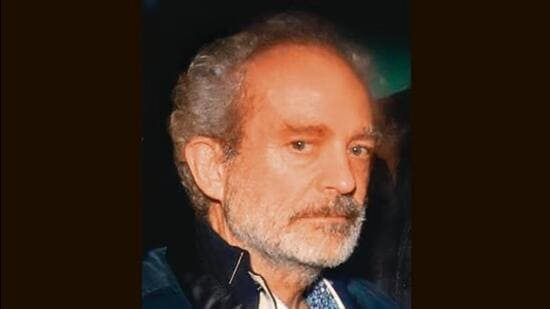
SC seeks Centre reply on Christian Michel James’s plea for release
# SC Seeks Reply on Agusta Middleman Release
By Senior Legal Correspondent, National News Desk, May 4, 2026
**New Delhi:** The Supreme Court of India on Monday issued a formal notice to the Central government, seeking a detailed response to a petition filed by Christian Michel James, the alleged British middleman in the infamous ₹3,600-crore AgustaWestland VVIP chopper scam. Michel, who has been incarcerated in Delhi’s Tihar Jail since his extradition from Dubai in December 2018, is seeking absolute release from custody. His legal counsel argues that his prolonged detention of over seven and a half years as an undertrial violates his fundamental right to life and liberty, especially given the sluggish pace of the trial. The apex court’s directive brings renewed judicial scrutiny to one of India’s most high-profile and politically sensitive defense procurement controversies. [Source: Hindustan Times | Additional: Public Legal Records]
## The Supreme Court’s Directive
During the hearing on May 4, 2026, the Supreme Court bench acknowledged the defense’s submission that Michel has spent a period in judicial custody that potentially exceeds the maximum sentence he could face if convicted of the charges leveled against him. The bench has directed the Central Bureau of Investigation (CBI) and the Enforcement Directorate (ED)—the two primary federal agencies investigating the corruption and money laundering aspects of the case—to file their respective counter-affidavits detailing the current status of the trial and the justification for his continued detention.
Michel’s legal team relied heavily on the statutory provisions related to the maximum period for which an undertrial prisoner can be detained. Under the legacy Section 436A of the Code of Criminal Procedure (CrPC), and its equivalent in the newly implemented Bharatiya Nagarik Suraksha Sanhita (BNSS), an undertrial has the right to be released on bail if they have undergone detention for a period extending up to one-half of the maximum period of imprisonment specified for the offense. Furthermore, if the undertrial has served the maximum possible sentence during the trial phase itself, continued incarceration is deemed illegal.
“The petitioner has been behind bars for over 90 months. The maximum sentence for the predicate offenses under the Prevention of Corruption Act and the Indian Penal Code sections invoked here is generally seven years. By mathematical calculation alone, keeping him in custody without a conviction is a punitive measure, not a preventive one,” Michel’s counsel argued before the apex court.
## Understanding the Legal Bottleneck
The resistance from the federal probe agencies in granting bail or release to Christian Michel has historically been rooted in two main arguments: his status as a foreign national presenting a severe flight risk, and the stringent bail conditions under Section 45 of the Prevention of Money Laundering Act (PMLA).
The ED has consistently maintained that Michel is a British national with extensive global connections and no deep roots in Indian society. Agencies fear that, if released, he would flee the jurisdiction, bringing the multi-nation corruption trial to a grinding halt. However, constitutional experts point out that the PMLA’s twin conditions for bail—which require the court to be satisfied that the accused is not guilty and is not likely to commit an offense while on bail—cannot eternally override Article 21 of the Constitution, which guarantees the right to a speedy trial.
“When a foreign national is held as an undertrial for over seven years in a complex white-collar crime without a conviction, it forces our constitutional courts to confront a critical dilemma,” explains Dr. Ananya Sharma, a senior Supreme Court advocate and specialist in extradition and international law. “The courts must balance the stringent anti-money laundering provisions against the fundamental human right to liberty. Recent jurisprudential trends from the Supreme Court have increasingly emphasized that the ‘process cannot be the punishment,’ and excessive delay in trial is a valid ground for bail, irrespective of the strictures of the PMLA.”
## Flashback: The AgustaWestland VVIP Chopper Deal
To understand the gravity of Michel’s plea, it is essential to revisit the origins of the AgustaWestland scam, a controversy that deeply shook India’s defense procurement ecosystem during the United Progressive Alliance (UPA) government’s tenure.
In 2010, the Indian government signed a contract worth approximately ₹3,600 crore (around €556 million) with the UK-based AgustaWestland, a subsidiary of the Italian defense conglomerate Finmeccanica, to supply 12 AW-101 helicopters. These highly secure choppers were intended for the Communication Squadron of the Indian Air Force to transport Very Very Important Persons (VVIPs), including the President, the Prime Minister, and other top dignitaries.
By 2013, the deal unraveled spectacularly when Italian authorities arrested Finmeccanica’s CEO, Giuseppe Orsi, on charges of bribing Indian officials to secure the contract. The allegations suggested that the technical specifications of the helicopters—specifically the operational flight ceiling—were deliberately lowered from 6,000 meters to 4,500 meters to allow AgustaWestland to qualify for the bidding process.
In January 2014, India formally cancelled the contract, citing a breach of the pre-contract integrity pact. Subsequent investigations alleged that kickbacks amounting to roughly ₹360 crore (€42.3 million) were paid to Indian politicians, bureaucrats, and Indian Air Force officials.
## Christian Michel’s Alleged Role
Indian investigative agencies identified three primary middlemen who facilitated the illicit routing of these kickbacks: Guido Haschke, Carlo Gerosa, and Christian Michel James.
The CBI and ED charge sheets allege that Michel was hired by AgustaWestland precisely for his deep network within the Indian defense establishment. Agencies claim that roughly €30 million (over ₹225 crore) was routed to Michel’s Dubai-based companies, such as Global Services FZE, under the guise of legitimate consultancy contracts. These funds were allegedly meant to buy influence, suppress negative media coverage in India regarding the helicopter deal, and directly bribe key decision-makers.
Michel has consistently denied these allegations, maintaining that his consultancy work was legitimate and that he is a victim of political crossfire.
## The Extradition and International Controversy
Christian Michel’s presence in an Indian jail is the result of a protracted diplomatic and legal battle. In December 2018, in a major diplomatic victory for New Delhi, UAE authorities extradited Michel to India. Since landing in New Delhi, he has been subjected to exhaustive interrogations by both the CBI and the ED.
However, his prolonged pre-trial detention has drawn the attention of international human rights bodies. In early 2021, the United Nations Working Group on Arbitrary Detention (UNWGAD) released an opinion stating that Michel’s detention was arbitrary and violated the Universal Declaration of Human Rights. The UN panel expressed concern over the conditions of his extradition and called for his immediate release.
The Indian government swiftly and strongly rejected the UNWGAD report, asserting that the working group is not a judicial body and that its findings are not binding on a sovereign nation. The Ministry of External Affairs emphasized that India possesses a robust, independent judiciary and that Michel was arrested and extradited in strict accordance with international treaties and due process of law.
## Timeline of the AgustaWestland Case
To contextualize the delay in the trial, a brief timeline of the events highlights the protracted nature of this legal battle:
* **February 2010:** India signs the ₹3,600 crore contract for 12 AW-101 helicopters.
* **February 2013:** Italian authorities arrest Finmeccanica CEO Giuseppe Orsi; India orders a CBI probe.
* **January 2014:** India officially cancels the chopper deal.
* **September 2015:** A special CBI court in India issues an open non-bailable warrant against Christian Michel.
* **December 2018:** Michel is successfully extradited from the UAE to India and sent to Tihar Jail.
* **2019-2023:** Multiple bail pleas filed by Michel are rejected by trial courts and the Delhi High Court, citing flight risk and the gravity of economic offenses.
* **May 2026:** The Supreme Court seeks the Centre’s response on his plea for absolute release due to the expiration of the maximum statutory detention period.
## Implications for Defense Procurement and Justice
The Supreme Court’s eventual ruling on this matter will have sweeping implications far beyond Christian Michel’s personal liberty. Legal analysts suggest that a ruling in favor of Michel could establish a formidable precedent for how economic offenders and foreign nationals are treated under Indian law when trials face unending delays.
One of the primary reasons for the slow pace of the AgustaWestland trial is the inherently international nature of the crime. The CBI and ED have had to send Letters Rogatory (LRs)—formal requests for judicial assistance—to multiple jurisdictions, including the UAE, the UK, Italy, Mauritius, and Switzerland. Translating thousands of pages of foreign banking documents and awaiting responses from overseas authorities has severely hampered the speed of the domestic trial.
“The AgustaWestland case is a textbook example of the complexities of prosecuting transnational corruption,” notes Vivek Chaurasia, a former investigative officer and financial crime analyst. “While the agencies must meticulously piece together the money trail, the judiciary cannot indefinitely suspend the constitutional rights of the accused. If the state cannot conclude a trial within a timeframe that is proportionate to the maximum punishment, the legal framework mandates release. It is a harsh reality of the criminal justice system that systemic delays ultimately benefit the accused.”
Furthermore, several co-accused in the case, including former Indian Air Force Chief S.P. Tyagi and prominent lawyer Gautam Khaitan, are already out on bail. Michel’s defense has repeatedly pointed to the principle of parity, arguing that keeping the alleged middleman incarcerated while the alleged principal beneficiaries are free is a violation of equitable justice.
## Conclusion and Future Outlook
The Supreme Court’s notice to the Centre marks a critical juncture in the eight-year-long incarceration of Christian Michel James. The forthcoming responses from the CBI and the ED will be pivotal. They are expected to argue that the gravity of the offense—which compromised India’s national security apparatus and involved high-level political corruption—warrants exceptions to standard bail provisions. They may also highlight the lack of an extradition treaty with the UK that could guarantee Michel’s return if he were to flee.
However, the apex court’s increasing intolerance for endless pre-trial detentions suggests that the government will need to present a highly compelling roadmap for the swift conclusion of the trial. If the agencies fail to demonstrate imminent progress, the court may be compelled to uphold the statutory guarantees of maximum undertrial detention periods, potentially paving the way for Michel’s release under strict conditions.
As India’s judicial system continues to evolve, balancing the iron-fisted pursuit of anti-corruption with the unyielding guarantees of constitutional liberty remains a delicate high-wire act. The next hearing, scheduled for later this month, will determine whether the alleged mastermind of the VVIP chopper scam will finally walk out of Tihar Jail, redefining the boundaries of undertrial incarceration in India’s legal landscape.





