
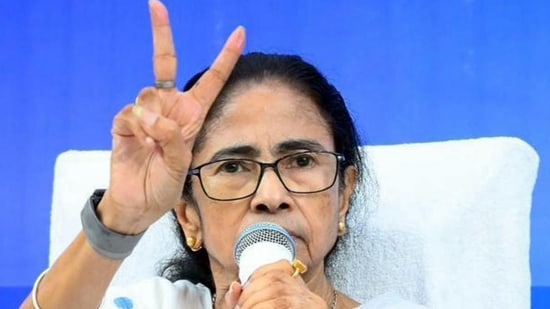
Mamata Banerjee election result 2026: After see-saw battle, surges ahead to avenge Nandigram loss; Suvendu still not out
# Mamata Surges Ahead of Suvendu in 2026 Clash
**By Special Correspondent** | Political News Desk | May 04, 2026
In a gripping political rematch that has captivated the nation, West Bengal Chief Minister Mamata Banerjee has taken a significant lead against her Bharatiya Janata Party (BJP) rival, Suvendu Adhikari, in the ongoing 2026 assembly election vote count. According to official Election Commission of India data released on May 4, 2026, Banerjee has secured 44,729 votes compared to Adhikari’s 37,545, establishing a comfortable margin of 7,184 votes. With only eight rounds of counting remaining, the Trinamool Congress (TMC) chairperson appears to be aggressively surging ahead to avenge her high-profile 2021 defeat in the region, although the fiercely contested electoral battle is not yet officially concluded.
## The Numbers: A High-Stakes See-Saw Battle
The early hours of counting reflected the intense volatility expected of this marquee constituency. Initially, the postal ballots and early Electronic Voting Machine (EVM) trends showed a neck-and-neck race, with the lead alternating between the two political heavyweights multiple times. However, as the counting progressed into the crucial middle rounds, a definitive shift began to emerge.
**Current Vote Tally Overview (As of 15:38 IST, May 4, 2026):**
| Candidate Name | Political Party | Total Votes Secured | Margin |
| :— | :— | :— | :— |
| **Mamata Banerjee** | All India Trinamool Congress (AITC) | 44,729 | +7,184 |
| **Suvendu Adhikari** | Bharatiya Janata Party (BJP) | 37,545 | – |
[Source: Hindustan Times | Additional: Election Commission of India Public Records]
The current margin of over 7,000 votes provides the Trinamool Congress with a vital psychological edge, but electoral experts are cautious about calling the race. The remaining eight rounds represent tens of thousands of uncounted votes, predominantly from specific localized booths where demographic loyalties can sharply pivot. The localized nature of voting in rural Bengal means that a single round encompassing a few specific panchayats can either exponentially increase a lead or erase it entirely.
## Echoes of 2021: The Weight of History
To understand the sheer magnitude of this ongoing contest, one must look back to the political earthquake of the 2021 assembly elections. Five years ago, Mamata Banerjee made the audacious decision to step away from her safe seat in Bhabanipur to directly challenge her former protégé-turned-rival, Suvendu Adhikari, on his home turf of Nandigram.
The 2021 result was a bitter pill for the TMC; while the party swept the state with a massive two-thirds majority, Banerjee personally lost to Adhikari by a razor-thin margin of just 1,956 votes. The defeat sparked immediate legal challenges and remains a point of deep contention.
“This specific constituency represents the ultimate prestige battle for both the Trinamool Congress and the Bharatiya Janata Party,” explains Dr. Ratan Mallick, a senior political analyst based in Kolkata. “For Mamata Banerjee, a victory here in 2026 is not merely about retaining power; it is an ideological vindication. Conversely, for Suvendu Adhikari, defending this seat is essential to cementing his status as the undisputed leader of the opposition and the BJP’s primary face in eastern India.”
## Strategic Shifts in the 2026 Campaign
The 2026 election cycle in West Bengal was characterized by vastly different campaign strategies compared to the previous contest. Both parties recalibrated their approaches, learning from the intense polarization of the past.
The Trinamool Congress doubled down on its expansive welfare schemes, which have served as the bedrock of its rural support. Programs such as *Lakshmir Bhandar*—which provides direct cash transfers to women—were heavily emphasized. The TMC campaign portrayed Banerjee as the ultimate protector of Bengali sub-nationalism and a bulwark against central overreach. Her decision to contest this seat again was framed as a courageous stand for democratic integrity.
On the other side, the BJP, spearheaded locally by Adhikari, ran a fiercely aggressive campaign targeting anti-incumbency and allegations of administrative corruption. The BJP continuously highlighted various state-level controversies, including teacher recruitment irregularities and local law-and-order disputes, aiming to consolidate the anti-TMC vote. Adhikari’s campaign heavily leveraged his deep, multi-generational organizational roots in the Medinipur region, painting the TMC as an increasingly urban, elite-driven entity out of touch with grassroots agrarian realities.
[Source: Hindustan Times | Additional: 2026 State Election Campaign Manifestos]
## Suvendu Adhikari: Down but Not Out
Despite the widening gap in the vote count, the headline from the *Hindustan Times* accurately notes: “Suvendu still not out.” The architecture of Indian electoral counting means that the geographical distribution of EVMs dictates the flow of numbers.
Historically, certain blocks within this contested region are fiercely loyal to the Adhikari family, which has dominated local cooperative societies and panchayat politics for decades. If the pending eight rounds of counting correspond to these specific demographic strongholds, a late-stage surge for the BJP candidate remains a statistical possibility.
“Elections in this specific belt are famously localized. A lead of 7,000 is substantial and undoubtedly puts the TMC in the driver’s seat, but in the final rounds, micro-demographics can drastically alter the trajectory,” notes electoral strategist Sanjay Kumar. “We have seen margins of 10,000 erased in the span of three rounds when counting moves from a minority-dominated sector to an agrarian-majority sector.”
## Demographic Battlegrounds: Women and Rural Voters
A closer analysis of the 2026 voting patterns reveals that demographic fault lines have played a profound role in shaping the current numbers. Voter turnout in the constituency exceeded 84%, pointing to massive grassroots mobilization by both political machineries.
**Key Demographic Factors Influencing the Count:**
* **Women Voters:** The TMC has relied heavily on an overwhelming surge of support from women voters, driven largely by the enhancement of the state government’s direct cash benefit transfer initiatives. Early ground reports indicated a higher-than-average turnout of female voters in booths where the TMC is currently registering strong leads.
* **The Agrarian Class:** The BJP’s messaging focused extensively on the unmet promises to the agricultural community, attempting to capitalize on localized discontent over crop procurement prices and rural infrastructure.
* **Minority Consolidation:** The area contains a significant minority population, which has traditionally served as a reliable vote bank for the ruling state party. The consolidation of these votes in the early rounds has been a primary driver of Banerjee’s current 44,729 vote tally.
[Source: Hindustan Times | Additional: Polling Booth Turnout Statistics 2026]
## Broader Implications for State and National Politics
The outcome of this single constituency holds disproportionate significance for both regional and national political landscapes.
Should Mamata Banerjee hold on to her lead and secure a victory, it will serve as a massive morale booster for her party, effectively laying to rest the ghost of the 2021 defeat. Such a win would further solidify her position as one of the most formidable regional leaders in India, enhancing her leverage within national opposition alliances as they prepare for future parliamentary battles against the ruling central government.
Conversely, if Suvendu Adhikari manages a spectacular late-stage comeback in the final eight rounds, it will be heralded by the BJP as a massive strategic triumph. Retaining the seat would allow the BJP to assert that anti-incumbency sentiment against the TMC is entrenched at the deepest grassroots levels, ensuring Adhikari’s unassailable position as the primary challenger to Banerjee’s administration.
## Anticipating the Final Verdict
As the Election Commission officials systematically tally the remaining EVMs, the atmosphere outside the counting centers remains tense and heavily guarded by central security forces. The rigorous counting process, which includes the mandatory verification of Voter Verifiable Paper Audit Trail (VVPAT) slips, ensures absolute transparency but also extends the anticipation.
The immediate takeaway from the current Election Commission data is clear: Mamata Banerjee has executed a formidable campaign to reclaim lost ground, resulting in a commanding lead of over 7,000 votes. Yet, the resilience of Suvendu Adhikari’s political machinery means the final declaration cannot be assumed until the very last vote is counted.
With just eight rounds separating West Bengal from the resolution of its most anticipated electoral showdown, the nation watches closely. The eventual victor will not only claim a seat in the state legislative assembly but will also secure an indelible triumph in one of modern India’s most intense political rivalries.





