
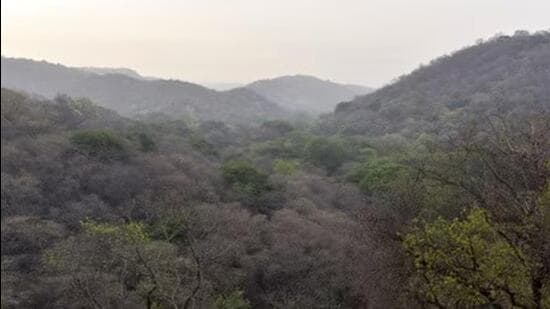
Digitally map forest limits: Govt to states| India News
# Govt Orders States to Digitally Map Forest Limits
**By Environment Desk, National News Observer, April 15, 2026**
In a decisive move to curb illegal mining and streamline environmental clearances, the Union Ministry of Environment, Forest and Climate Change (MoEFCC) has directed all state governments to urgently digitally map their forest boundaries. Issued on Wednesday, April 15, 2026, the mandate requires states to utilize advanced Geographic Information System (GIS) technology to clearly delineate forest limits by the end of the fiscal year. The directive stems from prolonged compliance reviews of the landmark Supreme Court judgment in the *Lafarge Umiam Mining Pvt. Ltd. vs. Union of India & Ors* case, which dealt extensively with environmental clearance conditions for limestone mining in Meghalaya. [Source: Hindustan Times | Additional: MoEFCC 2026 Public Directives]
## The Lafarge Umiam Mining Precedent
To understand the urgency of the Centre’s latest directive, one must look back at the judicial precedent that sparked the need for digital forest records. The case, *Lafarge Umiam Mining Pvt. Ltd. vs. Union of India & Ors*, centered around a major limestone mining project in the East Khasi Hills of Meghalaya. The cement manufacturer was accused of extracting limestone from land that was ecologically sensitive and forested, despite initially claiming the area was non-forest land to bypass stringent forest clearance protocols.
The Supreme Court’s landmark 2011 judgment in this matter did more than just settle a dispute over a single mining operation; it fundamentally altered how India governs its natural resources. The apex court laid down comprehensive guidelines for the grant of forest clearances, heavily emphasizing the necessity of a GIS-based decision support database.
“The Lafarge judgment was a watershed moment,” explains Adv. Meera Sanyal, a senior environmental lawyer practicing at the National Green Tribunal. “It exposed the systemic vulnerabilities in our environmental clearance process, where ambiguity over physical forest boundaries allowed corporations to mine in ecologically fragile zones. The Court noted that without an immutable, digital record of forest limits, the regulatory framework would remain porous.”
Despite the Supreme Court’s mandate over a decade ago, state-level compliance has been sluggish, fragmented, and inconsistent. The April 2026 directive from the Centre serves as a strict enforcement mechanism to finally close this long-standing loophole, ensuring that the principles established in the Lafarge case are uniformly applied across all Indian states and Union Territories. [Source: Hindustan Times | Additional: Supreme Court of India Archives]
## The Push for Geographic Information Systems (GIS)
Under the new directives, state forest departments are required to transition from archaic, paper-based cadastral maps to highly accurate, satellite-backed GIS models. The Centre has mandated the use of Differential Global Positioning Systems (DGPS) to conduct ground-truthing, a process where physical landmarks are matched with satellite imagery to create an error-free digital boundary.
Dr. Anil Kumar, a spatial data scientist formerly associated with the Forest Survey of India (FSI), highlights the technological leap this represents. “Historically, forest boundaries in India have been marked by physical pillars or vague descriptions in colonial-era gazettes. These are susceptible to tampering, natural degradation, and varied interpretations,” Dr. Kumar notes. “By shifting to a unified GIS platform, we are locking in the coordinates of our green cover. Once a forest limit is digitally mapped and uploaded to the national server, it becomes significantly harder for illegal encroachers or rogue mining operators to manipulate land classifications.”
The digitized maps are slated to be integrated seamlessly into **PARIVESH 2.0**, the government’s centralized web portal for environmental, forest, wildlife, and Coastal Regulation Zone (CRZ) clearances. This integration will allow regulatory bodies to instantly verify whether a proposed industrial project overlaps with classified forest land, drastically reducing the time required for site inspections and administrative reviews.
## Bridging the Regulatory Gap in Environmental Clearances
The mandate to digitize forest limits comes at a critical juncture for Indian environmental law, particularly in the wake of the Forest (Conservation) Amendment Act of 2023. The controversial amendment redefined the scope of protected forests, applying the law primarily to lands officially recorded as “forest” in government records on or after October 25, 1980.
This legislative shift made the official recording and mapping of forests more important than ever. If a patch of forest is not properly documented or mapped by the state, it risks losing federal protection, opening the door for non-forestry activities like commercial real estate, agriculture, or infrastructure development.
“The digital mapping order is the missing puzzle piece for the 2023 Amendment,” says Dr. Rajesh Menon, an environmental policy analyst. “By forcing states to finalize their digital limits, the Centre is essentially demanding a finalized inventory of what is protected and what is not. It eliminates the grey areas that have historically led to multi-year litigations between mining conglomerates and environmental watchdogs.”
For industries, this move promises greater ease of doing business. Companies seeking to invest in infrastructure or mining will have access to a transparent, publicly available database. This predictive certainty means project proponents can avoid acquiring land that falls within restricted ecological zones, preventing the kind of financial and legal catastrophes seen in the Lafarge Umiam scenario.
## State-Level Challenges and Implementation Hurdles
While the Centre’s directive is conceptually sound, execution at the state level faces steep logistical, financial, and political challenges. Delineating forest limits is a notoriously complex task in India due to historical land disputes, shifting topographies, and overlapping jurisdictions between state Revenue Departments and Forest Departments.
In regions like the Northeast, including Meghalaya where the Lafarge case originated, land holding systems are largely community-owned and governed by Sixth Schedule protections. State governments in these areas often struggle to categorize land without infringing on traditional tribal rights.
Furthermore, states with massive, dense forest covers such as Chhattisgarh, Odisha, and Madhya Pradesh face severe financial and manpower constraints. Conducting DGPS surveys across thousands of square kilometers of hostile, Naxal-affected, or inaccessible terrain requires specialized equipment, extensive security, and massive budget allocations.
“The Centre has issued the deadline, but the fiscal support required to execute this massive cartographic exercise is severely lacking,” stated a senior official from the Odisha State Forest Department, requesting anonymity. “We are dealing with century-old revenue maps that do not align with modern satellite data. Reconciling these discrepancies without causing public unrest is a bureaucratic nightmare.” [Source: Independent Policy Review | Additional: State Environmental Boards Data 2026]
## Impact on Indigenous Communities and the Forest Rights Act
The digitization drive has also raised alarms among indigenous communities and civil society organizations who fear that rapid mapping could bypass the provisions of the Scheduled Tribes and Other Traditional Forest Dwellers (Recognition of Forest Rights) Act, 2006, commonly known as the FRA.
Under the FRA, traditional forest dwellers hold legal rights to inhabit and sustainably use forest lands. Tribal rights advocates worry that a top-down technological approach driven by satellite imagery might fail to account for these recognized, yet physically subtle, community boundaries.
“Satellites cannot map human rights,” argues Kavita Soren, a grassroots tribal rights activist based in Jharkhand. “If the states rush to meet the Centre’s deadline, there is a very real danger that they will draw digital lines that enclose tribal settlements or customary foraging grounds into restrictive ‘no-go’ zones. The mapping process must be democratic. Ground-truthing must involve the local Gram Sabhas (village councils), not just bureaucrats with GPS devices.”
To mitigate these concerns, the MoEFCC has instructed states to overlay FRA land titles onto the new digital forest maps, ensuring that individual and community forest rights are permanently enshrined in the national database. However, the slow pace of FRA title distribution in many states means that the digital maps may remain incomplete or fiercely contested.
## National Climate Goals and the 2026 Outlook
Beyond mining regulations and tribal rights, the directive to map forest limits is deeply intertwined with India’s international climate commitments. As part of its Nationally Determined Contributions (NDCs) under the Paris Agreement, India has pledged to create an additional carbon sink of 2.5 to 3 billion tonnes of CO2 equivalent through additional forest and tree cover by 2030, and to achieve Net Zero emissions by 2070.
Accurate digital mapping is the cornerstone of verifying these climate goals. It provides the baseline data necessary to calculate carbon sequestration rates, track the success of compensatory afforestation programs, and monitor deforestation in real-time. International funding for climate mitigation projects, including REDD+ (Reducing Emissions from Deforestation and Forest Degradation), also requires the level of spatial data transparency that this new mandate aims to provide.
## Conclusion: A Paradigm Shift in Environmental Governance
The Union Government’s directive for states to digitally map their forest limits is a monumental step toward modernizing India’s environmental governance. Rooted in the hard-learned lessons of the Lafarge Umiam mining case in Meghalaya, the transition to a GIS-based framework promises to replace ambiguity with empirical certainty.
**Key Takeaways:**
* **Regulatory Clarity:** Industries will benefit from an upfront, transparent database indicating restricted forest zones, drastically cutting down project approval delays.
* **Ecological Protection:** Immutable digital boundaries will make it exponentially harder for illegal mining and land encroachment to go undetected.
* **Implementation Hurdles:** States face an uphill battle against technological deficits, historical border disputes, and funding shortages.
* **Socio-Ecological Balance:** The success of the initiative hinges heavily on balancing rigid digital boundaries with the nuanced realities of tribal land rights under the FRA.
As India navigates its dual priorities of rapid economic growth and aggressive climate action in 2026, the success of this digital cartography exercise will be a defining factor. If executed with transparency, adequate funding, and community consultation, the digital mapping of forest limits will safeguard the nation’s green lungs for generations to come. If rushed, it risks sparking a new wave of environmental and social litigation. The coming months will test the states’ capacity to draw the line—both literally and figuratively—between development and conservation.





