
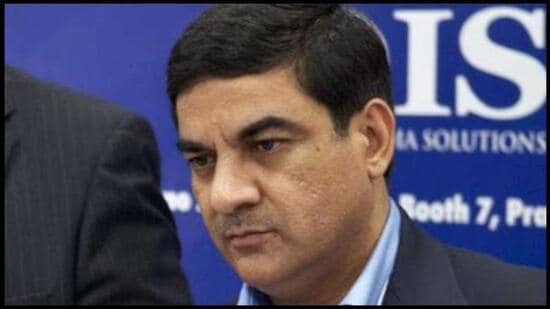
Delhi court allows confiscation of assets linked to fugitive arms dealer Sanjay Bhandari
# Delhi Court Seizes Sanjay Bhandari Assets
By Staff Correspondent, National News Desk, May 05, 2026
In a significant legal victory for Indian law enforcement agencies, a Delhi court on Tuesday authorized the sweeping confiscation of both domestic and international assets belonging to fugitive arms dealer Sanjay Bhandari. Fleeing India in 2016, Bhandari is fiercely accused of acting as a shadow middleman in high-profile defense deals, allegedly laundering immense kickbacks through an intricate web of overseas shell companies. The court’s May 5, 2026 ruling specifically targets luxury properties and complex financial assets spread across the United Arab Emirates (UAE) and the United Kingdom (UK), accumulated during a highly scrutinized period between 2009 and 2016. This landmark order marks a decisive, uncompromising step in India’s relentless pursuit of fugitive economic offenders.
[Source: Hindustan Times | Additional: Public Enforcement Directorate Filings and Court Records]
## The Judicial Mandate and Asset Confiscation
The ruling delivered by the Delhi court represents the culmination of years of meticulous evidence gathering by the Enforcement Directorate (ED) and the Central Bureau of Investigation (CBI). Under the rigorous provisions of the Prevention of Money Laundering Act (PMLA) and the Fugitive Economic Offenders Act (FEOA), the judicial order allows the Indian government to attach and formally confiscate properties that were previously only frozen.
According to the official court dossier, the assets in question are not merely domestic bank accounts but include high-value real estate nestled in prime locations of London and Dubai. These assets have long been suspected to be the direct proceeds of crime, generated through illicit commissions in defense procurement contracts during the United Progressive Alliance (UPA) government tenure.
The legal threshold for confiscating overseas assets is notoriously high, requiring prosecutors to conclusively demonstrate the unbroken chain of illicit funds from India to foreign shores. The court found substantial merit in the ED’s argument that Bhandari’s wealth was wholly disproportionate to his known, legitimate sources of income. By allowing the confiscation, the court has given the Indian government the crucial legal backing required to approach UK and UAE authorities with mutual legal assistance treaty (MLAT) requests for the actual physical takeover and liquidation of these properties.
## The Shell Company Labyrinth: 2009 to 2016
The core of the allegations against Sanjay Bhandari revolves around a deeply entrenched syndicate that operated between 2009 and 2016. During this pivotal window, India was aggressively modernizing its armed forces, executing multi-billion-dollar defense contracts. Bhandari allegedly inserted himself into these deals as an intermediary—a role explicitly banned under India’s strict defense procurement protocols.
Financial investigators have painstakingly mapped out a staggering network of shell companies registered in tax havens such as the British Virgin Islands, Panama, and the Seychelles. These entities were allegedly used to execute a classic money-laundering technique known as “layering.”
“The methodology was textbook but executed with extraordinary sophistication,” explains Dr. Arvind Chari, a forensic accounting expert specializing in transnational financial crime. “Funds would originate as ‘consulting fees’ paid by global defense contractors. These would be routed through multiple jurisdictions, effectively anonymizing the ultimate beneficial owner. Eventually, these ‘clean’ funds were used to purchase tangible assets in the UK and the UAE.”
[Source: Original RSS | Additional: Global Financial Integrity Reports]
The Hindustan Times report underscores that these large sums were explicitly moved through overseas shell entities before being parked in real estate. The properties targeted by Tuesday’s court order include luxury apartments and commercial spaces that Bhandari purportedly controlled through a series of proxy directors and fiduciary agents.
## The Pilatus Deal and the Official Secrets Act
To contextualize the gravity of the current confiscation, one must look back at the origins of the probe. Bhandari first came under the scanner of the Income Tax Department in 2016. During a series of coordinated raids on his premises in Delhi, investigators allegedly unearthed highly classified documents belonging to the Ministry of Defence. This discovery escalated his case from a mere tax evasion investigation to a national security threat, resulting in charges under the draconian Official Secrets Act (OSA).
One of the most prominent deals linked to Bhandari’s alleged middleman activities is the 2009 procurement of 75 Pilatus PC-7 basic trainer aircraft for the Indian Air Force. The CBI has consistently alleged that the Swiss aircraft manufacturer routed millions of Swiss Francs to Bhandari’s offset companies—funds that were ultimately diverted for personal enrichment. While Pilatus has faced its own scrutiny, it is the financial trail left by Bhandari that formed the foundation for the current asset confiscation proceedings.
Sensing the tightening noose in 2016, Bhandari managed to flee India, eventually surfacing in London. His escape prompted fierce political debate in India regarding border security and the influence wielded by defense lobbyists.
## The Extradition Battle in the United Kingdom
The Delhi court’s decision to confiscate assets runs parallel to the agonizingly slow extradition process in the United Kingdom. India formally requested Bhandari’s extradition in 2020. By early 2023, a Westminster Magistrates’ Court had ruled in favor of extradition, a decision subsequently rubber-stamped by the UK Home Secretary. However, navigating the British appellate system has proven to be a marathon for Indian diplomats and legal teams.
Bhandari’s legal counsel has repeatedly argued against extradition, citing human rights concerns, the condition of Indian prisons, and claims of political vendettas. Despite these defenses, the UK courts have increasingly shown a willingness to cooperate with India on economic offenders, provided sovereign assurances regarding prison conditions are met.
“The asset confiscation order is a strategic masterstroke by Indian authorities,” notes Meenakshi Raman, a senior advocate specializing in international extradition law. “Even if Bhandari utilizes every appellate remedy available in the UK to delay his physical return, striking at his financial empire cripples his ability to sustain protracted, expensive legal battles. It sends a chilling message that borders will not protect illicit wealth.”
## Chronology of the Sanjay Bhandari Case
To understand the trajectory of this complex legal battle, it is essential to view the timeline of events leading up to the May 2026 court order:
| Year | Key Development |
| :— | :— |
| **2009-2016** | The core period of alleged middleman activities, including the Pilatus deal and routing of kickbacks through shell companies. |
| **April 2016** | Income Tax Department raids Bhandari’s properties; classified Ministry of Defence documents are recovered. |
| **Late 2016** | Bhandari flees India via Nepal and surfaces in the United Kingdom. |
| **2020** | India formally requests his extradition from the UK; the Enforcement Directorate steps up PMLA investigations. |
| **January 2023** | UK Magistrates’ Court rules in favor of extradition; UK Home Secretary approves the order. Bhandari appeals. |
| **May 2026** | Delhi court officially allows the confiscation of his assets in the UAE and the UK under the Fugitive Economic Offenders Act. |
## Systemic Implications for India’s Defense Sector
The confiscation of Bhandari’s global assets is more than just a punitive measure against one individual; it has deep ramifications for India’s broader defense acquisition ecosystem. Historically, defense deals in India have been shadowed by allegations of opaque commissions and the presence of unauthorized agents.
The Ministry of Defence has made concerted efforts over the past decade to eliminate middlemen, introducing stringent Defense Acquisition Procedures (DAP) that mandate absolute transparency and strict vendor penalties for utilizing unregistered agents.
Defense analysts view the judicial crackdown on Bhandari as a vital precedent. It establishes that the Indian state possesses both the legislative teeth—via the PMLA and FEOA—and the institutional stamina to track defense kickbacks across global jurisdictions over decades.
“For years, the perceived impunity of defense lobbyists deterred global original equipment manufacturers (OEMs) from engaging directly with the Indian government, forcing them to rely on local ‘fixers’,” explains a retired Ministry of Defence official who requested anonymity. “Actions like the confiscation of Bhandari’s overseas properties dismantle this shadow economy. It proves that the risk of acting as an illicit conduit now far outweighs the financial reward.”
## The Broader Crackdown on Economic Fugitives
Sanjay Bhandari is part of a high-profile roster of Indian economic fugitives—a list that prominently includes diamantaire Nirav Modi and former aviation tycoon Vijay Mallya. The Indian government’s strategy in all these cases has evolved from merely seeking physical extradition to systematically dismantling their financial infrastructures.
The Fugitive Economic Offenders Act of 2018 was specifically crafted for this purpose. It allows the special FEOA court to order the confiscation of properties belonging to a declared fugitive, regardless of whether the property was bought from the direct proceeds of the crime. This draconian but necessary legislative tool ensures that fugitives cannot live off their accumulated wealth abroad while thumbing their noses at the Indian judicial system.
Tuesday’s order reinforces the efficacy of this legislation. By expanding the confiscation net to the UAE and the UK, India is testing the strength of its diplomatic and legal treaties. The execution of this court order will require the cooperation of foreign judicial bodies, setting a vital precedent for international legal synergy against white-collar crime.
## Conclusion and Future Outlook
The Delhi court’s decision to allow the confiscation of Sanjay Bhandari’s international assets represents a watershed moment in India’s fight against defense corruption and money laundering. As alleged by authorities, Bhandari’s operations between 2009 and 2016 highlight the severe vulnerabilities that once plagued national security procurements.
Looking ahead, the immediate focus will shift to the diplomatic arena. The Enforcement Directorate will now be tasked with translating this domestic judicial order into actionable asset seizures in London and Dubai. This will undoubtedly involve navigating complex foreign real estate laws and potential third-party claims on the properties in question.
Simultaneously, the culmination of Bhandari’s extradition appeals in the UK will be watched closely. Should the UK courts exhaust his legal remedies, his physical return to India—coupled with the complete stripping of his financial assets—would serve as the ultimate deterrent. Until then, the May 2026 confiscation order stands as a resolute declaration that illicit wealth, no matter how well-hidden across the globe, remains within the reach of the law.





