
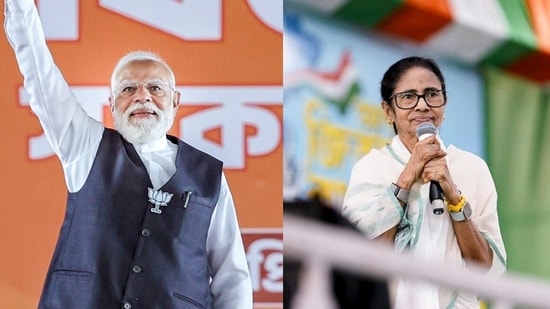
Uniform Civil Code becomes latest flashpoint between TMC, BJP in Bengal ahead of polls| India News
# UCC Sparks TMC-BJP Showdown in Bengal
**By Special Correspondent, Election Pulse India** | April 12, 2026
As West Bengal braces for the high-stakes 2026 Legislative Assembly elections, the Uniform Civil Code (UCC) has rapidly emerged as the central flashpoint between the ruling Trinamool Congress (TMC) and the opposition Bharatiya Janata Party (BJP). Addressing a massive rally on Sunday, Chief Minister Mamata Banerjee launched a blistering offensive against the BJP’s nationwide push for the UCC, framing it as a direct assault on India’s pluralistic ethos. Escalating the political temperature, Banerjee also lobbed a serious allegation, claiming the opposition is actively conspiring to legally “invalidate” her candidacy from the prestigious Bhabanipur constituency in south Kolkata. This dual-front confrontation sets the stage for one of the most fiercely polarized electoral battles in the state’s recent history [Source: Hindustan Times].
## The Uniform Civil Code as an Electoral Weapon
The debate surrounding the Uniform Civil Code is not new to Indian politics, but its aggressive introduction into the West Bengal electoral arena marks a significant strategic pivot by the BJP. Following the successful implementation of the UCC in Uttarakhand and the party’s continued promise to roll it out nationwide, the BJP has made the common civil code a cornerstone of its 2026 Bengal manifesto.
The UCC proposes to replace personal laws based on religious scriptures and customs with a common set of laws governing every citizen in matters of marriage, divorce, inheritance, and adoption. For the BJP, championing the UCC is framed as a matter of gender justice and national integration. State BJP leaders have consistently argued that uniform laws are necessary to dismantle archaic patriarchal structures embedded in personal religious laws, thereby ensuring equal rights for all women, irrespective of their faith.
However, the Trinamool Congress views the UCC through an entirely different lens. Chief Minister Mamata Banerjee has categorically rejected the proposal, labeling it a majoritarian tool designed to marginalize minority communities and erase India’s rich cultural diversity. **The TMC argues that in a state like West Bengal, which prides itself on its syncretic cultural heritage and boasts a minority population of nearly 30%, the imposition of a uniform code is a direct threat to religious freedom guaranteed by the Constitution.**
## The Bhabanipur Constituency Dispute
While the UCC debate dominates the ideological airspace, a highly personalized political battle is unfolding in South Kolkata. During her Sunday address, Mamata Banerjee accused the BJP of attempting a backdoor subversion of the democratic process by seeking to invalidate her nomination from her home turf of Bhabanipur.
**Bhabanipur is more than just a constituency; it is the political fortress of the TMC supremo.** Banerjee has historically relied on this diverse, urban electorate—comprising Bengalis, Gujaratis, Marwaris, and Sikhs—to secure her mandate. Her allegation suggests that the opposition is meticulously scrutinizing her election affidavits, looking for minute discrepancies regarding personal assets, pending legal cases, or procedural technicalities to mount a legal challenge before the Election Commission of India (ECI).
“They know they cannot defeat us on the ground, so they are resorting to institutional manipulation to invalidate my candidature from Bhabanipur,” Banerjee declared to thousands of supporters. [Source: Hindustan Times]. The BJP has vehemently denied these claims, with state leadership asserting that ECI scrutiny is a standard democratic procedure and that the Chief Minister is preemptively playing the victim card to distract from anti-incumbency sentiments.
## Strategic Calculations and the Matua Factor
To understand the BJP’s aggressive UCC push in Bengal, one must examine the state’s complex demographic and sociological matrix. Following the rollout of the Citizenship Amendment Act (CAA) rules, the BJP successfully consolidated a significant portion of the Matua community—a historically marginalized Dalit group that migrated from Bangladesh and heavily influences outcomes in the border districts of North 24 Parganas and Nadia.
However, the BJP realizes that the CAA alone is insufficient to secure the 148 seats needed to form the government in the 294-member assembly. **By introducing the UCC into the discourse, the BJP aims to achieve overarching Hindu consolidation.** The strategy involves uniting disparate caste groups under a broader nationalist umbrella, presenting the UCC as a necessary step to curb what the party describes as the TMC’s “appeasement politics.”
Political analysts note that the BJP is attempting to replicate its successes in northern and western India. “The BJP’s reliance on the UCC in Bengal is a calculated risk. While it resonates deeply with the party’s ideological base and certain segments of the urban middle class, it risks alienating the state’s liberal intelligentsia and consolidating the minority vote entirely behind the TMC,” explains Dr. Ritam Sengupta, a senior political analyst based in Kolkata. [Source: Additional Public Knowledge].
## TMC’s Dual Shield: Welfare and Sub-Nationalism
In response to the BJP’s ideological onslaught, the Trinamool Congress is relying heavily on its formidable grassroots organization and an expansive network of state-sponsored welfare schemes. Programs like *Lakshmir Bhandar* (direct cash transfers to women), *Kanyashree* (financial aid for the education of girls), and *Swasthya Sathi* (health insurance) have created a dedicated constituency of rural women voters who remain largely loyal to the Chief Minister.
Furthermore, Banerjee is doubling down on Bengali sub-nationalism. By portraying the BJP as an “outsider” party trying to impose North Indian cultural and legal norms on West Bengal, the TMC hopes to evoke regional pride. The fight against the UCC is being articulated not just as a defense of minority rights, but as a defense of Bengal’s autonomy and unique cultural identity.
Banerjee has repeatedly warned that a centrally mandated UCC would disrupt the customary laws of tribal populations in districts like Purulia, Bankura, and Jhargram. By expanding the anti-UCC narrative to include Adivasi (tribal) anxieties, the TMC is actively working to prevent the BJP from making inroads into the critical Junglemahal region, which has seen fluctuating political loyalties over the last two election cycles.
## Legal and Constitutional Friction
Beyond the immediate electoral rhetoric, the UCC proposition raises profound constitutional questions. Family and personal laws fall under the Concurrent List of the Indian Constitution, meaning both the central and state governments have the authority to legislate on these matters. However, if the central government passes a national UCC, it would override any state-level personal laws due to the doctrine of repugnancy under Article 254.
Legal experts suggest that if the BJP returns to power at the center with a mandate to pass a national UCC, non-BJP ruled states like West Bengal, Kerala, and Tamil Nadu could spark a severe federal crisis. “If a national UCC is enacted, state governments cannot technically block its implementation. However, they can refuse to allocate state administrative machinery to enforce it, leading to a massive constitutional gridlock,” notes Supreme Court advocate Meera Viswanathan.
This impending legal battle adds a layer of urgency to the 2026 assembly elections. For Mamata Banerjee, retaining power is essential to maintaining West Bengal as a bulwark against the BJP’s national policy objectives. For the BJP, capturing Bengal would be the ultimate vindication of its ideological project in eastern India.
## Key Demographics Shaping the 2026 Verdict
As the UCC debate intensifies, voter demographics will play a decisive role. Both parties are actively tailoring their messaging to capture these critical segments:
| Demographic Group | Electoral Significance | Leanings on the UCC / Current Sentiment |
| :— | :— | :— |
| **Minority Voters** | Approx. 30% of the electorate; crucial in districts like Murshidabad and Malda. | Strongly opposed to the UCC. Expected to heavily consolidate behind the TMC. |
| **Rural Women** | Beneficiaries of massive TMC welfare schemes (e.g., Lakshmir Bhandar). | Largely insulated from ideological debates; primarily driven by economic benefits and loyalty to Banerjee. |
| **Matua Community** | Key deciding factor in over 30 assembly constituencies. | Supportive of BJP post-CAA, though the UCC’s impact on their specific customs remains an under-discussed variable. |
| **Urban Middle Class** | Influential in Kolkata and surrounding metropolitan areas. | Divided. Some favor the UCC as a modern, secular framework, while others align with TMC’s defense of pluralism. |
| **Tribal (Adivasi) Voters** | Dominant in the Junglemahal region. | Apprehensive about the UCC overriding customary tribal laws; heavily courted by both TMC and BJP. |
## Conclusion: The Road to the Polls
As April 2026 progresses, the political climate in West Bengal is set to become increasingly volatile. The Uniform Civil Code has transcended being a mere policy proposal; it is now the ideological battleground upon which the future of Bengal’s governance will be decided.
Chief Minister Mamata Banerjee’s explosive allegations regarding the BJP’s attempts to invalidate her Bhabanipur candidacy highlight the high-stakes, deeply personal nature of this contest. The BJP, armed with a powerful national narrative and a desire to finally breach the TMC fortress, is leaving no stone unturned.
Ultimately, the 2026 Bengal Assembly elections will serve as a profound referendum. Voters will not only decide on local governance and welfare delivery but will also deliver a crucial verdict on the broader ideological direction of the nation. Whether the UCC acts as the catalyst for the BJP’s breakthrough or solidifies Mamata Banerjee’s status as the invincible guardian of Bengal’s autonomy remains to be seen.





